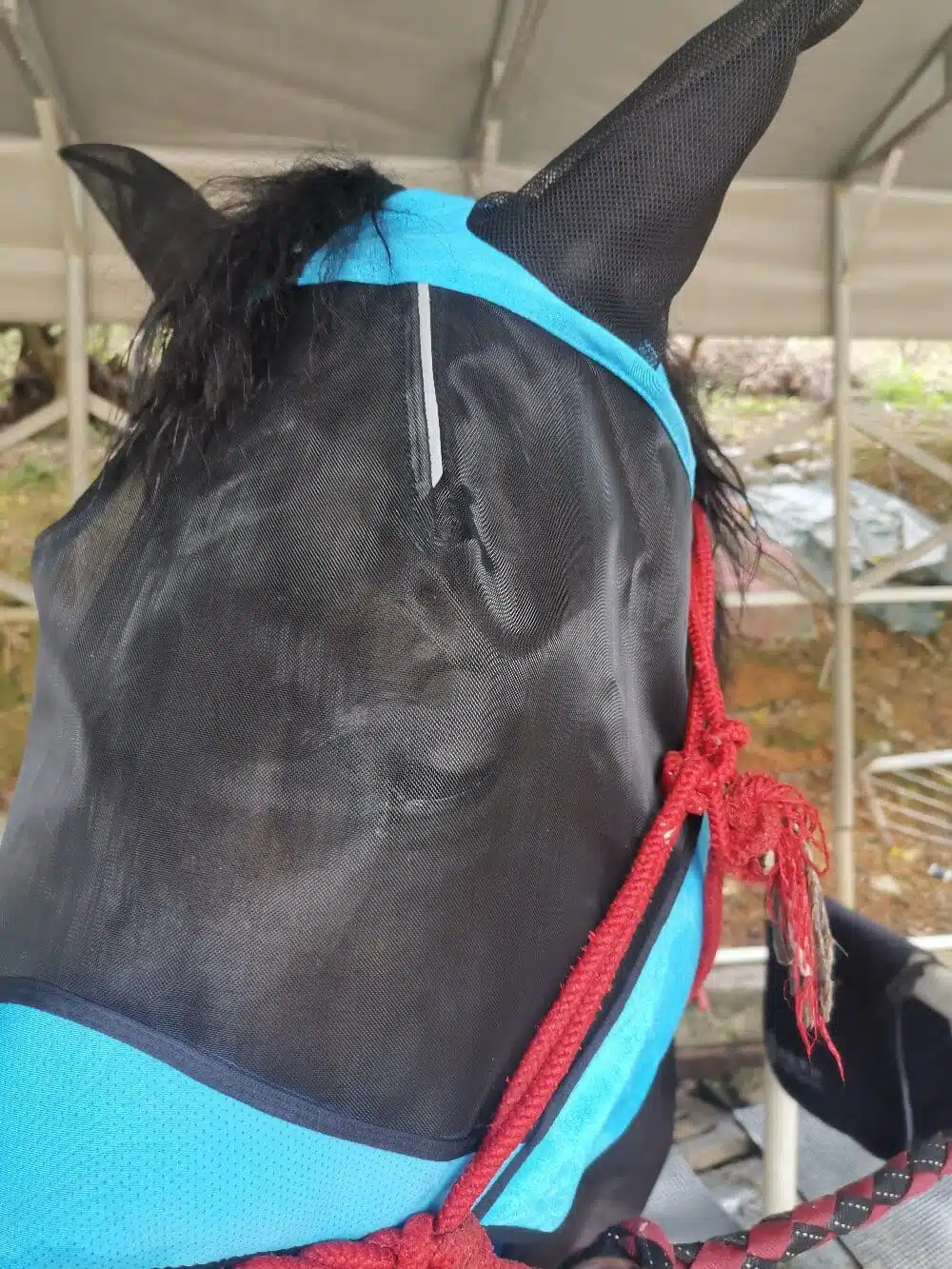

By the next decade, the horse fly mask will have transcended its current role as a simple protective accessory, evolving into an intelligent, multi-functional device integral to equine wellness management. Future iterations will not merely shield a horse’s eyes from irritating pests; they will actively monitor health metrics, adapt to changing environmental conditions, and integrate seamlessly with stable management software. This progression from passive barrier to proactive sensor system represents a paradigm shift in how owners approach preventative care, driven by advances in material science, wearable technology, and a deeper understanding of equine ophthalmology.
From Static Mesh to Dynamic Climate Control
Contemporary masks rely on static mesh densities to block flies, but the future horse fly mask will feature adaptive weaves that respond to real-time stimuli. Researchers are currently developing photochromic and thermochromic fibers that alter their opacity and breathability based on sunlight intensity and ambient temperature. Within eight years, expect a mask that automatically tightens its weave during peak insect hours at dawn and dusk, then relaxes the weave during the heat of midday to promote maximum airflow. Furthermore, embedded micro-sensors will detect increased tear production or squinting—early indicators of ocular irritation—and trigger a localized, ultra-fine mist of a veterinarian-approved, preservative-free lubricant from a refillable reservoir in the mask’s frame.
Integrated Biometric Feedback and Health Alerts
The objective utility of future designs will extend far beyond fly prevention. Non-invasive biometric sensors woven into the mask’s lining will track corneal temperature, blink rate, and even the chemical composition of tears, such as glucose or inflammatory markers. This data will be transmitted wirelessly via low-energy Bluetooth to a central stable application, flagging potential issues like uveitis or early corneal ulcers before clinical signs become visible. For boarding stables, a fleet of these smart horse fly masks will provide owners with remote peace of mind, delivering daily ocular health scores without requiring physical handling. This capability will be particularly critical for managing horses prone to recurrent uveitis, where early detection is directly correlated with better long-term visual outcomes.
Another anticipated development involves self-cleaning and antimicrobial surface coatings. Instead of manual washing, future materials will utilise photocatalytic layers that break down organic debris, including saliva, dust, and insect remnants, when exposed to UV light. This reduces the risk of fungal or bacterial build-up directly against the delicate periocular skin. The fastening systems will likewise evolve, replacing hook-and-loop closures with magnetic, breakaway buckles that are easier to use with gloved hands and safer if the mask snags on a branch. These buckles will be engineered to release under specific pressure, preventing injury while maintaining a secure fit during turnout.
The Role of Sustainability and Customisation
Sustainability will also be a driving force by 2032. Manufacturers will shift towards fully recyclable, bio-based polymers derived from castor oil or algae, ensuring that a mask reaching its end-of-life can be returned to the manufacturer for closed-loop recycling. Customisation via 3D scanning will become standard, allowing for a perfect anatomical fit that minimises pressure points over the facial crest and behind the ears. This bespoke tailoring will dramatically reduce friction rubs, which are a common but avoidable secondary issue today.
While some horses may initially resist wearing any form of headgear, the next generation will be designed with a focus on proprioception. Using lighter, ultra-thin fibers that mimic the weight of natural spider silk, the mask will be practically imperceptible to the wearer. Early adoption of this technology will likely occur in high-performance disciplines, where maintaining clear vision without impediment is non-negotiable for jumping or eventing. However, the trickle-down effect will make advanced monitoring accessible to recreational owners within ten years.
In conclusion, the trajectory for the horse fly mask is one of convergence between veterinary science and consumer electronics. The primary purpose—protection from flies—will remain the bedrock, but the secondary and tertiary functions will expand exponentially. As these intelligent textiles become more affordable and durable, they will not only reduce the incidence of infections and ocular trauma but also generate a treasure trove of data that informs personalised care. The future of equine eye protection is not a static piece of cloth, but a living, responsive guardian that watches over the horse’s most vital sense. This shift promises to lower veterinary costs, improve animal welfare, and offer owners a clear, data-driven window into the ophthalmic health of their charges. The transition will be gradual, but the outcome will be a new standard of care that was unimaginable just a decade ago. For the discerning owner, preparing for this future means looking beyond simple mesh and considering the connected, intelligent possibilities that lie ahead. The horse fly mask of tomorrow is a gesture of proactive stewardship, one that protects not just from outward pests, but from silent, internal health threats as well. As we move forward, the humble mask will become a cornerstone of comprehensive equine health surveillance.