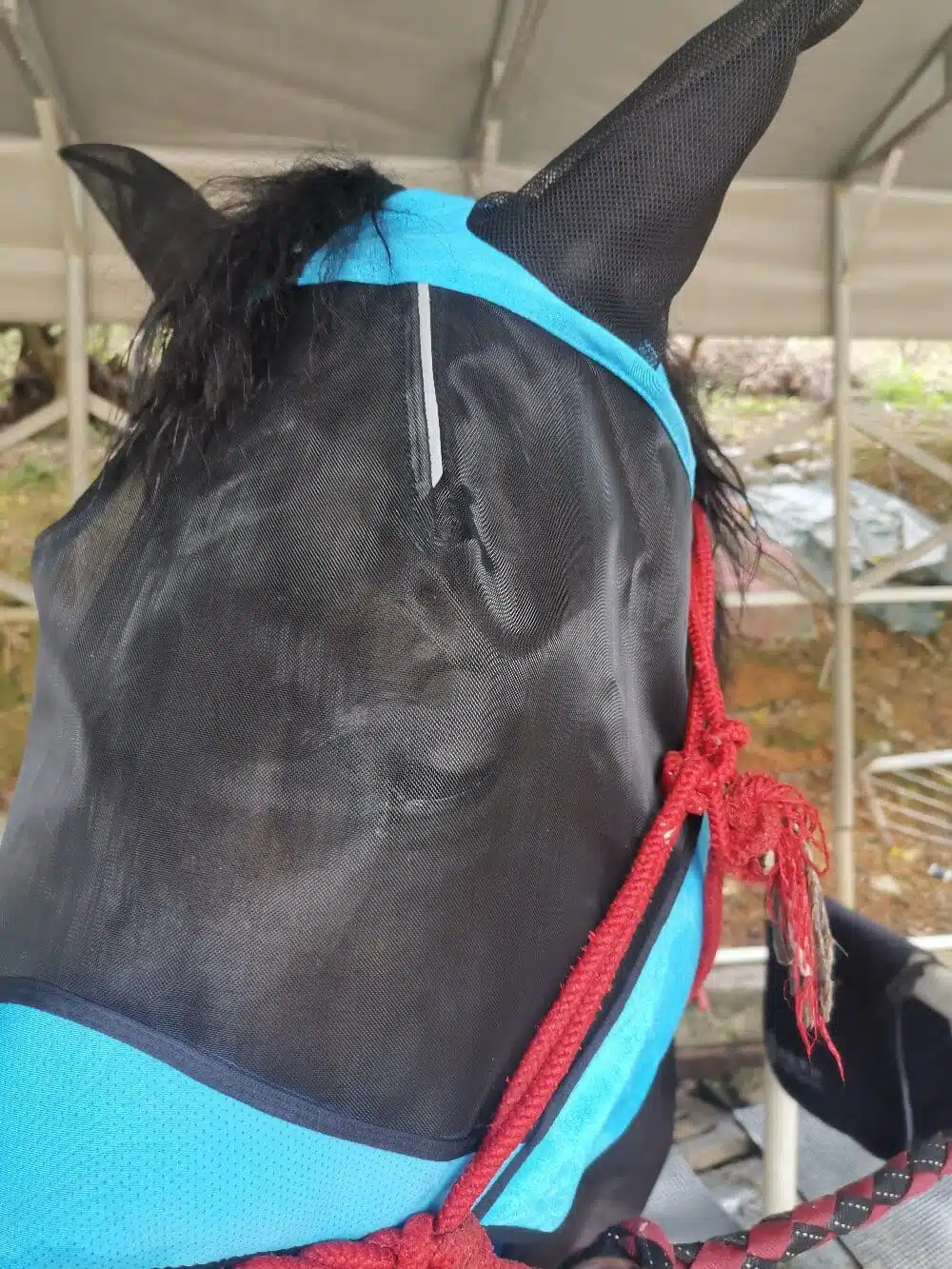

After one brutal summer of watching my gelding stomp, swish, and head-toss his way through every ride, I finally admitted the obvious: the bugs were winning. That’s when I bought my first horse fly mask, and it genuinely changed our daily routine. If you’re tired of dealing with watery eyes, crusty discharge, and a miserable horse, this practical guide will walk you through everything I’ve learned about choosing, fitting, and maintaining fly masks for horses.
What a Horse Fly Mask Actually Does
A fly mask is a lightweight mesh covering that shields your horse’s eyes, and often the ears and muzzle, from flies, gnats, mosquitoes, and debris. Unlike fly spray, which needs constant reapplication, a mask offers continuous, physical protection. I noticed fewer eye infections, less head shaking, and a calmer horse within days of consistent use.
Most masks use fine mesh that lets air circulate while blocking insects. Some include UV protection, which is a bonus for horses with pink skin or photosensitivity. Then there are full-face designs with ear covers and nose extensions, plus simple eye-only versions for horses who hate extra material.
How to Choose the Right Fly Mask for Your Horse
Sizing matters more than most people realize. A mask that’s too tight rubs the face; one that’s too loose slides down or lets insects sneak in. Here’s what I check before buying:
- Measure your horse’s head. Use a soft tape from the center of the forehead, under the jaw, and back up. Compare with the manufacturer’s size chart.
- Consider ear fit. Ears should stand comfortably, not fold over. If your horse has sensitive ears, look for soft lycra or fleece-lined ear covers.
- Check the closure system. Hook-and-loop straps are common, but I prefer double velcro or elasticized throat straps for horses who rub their faces on fences.
- Think about nose coverage. Horses prone to sunburn or bug bites on the muzzle benefit from a mask with a nose extension.
Draft breeds and ponies often need larger or adjustable sizing, while fine-headed Arabians may need a smaller cut. Don’t assume one brand fits all.
Fly Mask Materials and Features I Look For
Mesh density is a trade-off. Finer mesh blocks more gnats but can trap heat. I prefer a medium weave with a soft, non-abrasive border. UV-treated fabrics are worth the extra cost if your horse has white markings around the eyes.
Other features that matter to me:
- Reinforced stitching at stress points
- Breathable ear material
- Reflective trim for visibility
- Machine-washable fabric
Fitting and Daily Use Tips
Even the best fly mask fails if it’s fitted poorly. I aim for two fingers of space under the throat strap and make sure the mask doesn’t press on the eyelashes. Check daily for rubbing, especially behind the ears and under the jaw.
Rotate two masks if possible. That way one can be washed while the other is in use. In my experience, a clean mask lasts longer and causes fewer skin issues. Also, remove the mask during turnout in extreme heat or if your horse is sweating heavily under it.
Common Mistakes to Avoid
I’ve made plenty. Leaving a mask on a horse with an active eye injury is a bad idea. So is using a mask with hard edges or exposed wire. Never fasten straps too tightly, and always inspect for tears that could catch on fences or branches.
Final Thoughts on Fly Mask Use
A horse fly mask is one of the simplest, most effective tools for summer comfort. Get the fit right, choose durable materials, and check it daily. Your horse will thank you with fewer stomps, calmer eyes, and a lot less misery.