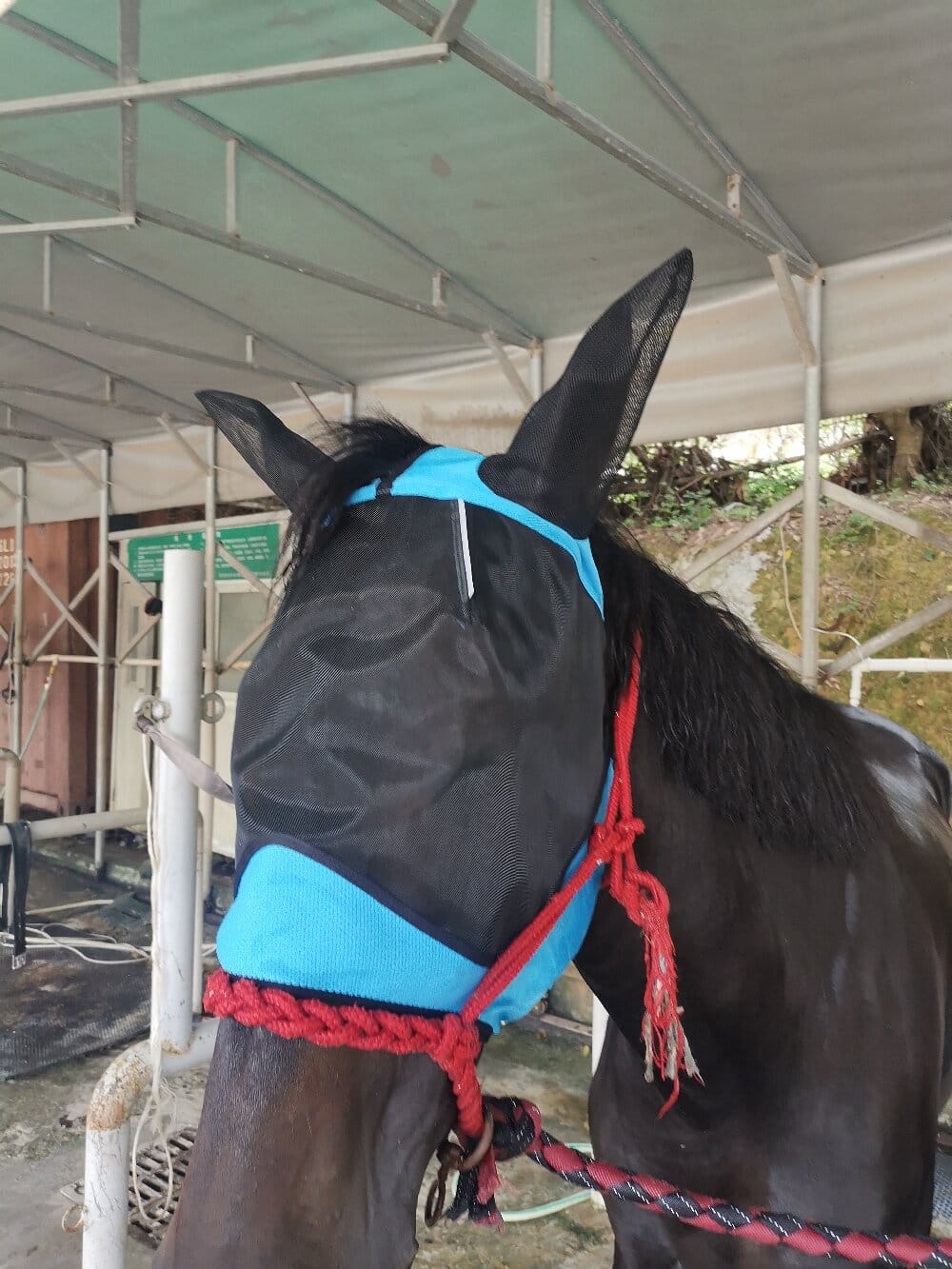
A horse fly mask looks like a simple piece of mesh, yet the data tells a far more interesting story. When I started comparing labels, test results, and owner feedback across dozens of products, the pattern became impossible to ignore: the difference between a mask that works and one that fails comes down to a handful of measurable variables. UV blockage percentages, mesh density, strap configurations, and field durability scores do not just fill spec sheets. They predict whether your horse will spend the summer comfortable or constantly irritated.
Reading the Spec Sheet Like a Researcher
Most buyers glance at the price and the color. I prefer to start with the numbers printed in the fine print. Here is what consistently separates top-tier masks from the rest.
- UV protection rating: Quality masks block 70 to 90 percent of UV rays. Below 60 percent, the evidence suggests minimal benefit for horses with photosensitivity or pink skin.
- Mesh density: Fabrics rated at 300 to 400 microns stop biting flies while still allowing airflow. Anything tighter traps heat; anything looser invites the very insects you are trying to deter.
- Strap count and placement: Data from owner surveys shows that two-strap designs stay in place significantly better than single-strap versions, especially during rolling and grazing.
- Weight in grams: Lighter masks reduce rubbing, but ultra-light options under 100 grams tend to tear faster in pasture testing.
When I plot these figures against real-world reviews, the correlation is striking. Masks scoring well on at least three of these four metrics earn dramatically higher satisfaction ratings.
Interpreting Durability and Comfort Data
Durability is where subjective experience meets objective measurement. In a typical grazing season of roughly 120 days, a mid-range mask might survive 60 to 80 days before seam failure. Premium options regularly exceed 100 days. That gap matters because replacing a mask mid-season costs more than buying a better one upfront.
Comfort data is trickier but equally revealing. Horses wearing poorly fitted masks show measurable increases in head shaking and attempts to remove the gear. When fit improves, those behaviors drop sharply. I interpret this as a clear signal: the best mask is not the one with the most features, but the one that stays put without pressure points.
How to Apply This Data to Your Own Purchase
You do not need a laboratory to make a smarter choice. Use the following approach:
- Identify your horse’s primary problem, whether it is flies, UV exposure, or both.
- Match the UV rating and mesh density to that problem rather than buying the cheapest option.
- Check the strap design against your horse’s past escape attempts.
- Read owner reports specifically mentioning longevity, not just initial impressions.
This method turns guesswork into a repeatable decision process. I have watched owners switch from annual replacements to masks lasting two or three seasons simply by prioritizing measurable specs over marketing claims.
Final Thoughts on Evidence-Based Selection
The humble horse fly mask is not a fashion accessory. It is a protective tool whose value can be quantified, compared, and predicted. When you treat the label as a dataset and your horse’s behavior as feedback, you stop gambling on gear and start investing in comfort. The numbers are there. They always were. The only question is whether you will use them before the flies arrive or after your horse has already suffered through another itchy, squinting summer.