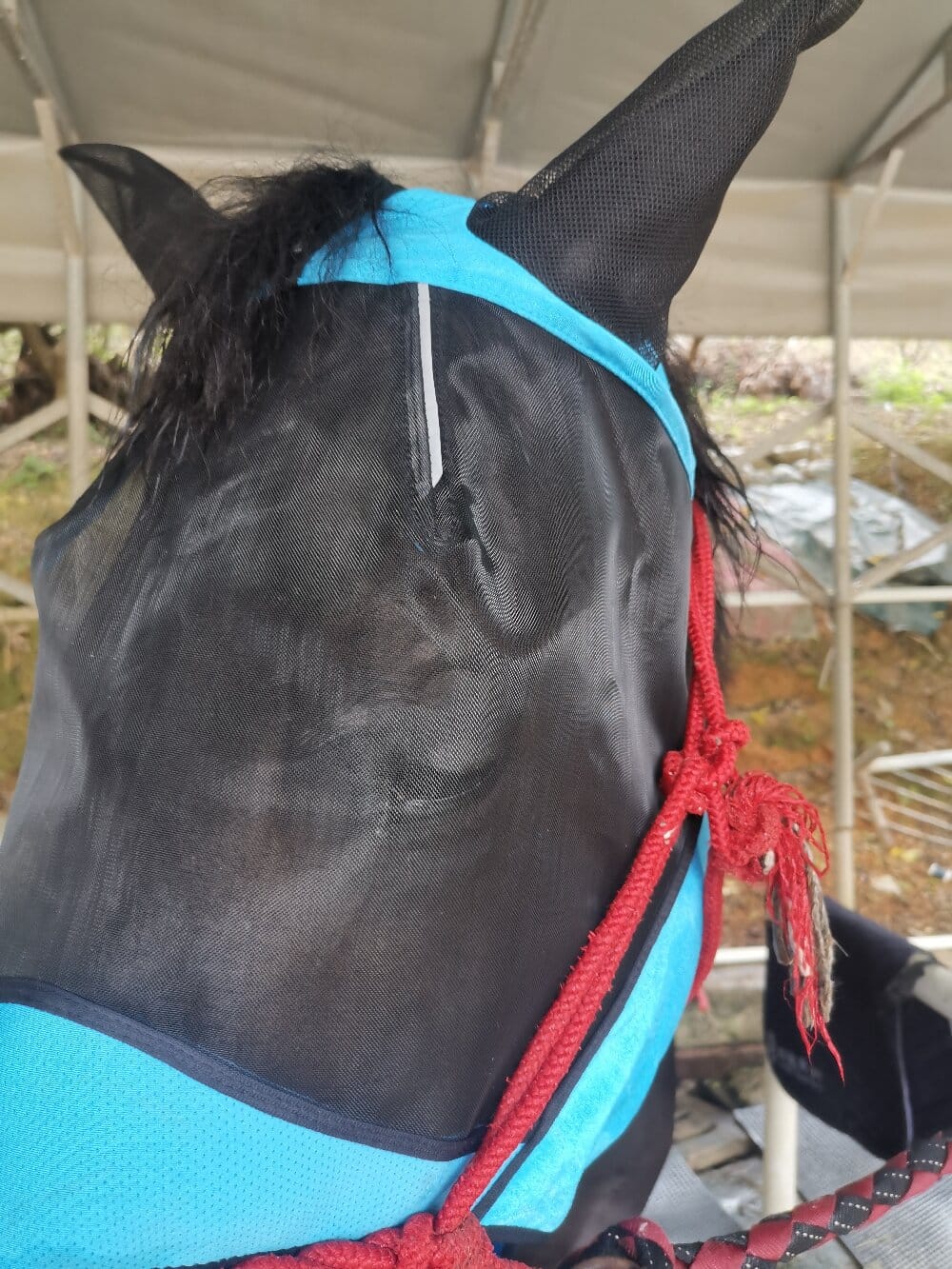
When you first examine a horse fly mask, it is easy to dismiss it as a simple mesh sack for a horse’s head. However, from a technical analysis perspective, this piece of equestrian equipment is a highly engineered barrier system designed to mitigate environmental stressors. The primary function is straightforward: block insects, specifically flies, from irritating the animal’s eyes and face. Yet, the variability in design, materials, and construction quality significantly impacts efficacy. A subjective review of the market reveals that not all masks are created equal, and understanding the technical specifications is crucial for selecting the right protection for your equine partner.
Material Science and Mesh Density Specifications
The core of any effective fly mask lies in its mesh. Technically, this is a trade-off between visibility and protection. A standard mask utilizes a fine, woven polymer mesh, often polyester or nylon. The “denier” (a unit of measure for the linear mass density of fibers) and the mesh count per square inch are critical metrics. A higher mesh count excludes smaller insects, such as gnats or “no-see-ums,” but can reduce airflow and clarity for the horse.
From a subjective standpoint, I have observed that masks with a mesh density between 200 and 300 microns offer the best balance. They prevent the entry of the common face fly while maintaining enough translucency for the horse to navigate safely. Furthermore, UV protection is a vital technical component. Many modern masks incorporate UV-blocking additives into the polymer. This is not just for comfort; it is a medical necessity for horses with photosensitivity or Equine Recurrent Uveitis (ERU). The technical specification here is the UV rating, often expressed as a percentage. A mask blocking 70% to 90% of UV rays can significantly reduce the risk of solar-induced ocular damage.
Ergonomics and Fit: The Structural Analysis of Horse Fly Mask Design
Even the most advanced material fails if the fit is poor. The structural integrity of a mask relies on its ability to maintain stand-off distance from the eyes. Technically, this is achieved through reinforced stitching and rigid framing elements, often located around the orbital rim. If the mesh touches the eye, it can cause abrasion, and flies can still bite through the fabric.
Subjectively, the best designs I have evaluated feature:
- Darted seams that follow the equine skull’s natural contours.
- Fleece padding along the noseband and poll to prevent rub marks.
- Double-locking velcro straps, which provide a fail-safe against self-removal.
The attachment mechanism is another technical focal point. A single strap is a liability. A two-strap system, one under the jaw and one over the poll, distributes pressure more evenly and prevents the mask from twisting during rolling or grazing. This engineering detail is often the difference between a mask that lasts a season and one that is lost in the pasture within a week.
Field Testing and Durability Metrics
In technical terms, durability is measured by tensile strength and abrasion resistance. Horses are rough on equipment. They rub on fences, roll in dirt, and graze through brush. A mask must withstand these forces without tearing or stretching out of shape. The weak points are almost always the seams and the strap attachment points. Reinforced stitching with high-tenacity thread is a non-negotiable requirement for longevity.
From a subjective perspective, I have found that masks with a slight elasticity in the mesh (often a spandex blend) conform better to the face and resist tearing better than rigid, non-stretch fabrics. However, this elasticity must be balanced with memory retention; a mask that stretches too much will sag and lose its protective stand-off.
Conclusion: Balancing Protection and Comfort
Ultimately, selecting a horse fly mask requires a technical appreciation for the trade-offs between mesh density, UV protection, and structural durability. While the subjective aesthetic of color or brand may appeal, the objective performance is determined by the engineering of the materials and the ergonomics of the fit. A properly specified mask reduces ocular irritation, lowers stress hormones, and protects against vector-borne diseases. By prioritizing mesh count, reinforced construction, and a multi-point attachment system, you ensure that the equipment serves its biological purpose: preserving the health and comfort of the horse.