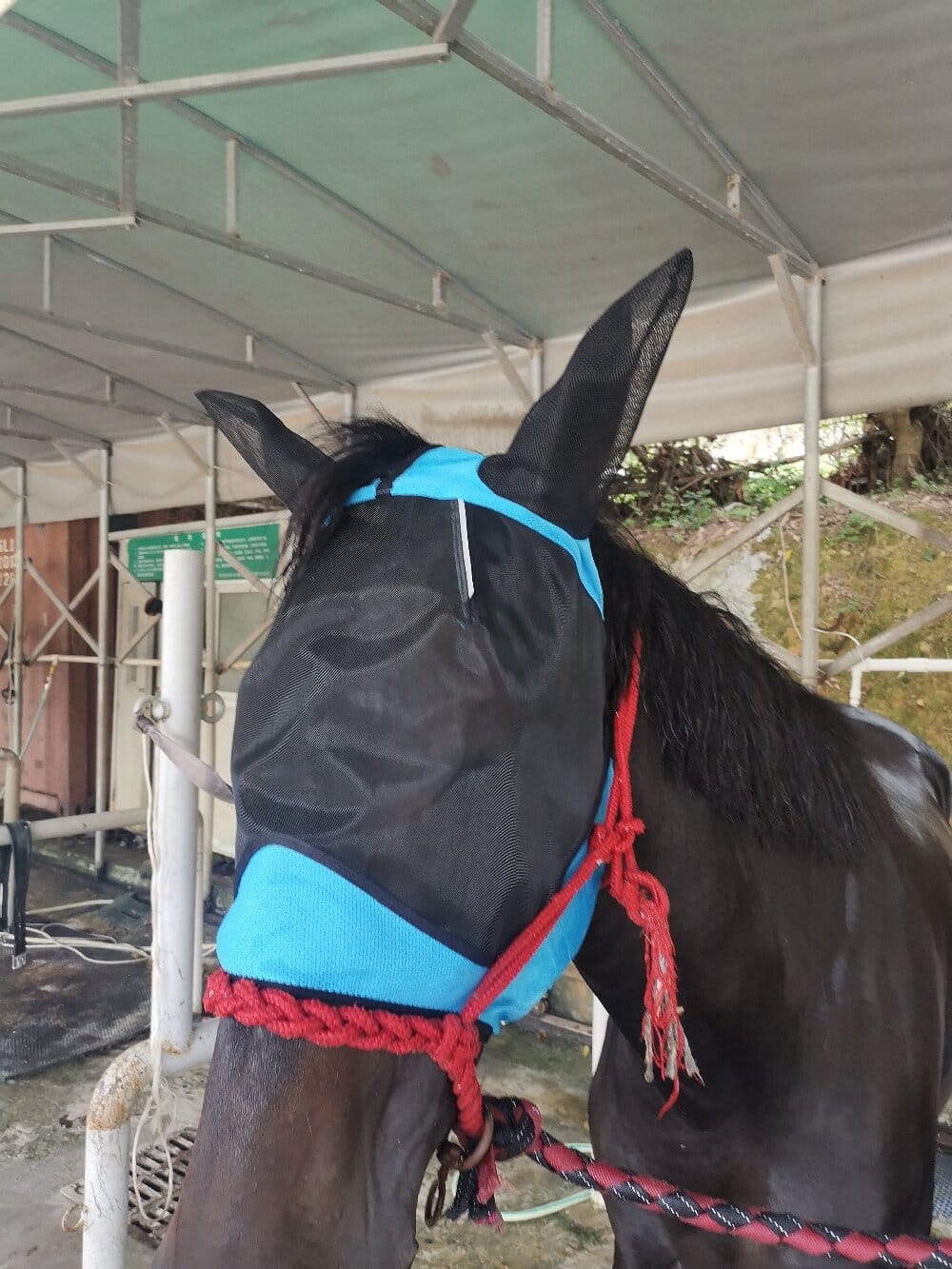
After watching my mare, Juniper, stomp and toss her head through an entire July, I decided to treat fly control like a proper experiment rather than a guessing game. The horse fly mask became my central variable. I wanted to know which design actually reduced irritation, how long each one lasted, and whether the extra features justified the price. What follows is the method I used, the data I collected, and the practical conclusions I reached after two full fly seasons.
My Testing Methodology for Choosing a Horse Fly Mask
I approached this the way I would any field trial. I selected four masks across price ranges and materials, then rotated them on the same horse under similar conditions to keep the comparison fair.
Here is the framework I followed:
- Baseline observation: For one week, I recorded head-shaking, ear flicking, and stomping counts during 30-minute turnout sessions with no mask.
- Controlled rotation: Each mask was worn for five consecutive days, with the same turnout times and pasture.
- Scoring: I rated fit, visibility, ventilation, stay-put performance, and rub marks on a scale of 1 to 5.
- Durability check: I inspected seams, binding, and mesh after each rotation and again at the end of the season.
Keeping a simple notebook mattered more than any gadget. Writing down numbers stopped me from relying on memory, which is surprisingly unreliable when you are sweaty and swatting at deer flies.
What I Learned About Fit and Materials
Fit turned out to be the single biggest factor. A mask that gapes at the throat lets insects walk right in, while one that pinches creates its own problems. I found that measuring from the poll to the end of the nose, plus around the jaw, gave me a far better starting point than breed labels alone.
Material mattered almost as much. Fine mesh blocked tiny gnats but trapped heat on humid afternoons. Slightly coarser mesh breathed better but let through the smallest pests. For my horse, a mid-weight mesh with soft binding around the edges struck the best balance.
I also paid attention to eye clearance. Darts or a reinforced brow area kept fabric off the eyelashes, which reduced blinking and rubbing. Masks without that structure tended to press inward whenever Juniper lowered her head to graze.
Feature Checklist I Now Use Before Buying
After two seasons, I narrowed my priorities to a short list. If a mask fails more than two of these, I skip it.
- Fleece or padded binding at the nose and brow.
- Adjustable throat strap with a quick-release closure.
- Ear covers that are optional and removable.
- UV protection rating stated by the manufacturer.
- Machine washable without losing shape.
Removable ears became a favorite feature because they extend protection into late summer when horse flies are at their worst, yet they can come off during milder weeks.
Maintenance Routine That Extends Mask Life
Cleaning was the step I used to neglect. Now I rinse each mask in cool water every few days and hand wash weekly with a mild, horse-safe soap. I air dry them flat, away from direct sun, because heat warps the mesh and stiffens the binding.
I also check the strap and seams before every use. A small tear near the throat latch can turn into a lost mask in a pasture within hours. Keeping a spare in the tack trunk has saved me more than once during peak fly season.
Final Takeaways From My Field Notes
My method was simple: observe, rotate, score, and repeat. That process showed me that the best horse fly mask is not the most expensive one, but the one that fits closely, breathes well, and holds up to daily wear. If you take the time to measure your horse, test a few styles, and track the results, you will end up with fewer head-shaking afternoons and a much calmer summer for both of you.