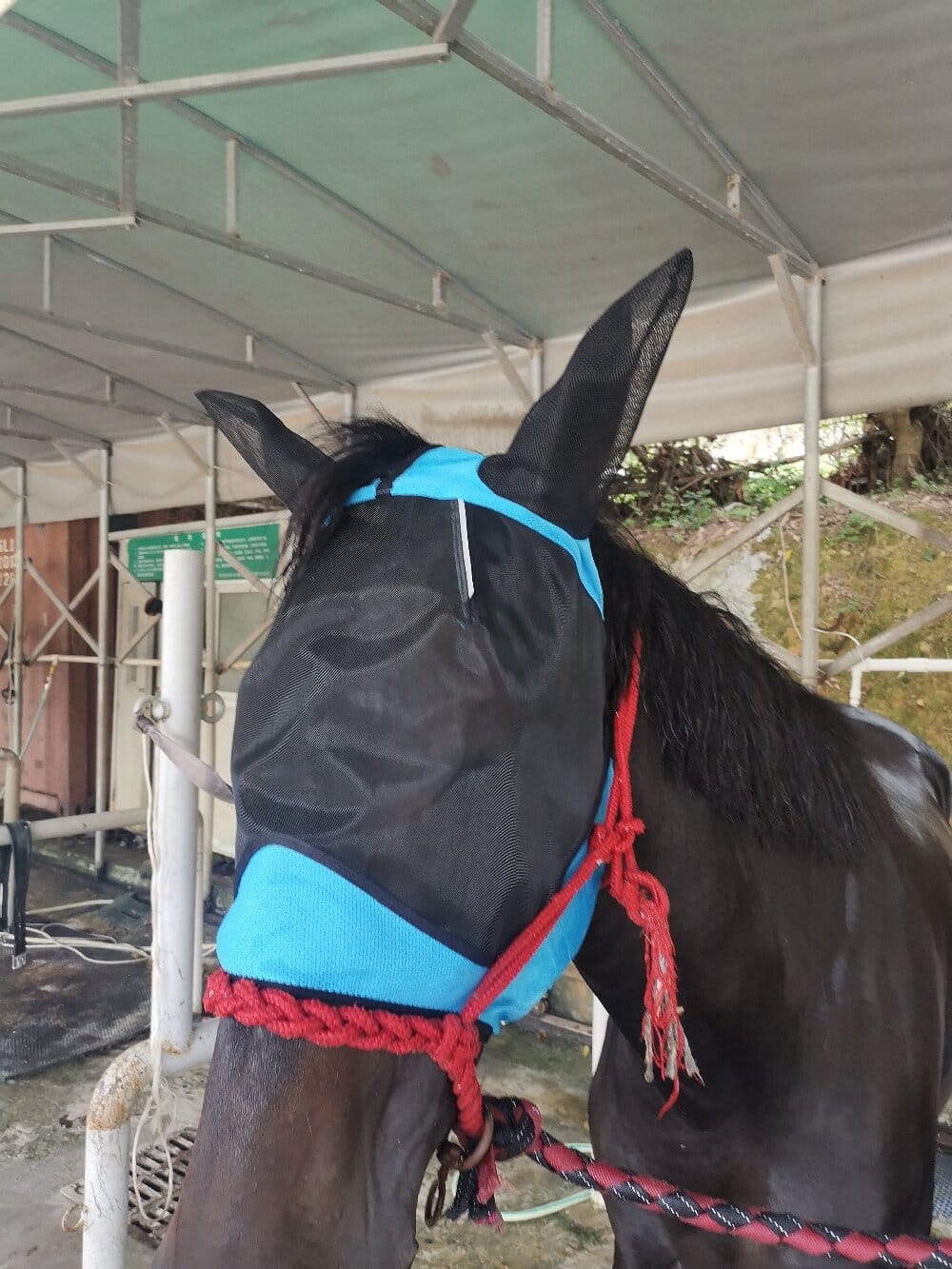
I’ll be honest: when I first bought a horse fly mask for my mare, I felt like I had solved summer. Problem identified, product purchased, done. But the more time I spend around horses, the more I realize that the horse fly mask is not a simple solution. It’s a tool, a compromise, and sometimes a genuine headache. Thinking critically about it doesn’t mean rejecting it outright; it means asking better questions before I strap one onto a horse’s head.
What a Horse Fly Mask Actually Does
The basic promise is straightforward. A fine mesh cover over the eyes, and sometimes the ears and muzzle, keeps biting insects away from sensitive areas. That matters, because flies can cause eye irritation, head shaking, and stress that ruins training and turnout. A good fly mask for horses can also reduce the risk of insect-borne infections and protect against ultraviolet light in some designs.
But here’s the critical part: it only works if the horse tolerates it. I’ve seen horses calmly graze in a fly bonnet for hours. I’ve also seen horses rub a mask off in ten minutes, leaving it tangled in a fence. The mask doesn’t care about your intentions. The horse decides whether the design succeeds.
Where My Skepticism Creeps In
I used to think any mesh eye protector was fine. Then I started noticing details that manufacturers don’t always emphasize.
- Fit matters more than fabric. A loose fly mask can shift and expose the eye, while a tight one can rub hair off or press against eyelashes.
- Visibility cuts both ways. Some horses become spooky when their peripheral vision is reduced. That’s a safety trade-off, not a minor inconvenience.
- Heat and moisture build up. On humid days, a fly mask with ear covers can trap sweat and create a friendly environment for skin irritation.
- Durability is unpredictable. Cheap masks fail at the seams. Expensive masks fail at the buckles. Either way, I’m out money and my horse is out protection.
None of this means fly masks are useless. It means the marketing claim “keeps flies away” is incomplete. The real question is whether the mask keeps flies away without creating a new problem.
How I Evaluate a Fly Mask for Horses Now
Instead of trusting the label, I test and observe. Critical thinking here looks like a checklist, not a vibe.
- Watch the horse for the first hour. Are they shaking their head, rubbing, or standing still in a weird posture?
- Check the eyes. Any tearing, squinting, or discharge after removal?
- Inspect the coat. Rub marks behind the ears or under the jaw mean the fit is wrong.
- Consider the environment. Pasture vs. stall, fly pressure, and turn-out duration all change what works.
- Rotate masks. One mask for turnout, another for riding, and a spare for laundry day.
I also ask whether I even need a full mask. Sometimes a simple fly bonnet with ear protection is enough. Sometimes fly spray and fans do more than any mask. The best insect protection for horses is usually layered, not singular.
The Subjective Bottom Line
I still use a horse fly mask. I just don’t worship it. It’s one imperfect tool among many, and its value depends on the horse, the season, and my willingness to pay attention. If you’re shopping for one, read reviews critically, measure your horse’s head, and be ready to return a bad fit. Your horse can’t tell you what’s wrong with a mask. You have to notice for them. That’s not cynicism. That’s just good horsemanship.