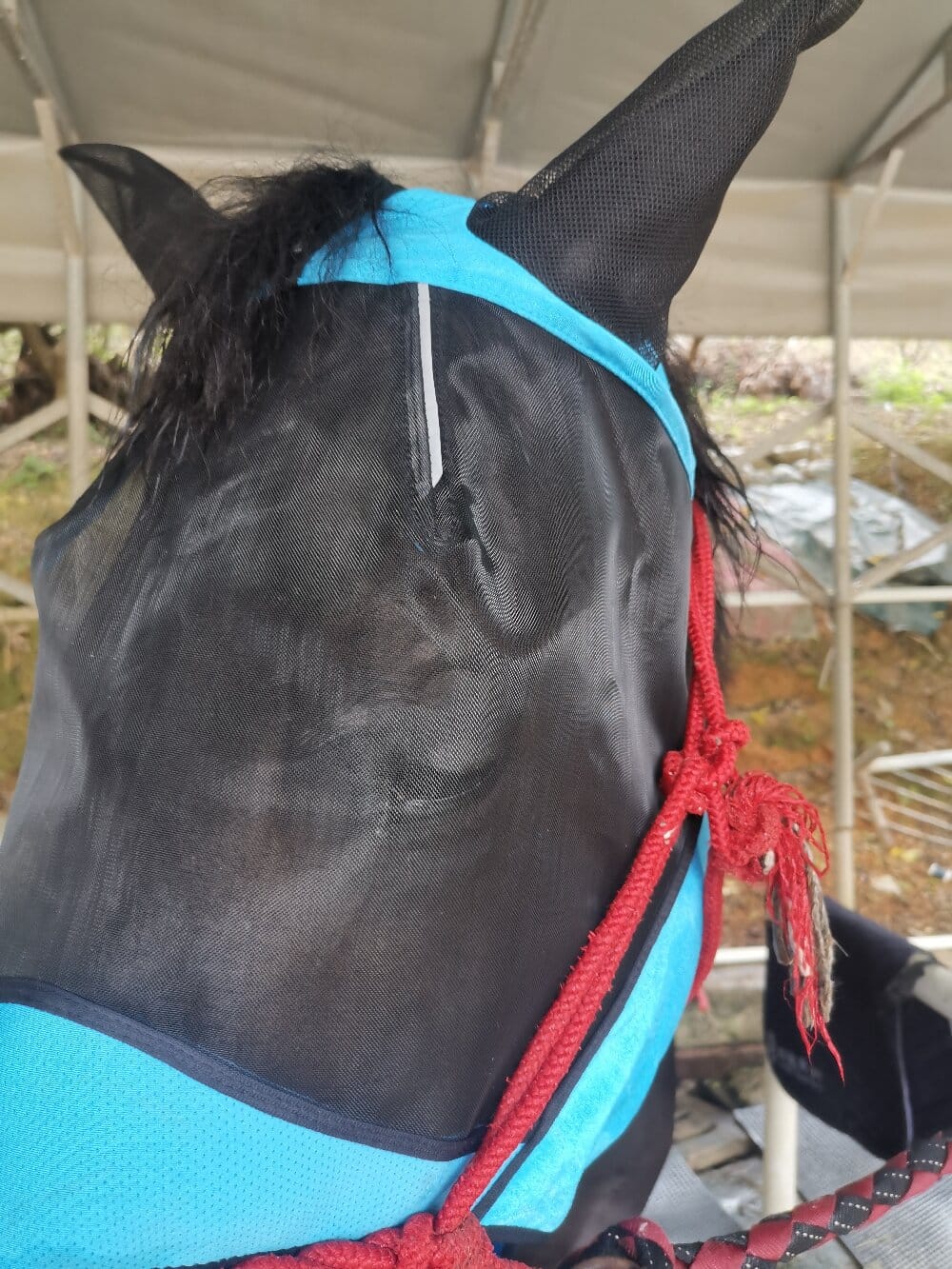
If you’ve ever watched your horse stamp, swish, and shake its head nonstop during fly season, you already know how miserable those pests can make them. That’s exactly why I started using a horse fly mask, and after several seasons of trial and error, I want to share what I’ve learned so you can skip the guesswork. A good fly mask is one of the simplest, most effective pieces of summer tack you can own, but only if you choose the right one and use it correctly.
Choosing the Right Horse Fly Mask for Your Horse
My first mask was a cheap impulse buy, and it lasted about a week before the mesh tore and the fit rubbed my gelding behind the ears. Since then, I’ve become picky, and you should be too. Here’s what I check before buying:
- Fit and sizing: Measure from the top of the poll to just below the jaw, and check the sizing chart rather than guessing. A mask that’s too loose slides and lets flies in; one that’s too tight rubs.
- Mesh coverage: Decide whether you need eye-only protection or a full-face design with ear and muzzle coverage. Horses with sensitive skin or pink skin around the nose often benefit from fuller coverage.
- Durability: Look for reinforced stitching, fleece padding at pressure points, and sturdy binding around the edges.
- Visibility and ventilation: The mesh should block insects without blocking vision or trapping heat.
- Fastenings: Double Velcro straps or buckle closures hold up better than a single thin strap.
How to Introduce a Fly Mask Without a Fight
Not every horse accepts something over its eyes right away. Mine didn’t. What worked was patience and a few small steps: I let him sniff the mask, rubbed it along his neck, and rewarded him for standing still. The first few times, I only left it on for a few minutes. Once he stopped objecting, I extended the time gradually. If your horse is especially head-shy, ask someone experienced to help you, and never force it, because a bad experience can set you back weeks.
Daily Care and Troubleshooting Tips
A fly mask only helps if it stays clean, dry, and intact. In my experience, these habits make a real difference:
- Rinse or hand-wash the mask weekly during peak fly season, and check the straps for wear.
- Inspect the mesh daily for holes and the seams for fraying before turning out.
- Remove the mask at night if your horse is turned out, since it can catch on fencing in the dark.
- Watch for rubbing behind the ears and along the cheekbones, and adjust the fit at the first sign of hair loss.
- Keep a spare mask on hand so you’re never caught without one while the first is drying.
What a Fly Mask Actually Does for Your Horse
Beyond reducing the constant head shaking, a well-fitted mask protects the delicate skin around the eyes from fly bites and helps prevent insect-borne eye irritation. It also cuts down on the stress that comes with relentless pests, which I noticed almost immediately in my horse’s attitude. Combined with fly spray, good manure management, and strategic turnout times, a fly mask becomes part of a broader insect-control routine rather than a standalone fix.
Final Thoughts
After seasons of use, I can say confidently that a horse fly mask is worth the investment, provided you prioritize fit, durability, and consistency. Measure carefully, introduce it slowly, keep it clean, and check it daily. Do that, and you’ll have a calmer, more comfortable horse all summer long.