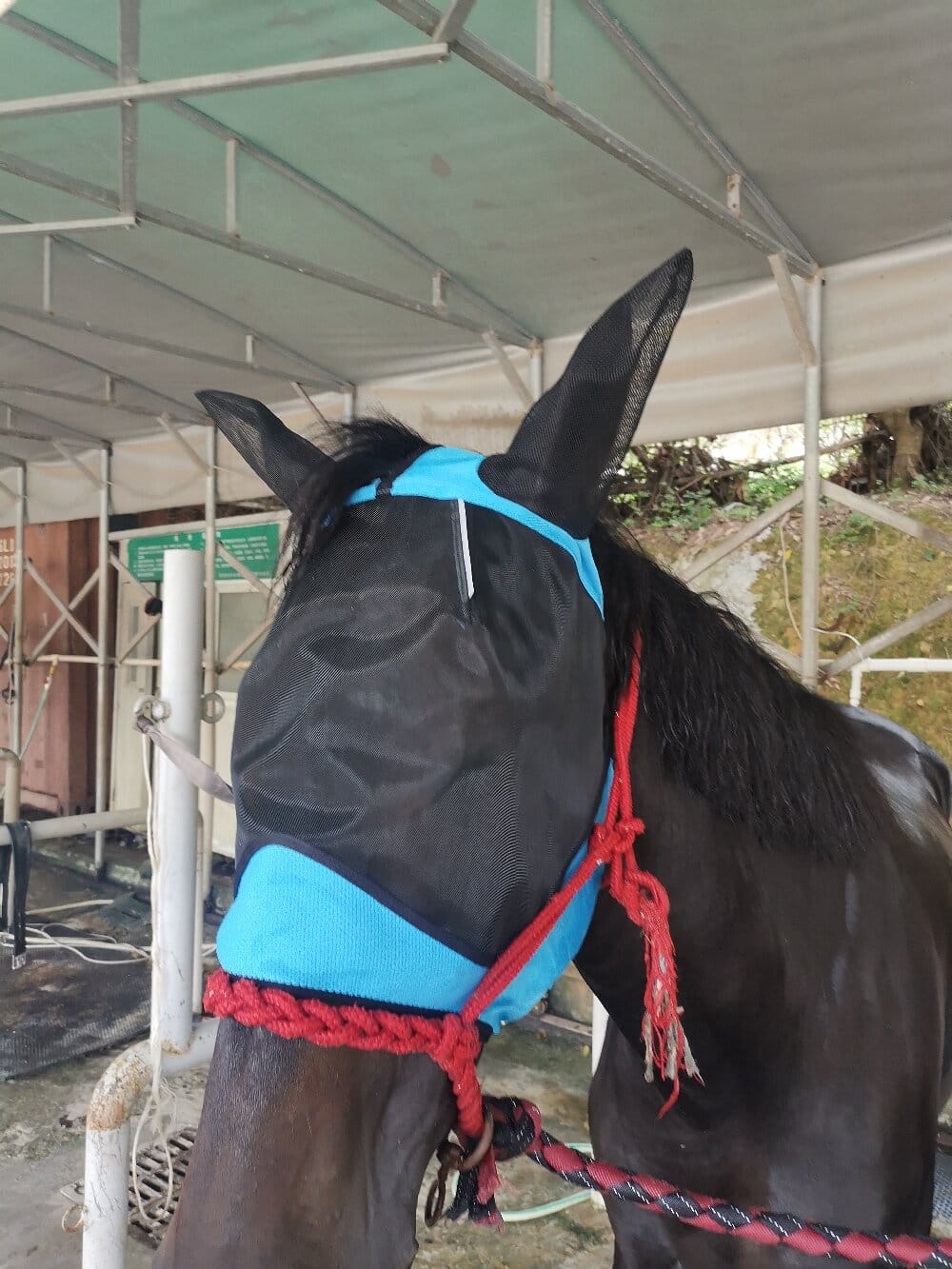
The history of the horse fly mask is closely tied to the long relationship between humans and equines, particularly in agricultural and working contexts. For centuries, horse owners have recognized that flying insects—especially horse flies, stable flies, and face flies—cause irritation, stress, and potential health issues for their animals. Early protective coverings were rudimentary, often fashioned from leather, woven cloth, or netting. Historical accounts from the 18th and 19th centuries describe makeshift face nets used on carriage horses and farm animals, primarily to reduce insect annoyance during long hours in the field or on the road. These early devices were functional rather than refined, but they established the core principle behind the modern horse fly mask: a physical barrier between the animal’s sensitive face and flying pests.
Evolution of the Horse Fly Mask Through the 20th Century
The 20th century brought significant changes to equine management, and with them, advancements in protective gear. As veterinary science developed, researchers began to document the specific harms caused by fly bites—everything from localized swelling and infection to the spread of diseases such as equine infectious anemia. This growing body of knowledge encouraged manufacturers to design purpose-built fly masks rather than relying on improvised solutions.
By the mid-1900s, commercial fly masks began appearing in equestrian catalogs. Early models typically featured mesh fabric with elastic edges, offering basic coverage over the eyes and sometimes the muzzle. Materials were often coarse, and fit was inconsistent, but the concept had clearly taken root. The latter half of the century saw gradual improvements: finer mesh for better visibility, softer binding to reduce rubbing, and adjustable straps for a more secure fit. The introduction of synthetic fabrics, including nylon and polyester mesh, allowed for lightweight, durable masks that could withstand regular use and washing.
Design Innovations and the Modern Horse Fly Mask
In recent decades, the horse fly mask has evolved into a sophisticated piece of equine equipment. Modern designs reflect a deeper understanding of horse anatomy and behavior. Key developments include:
- UV-protective mesh, addressing both insect control and sun protection, particularly for horses with sensitive skin or pale coats.
- Ergonomic shaping around the eyes and ears, reducing pressure points and improving comfort during turnout.
- Fleece-lined edges, which help prevent rubbing along the forehead and jaw.
- Extended nose coverage, offering protection for the muzzle where flies often congregate.
- Secure fastening systems, including hook-and-loop closures and adjustable straps, to keep masks in place during movement.
These refinements reflect a shift from simple pest exclusion toward comprehensive comfort and welfare. Manufacturers also began producing masks in varied sizes and styles, recognizing that a pony and a draft horse have different needs. The market now includes masks for turnout, riding, and veterinary use, demonstrating the versatility that has come to define this product category.
Historical Review of Materials and Welfare Considerations
Historically, the materials used in fly masks have always balanced durability against comfort. Early canvas and leather gave way to synthetic meshes that offer breathability and visibility. This transition was not merely commercial; it reflected a broader ethical shift in animal husbandry. Owners and veterinarians increasingly emphasized that protective equipment should not cause additional stress. Research into equine behavior and skin sensitivity has informed design choices, such as avoiding stiff seams and ensuring that masks do not obstruct peripheral vision. Today, welfare organizations and equestrian bodies often recommend fly masks as part of a responsible insect-management strategy, particularly during peak fly season. The historical trajectory of the horse fly mask thus mirrors wider changes in how society views animal care—from utilitarian necessity to informed, comfort-oriented stewardship.
Summary
From crude cloth nets to carefully engineered mesh coverings, the horse fly mask has a history shaped by practical need, scientific insight, and evolving standards of animal welfare. Its development illustrates how a simple protective tool can adapt over centuries, incorporating better materials, improved fit, and greater attention to the comfort of the horse. For modern owners, understanding this historical context underscores the value of choosing a well-designed mask—one that balances effective insect protection with the animal’s daily well-being.