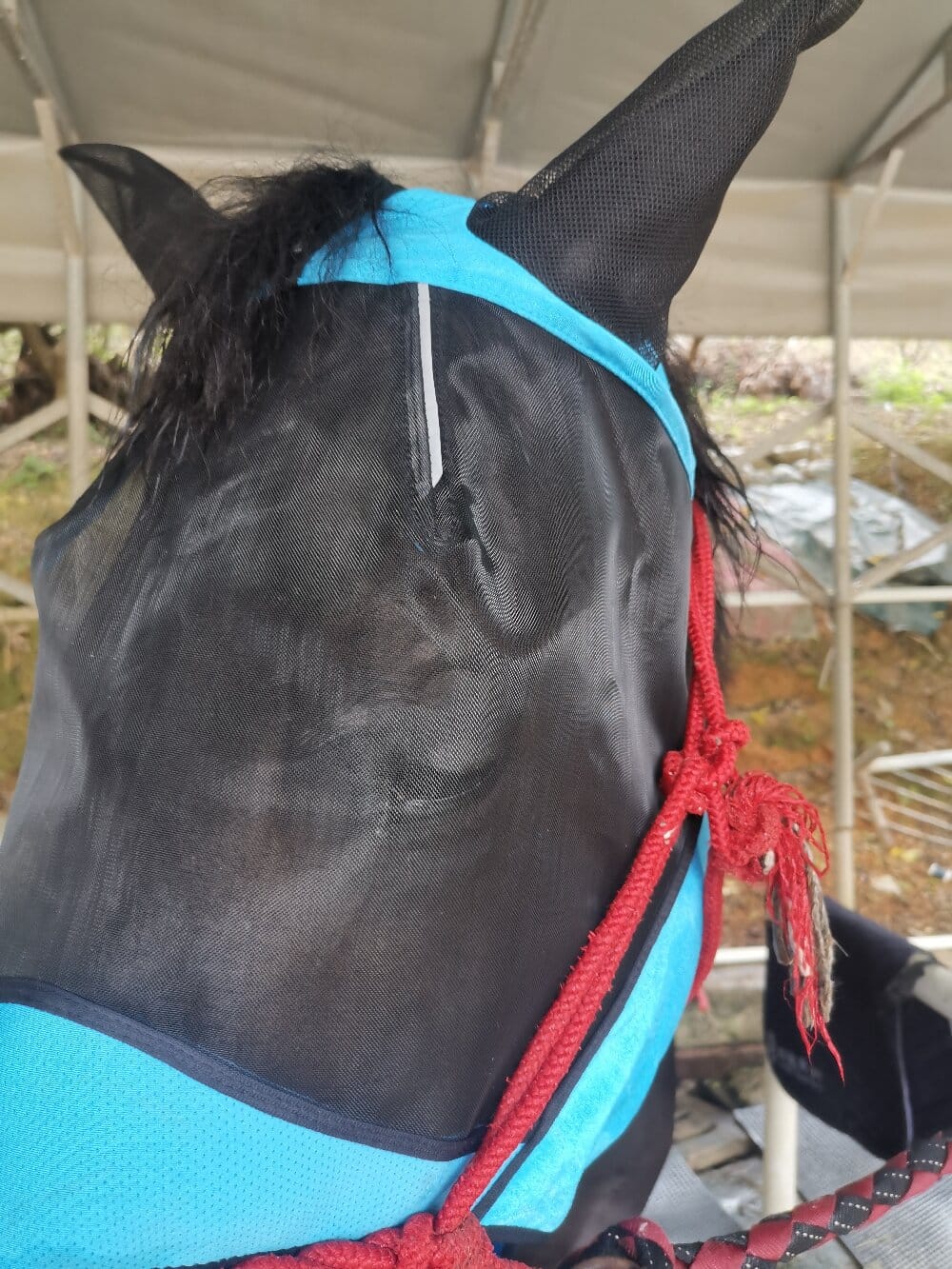
I still remember the first summer I brought my gelding home. Within a week, his eyes were watering, his head was constantly tossing, and the flies seemed to treat him like a personal buffet. That’s when a barn friend handed me a horse fly mask and told me I’d never look back. She was right. After several seasons of trial, error, and a few shredded masks, I’ve learned what actually works, what doesn’t, and how to choose the right fly mask for your horse.
What a Horse Fly Mask Actually Does
At its core, a fly mask is a lightweight mesh shield that covers the horse’s eyes, forehead, and often the ears and nose. It keeps biting insects away from sensitive areas, but the benefits go further than most people expect:
- Blocks flies, gnats, and mosquitoes from the eyes and ears
- Reduces eye irritation and the risk of conjunctivitis
- Shields against dust, debris, and harsh UV rays
- Helps prevent sun bleaching and skin irritation on the face
- Can calm horses that are anxious about head-shy insects
In my experience, the biggest difference shows up in behavior. My horse stopped rubbing his face on fences and became noticeably more relaxed in the pasture.
How I Choose the Right Horse Fly Mask
Not all masks are created equal, and I learned that the hard way. Here’s what I check before buying:
- Fit and adjustability: A mask that shifts will rub and eventually fail. Look for adjustable straps and a soft fleece trim.
- Mesh quality: Fine mesh keeps out tiny gnats, but it must still allow airflow and clear vision.
- Ear and nose coverage: If your horse is bothered by ear flies, choose a mask with ear protection.
- Durability: Cheaper masks tear fast. Reinforced seams and tough binding last longer.
- UV protection: If your horse has a pink muzzle or light-colored face, UV-blocking fabric matters.
Lessons From My First Few Seasons
My first horse fly mask lasted about ten days before my horse removed it in a pasture scuffle. Since then, I’ve picked up a few habits that make a real difference:
- Measure your horse’s head before ordering, and check the sizing chart carefully
- Introduce the mask gradually with treats and short sessions
- Remove it daily to check for rubs and clean the mesh
- Keep a spare mask on hand, because they do get lost or damaged
- Wash masks regularly with mild soap to prevent buildup
I also learned that a fly mask works best as part of a broader fly control plan. Pairing it with fly spray, fans in the barn, and clean paddocks made a bigger difference than any single product.
Is It Worth It?
For me, the answer is an easy yes. A good horse fly mask has become a permanent part of my summer routine, and my horse is calmer, healthier, and far less irritated because of it. If your horse spends time outdoors in fly season, start with a well-fitted mask, check it daily, and replace it when it wears out. Your horse will thank you, even if he doesn’t always keep it on.