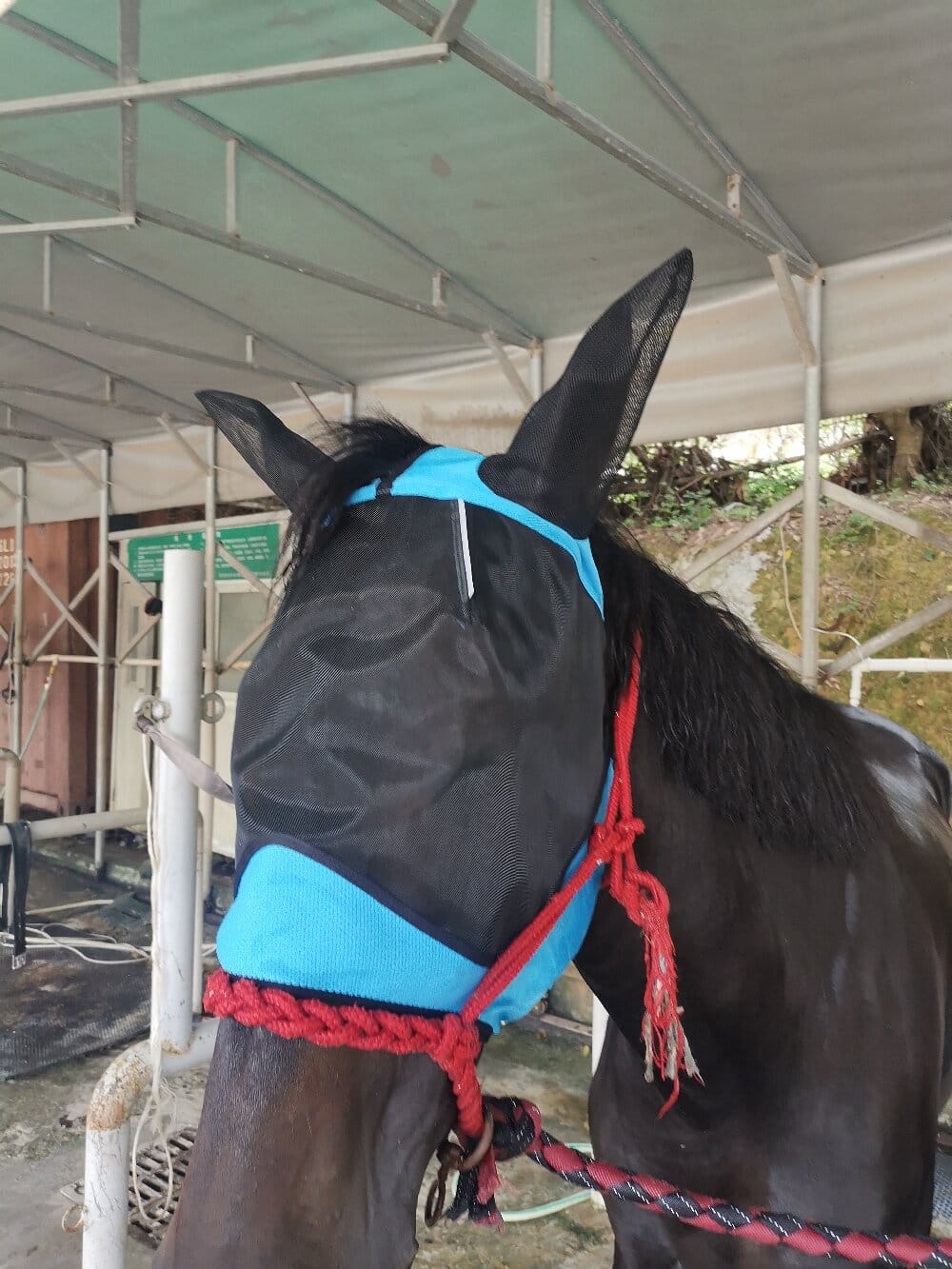
When I first brought my gelding, Cooper, home to a property bordered by wetlands, I underestimated how brutal fly season could be. Within a week, his eyes were watering constantly, his face was dotted with welts, and he had rubbed a bald patch above one eye trying to escape the pests. A barn friend suggested a horse fly mask, and I was skeptical — it looked like a silly piece of mesh. Six weeks later, I’m eating my words. This case study walks through what I learned, what worked, and what I’d tell any horse owner facing the same battle.
Assessing the Problem Before Buying a Horse Fly Mask
Before spending a dime, I spent a few evenings just watching Cooper in the field. The findings were eye-opening:
- Face flies clustered at the corners of his eyes almost constantly from dawn to dusk.
- He stomped and swished his tail nonstop, burning calories and stressing himself out.
- By day three, a small corneal irritation had developed — a genuine veterinary concern, not just cosmetic annoyance.
My vet confirmed that face flies can transmit pinkeye and other infections, so this shifted from a comfort issue to a health issue. That’s when I started researching equine fly masks in earnest, comparing materials, fit, and UV protection.
What I Learned Using a Horse Fly Mask Daily
I settled on a breathable mesh mask with fleece padding at the edges and a built-in nose cover. Here’s how the trial unfolded over the first month:
- Week one: Cooper tested my patience by attempting to rub the mask off on fence posts. A snugger fit solved the problem — lesson learned about proper sizing.
- Week two: The welts around his eyes began healing, and the constant head-tossing stopped. He was visibly calmer in the pasture.
- Week four: I noticed the mask blocked a surprising amount of sunlight, which my barn manager noted can help reduce glare and UV exposure for light-sensitive horses.
I also developed a routine: check the mask daily for debris, rinse it weekly, and have a spare on hand for laundry day. That small habit kept the fly mask effective and prevented rub marks.
Lessons From My Case Study for Other Horse Owners
Not every horse needs the same solution, but a few principles held true in my experience. First, fit matters more than brand — a loose fly mask is a fly mask that ends up in the mud. Second, introduce it gradually; I let Cooper wear his for short periods before turning him out full-time. Third, pair the mask with other fly control methods like fans, fly spray, and manure management, because no single tool does everything.
Would I buy another one? Without hesitation. The reduction in eye irritation alone justified the cost, and the secondary benefit — a calmer, less stressed horse — was the real win.
Final Thoughts on Choosing a Horse Fly Mask
My case study taught me that a well-fitted horse fly mask is one of the simplest, most cost-effective pieces of summer horse care available. It protects sensitive eyes from face flies, reduces UV glare, and cuts down on the stress that comes with constant pest pressure. If your horse spends time near water, woods, or livestock, do what I did: observe the problem, invest in a quality mask, and commit to basic maintenance. Your horse’s eyes — and his attitude — will thank you.