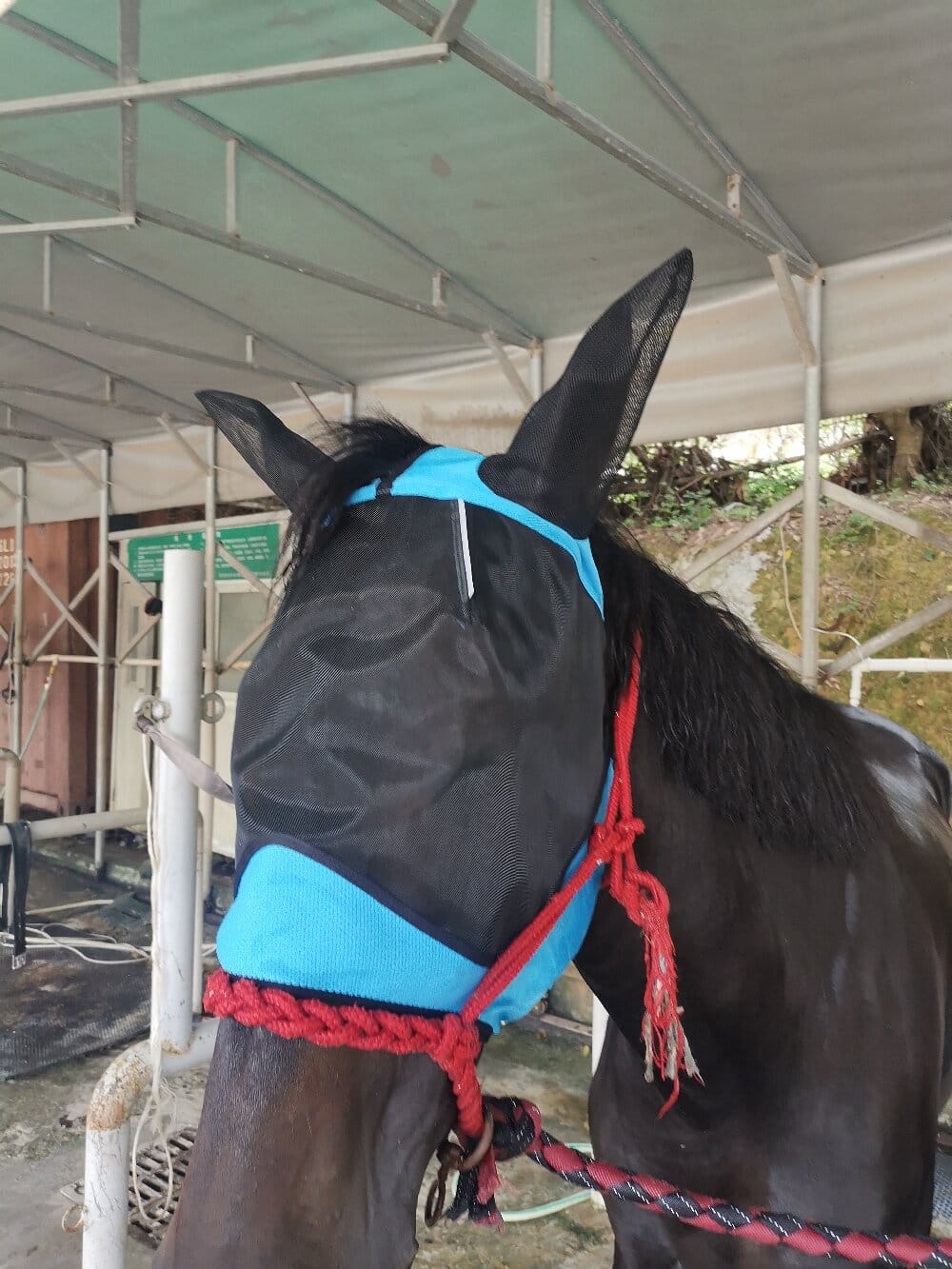
If you have ever watched your horse stamp, swish, and toss their head relentlessly during fly season, you already know how miserable pests can make them. A quality horse fly mask is one of the simplest, most effective solutions to that problem, yet many owners still wonder whether it is worth the hassle. From my own experience in the barn, the answer is a resounding yes — provided you pick the right mask and use it consistently. This guide walks you through the common problems riders face and the practical fixes that actually work.
Problem One: Insects Driving Your Horse Crazy
The most obvious reason to reach for a fly mask is the constant bombardment of flies, gnats, and mosquitoes around the eyes and ears. These pests do more than annoy; they can spread disease and cause painful bites that lead to swelling and infection. A well-fitted mask creates a physical barrier that keeps bugs away from sensitive areas, reducing stress and head-shaking behavior almost immediately.
My advice: look for breathable mesh that blocks even tiny gnats, and make sure the mask covers the ears if your horse is particularly bothered there. A mask that leaves gaps around the edges is basically an open invitation for pests to crawl underneath.
Problem Two: Sunburn and UV Damage on Light-Colored Faces
Horses with pink skin around the muzzle and eyes — think grays, paints, and many ponies — are highly susceptible to sunburn and even squamous cell carcinoma. A horse fly mask with UV-blocking fabric solves this problem neatly. Instead of slathering sunscreen on a reluctant horse every morning, you simply strap on the mask and let it do the work.
When shopping, check the product description for an explicit UV rating. Not every mesh offers meaningful sun protection, and a cheap mask that lets through most rays is little better than nothing.
Problem Three: Poor Fit Leads to Rubs and Removal
Here is where I see the most frustration: owners buy a mask, the horse rubs it off within an hour, and they give up. The real issue is usually fit, not the horse. A mask that is too tight creates pressure points and hair loss; one that is too loose slides around and invites escape attempts.
To solve this, measure your horse’s head carefully and check the manufacturer’s sizing chart. Then look for these features:
- Fleece or soft binding at the edges to prevent rubbing
- Adjustable straps under the jaw and over the poll
- Reinforced seams that hold up to daily turnout
- A cut that leaves room for forelocks without pulling
Give your horse a few short supervised sessions to adjust, and never leave a brand-new mask on overnight until you are confident it fits well.
Problem Four: Masks That Fall Apart Mid-Season
Durability matters, especially if your horse lives out with buddies who like to play. Cheap masks tear at the seams or lose their shape after a few washes. Invest in a reputable brand with strong stitching, and rotate between two masks so one can be cleaned while the other is in use.
Hand washing in mild soap and air drying preserves the mesh and elastic far longer than machine washing. I also keep a spare in the tack box — nothing is worse than finding a shredded mask the morning before a show.
Final Thoughts on Getting the Most from Your Mask
In short, the right horse fly mask addresses four real problems: insect irritation, sun exposure, fit-related rubbing, and premature wear. Choose breathable, UV-protective mesh, measure carefully, and maintain your mask properly. Do that, and your horse will spend fly season far more comfortably — and you will spend far less time chasing bugs away.