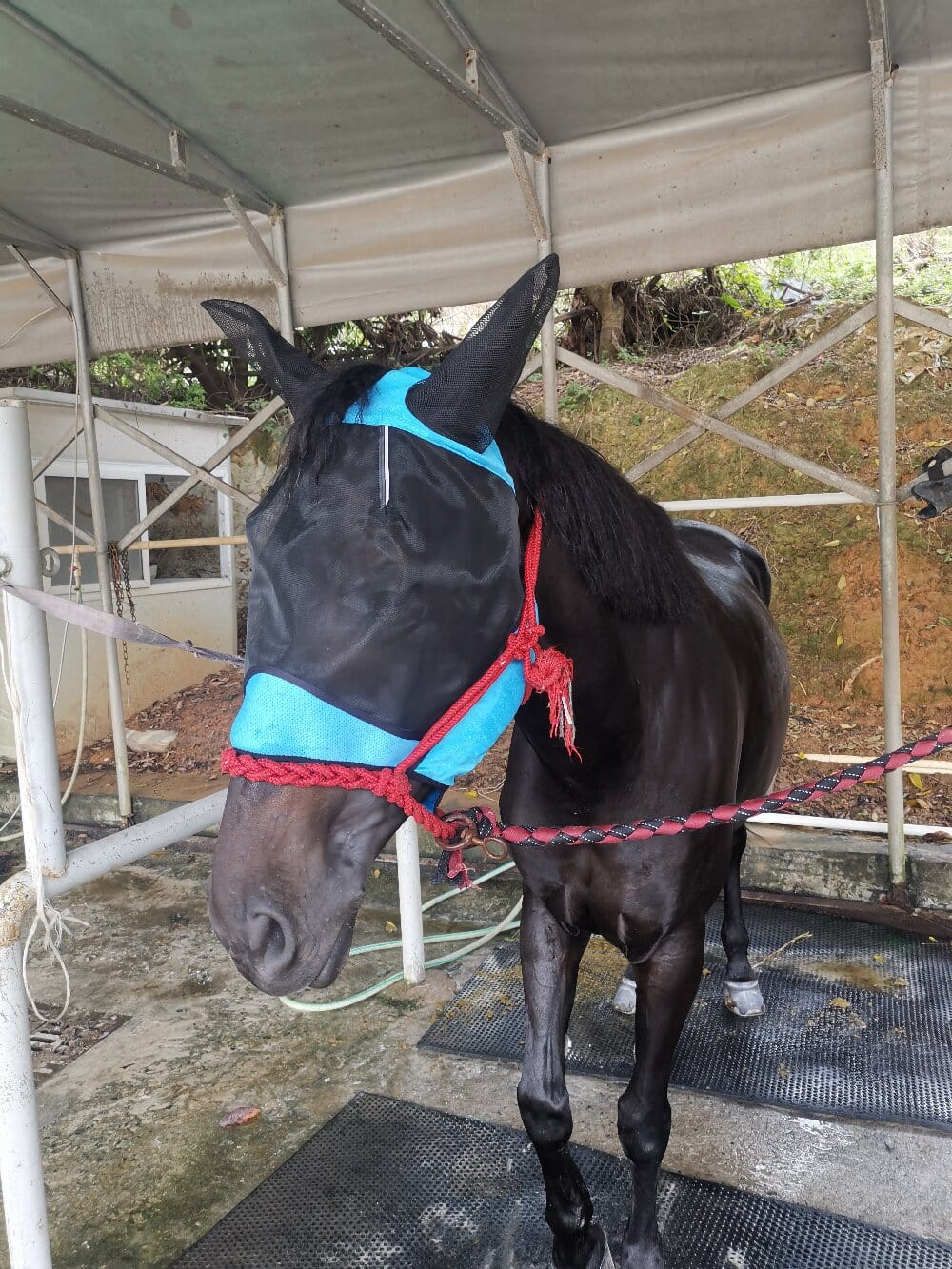
A horse fly mask is a specialized piece of equine equipment designed to provide physical protection for the animal’s face, eyes, and ears against flying insects. From a technical analysis perspective, the efficacy of a fly mask depends on three primary engineering variables: mesh aperture size, ultraviolet (UV) radiation blocking capacity, and ergonomic fit. The mesh density is typically rated in grams per square meter (GSM) or defined by the number of openings per linear inch; these parameters directly influence airflow, visibility, and insect exclusion. Most quality masks utilize a UV-stabilized polyethylene or nylon mesh that blocks between 60% and 80% of UV radiation, thereby reducing the risk of equine photosensitivity reactions and squamous cell carcinoma on unpigmented facial areas.
Structural Components and Fastening Systems
Technical evaluation of the horse fly mask reveals a multi-component assembly. The primary mesh body is usually bound with a soft, elasticized fleece or synthetic trim to prevent abrasion along the horse’s jaw and brow. Fastening systems commonly employ hook-and-loop closures, buckles, or elastic straps. Hook-and-loop tape offers adjustable tension but degrades with repeated washing and debris accumulation; buckles provide more secure retention but require precise sizing to avoid pressure points. Ear coverage is a variable feature—some masks integrate mesh ear covers to deter midges and black flies, while others omit them for increased ventilation. Fleece-lined brow bands and nose pieces distribute pressure across the facial crest, reducing the likelihood of rub lesions during extended wear.
Performance Metrics and Environmental Considerations
When selecting a horse fly mask, objective performance metrics include mesh durability against tensile stress, colorfastness under UV exposure, and resistance to equine behavior such as rubbing against fences. Darker mesh colors generally offer superior glare reduction but absorb more solar heat; lighter colors reflect radiation but may not provide equivalent UV blocking without additional coatings. Field studies indicate that masks with reinforced stitching at stress points (poll strap, throat latch) demonstrate longer service life than single-stitch alternatives. Additionally, the mask’s design must account for eyelash clearance—insufficient standoff distance between mesh and eye can cause corneal irritation. Regular inspection for mesh tears, stretched elastic, and debris accumulation is recommended as part of a routine husbandry protocol.
Comparative Analysis of Horse Fly Mask Configurations
Technical comparison among common horse fly mask configurations yields distinct trade-offs:
- Standard eye-only masks: Minimal coverage, highest ventilation, lowest cost; suitable for horses with no ear sensitivity.
- Full-face masks with ear covers: Broader insect exclusion, moderate ventilation reduction, higher risk of ear rub if sizing is inaccurate.
- Long-nose masks: Extend coverage to the muzzle, beneficial for horses prone to insect bite hypersensitivity on the nose; require precise fit to avoid nostril obstruction.
- UV-blocking specialty masks: Coated mesh with verified UV protection ratings; recommended for horses with pink skin or a history of photodermatitis.
Each configuration should be matched to the specific insect pressure, climate, and behavioral profile of the individual animal. Fit testing—checking for two-finger clearance at the throat and unobstructed eyelash movement—remains the most reliable validation method.
Maintenance Protocols and Longevity Factors
To preserve structural integrity, a horse fly mask should be hand-washed in mild detergent and air-dried, avoiding high-temperature machine drying that degrades elastic fibers and UV coatings. Inspection intervals of every two to three weeks are advisable during peak fly season. Masks showing frayed binding, detached straps, or mesh holes larger than 2 mm should be retired, as compromised mesh negates the protective function.
Conclusion
In summary, the horse fly mask is a technically nuanced product whose effectiveness hinges on mesh specifications, fastening reliability, and fit accuracy. Objective selection criteria—UV rating, GSM, stitching quality, and ear clearance—enable informed purchasing decisions. Proper maintenance and routine inspection extend service life and ensure consistent protection against flying insects and solar radiation.