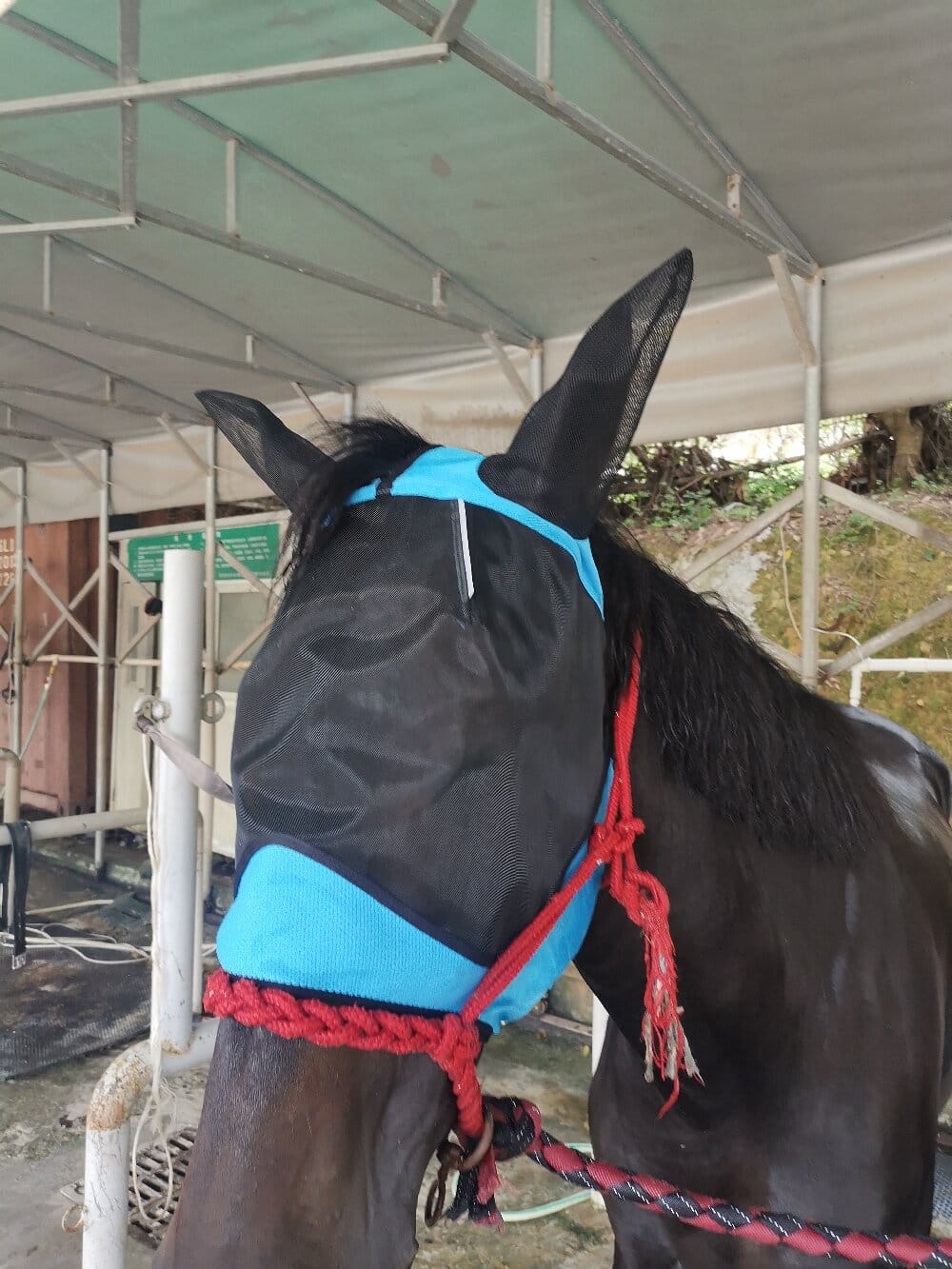
After watching my gelding toss his head for an entire trail ride, I finally admitted that not all horse fly masks are created equal. I have tested everything from bargain-bin nets to premium lycra hoods, and the differences surprised me. A good horse fly mask is not just a piece of mesh; it is a fitted barrier that protects eyes, ears, and sometimes the whole face from flies, dust, and UV rays. In this comparative analysis, I will walk you through what actually matters when you are shopping for one.
Horse Fly Mask Materials: Mesh Versus Lycra
The first comparison I make is always fabric. Standard mesh masks are breathable and block biting insects well, but the weave varies wildly. Cheaper masks use stiff, scratchy mesh that rubs at the brow, while quality options use soft, fine mesh that still keeps out tiny gnats. Lycra or stretch-fabric masks, often called fly hoods, fit snugly and stay in place during turnout, but they can trap heat in summer.
From my experience:
- Fine mesh wins for hot, buggy days and easy visual checks.
- Lycra blends suit horses that rub masks off or need ear coverage.
- Draft and cob owners should look for adjustable straps, because fit matters more than fabric on wider heads.
Fit and Coverage: Ears, Nose, and Forelock
My second comparison focuses on coverage. A basic eye-only mask protects against face flies but leaves ears exposed to gnats. Full-face versions with ear pockets and nose fringes offer more protection, yet they can restrict peripheral vision if poorly cut. I measure the distance from browband to noseband and check whether the mask has a forelock opening, which reduces rubbing and keeps the mask seated.
When I compared a well-known ear-and-nose mask against a simple eye saver, the full coverage model clearly reduced head shaking on pasture turnout. The trade-off was visibility: my horse spooked once at a shadow, so I now prioritize masks with a clear, wide eye opening and reinforced darts that keep mesh away from the lashes.
Durability and Fastenings Under Real Use
Durability is where budget masks lose ground. I have had hook-and-loop straps clog with hay and lose grip within weeks, while buckle and elastic combinations lasted entire seasons. Stitching quality around the ear pockets is another tell: loose threads become holes fast. If your horse is turned out with buddies, consider a mask with a breakaway strap for safety, and compare reinforcement at stress points before buying.
My Comparative Verdict on Choosing a Horse Fly Mask
Weighing protection, comfort, and price, I recommend starting with a fine-mesh, full-coverage mask with adjustable fastenings and a forelock opening, then adding a lycra hood only if your horse needs ear and neck protection. Wash masks weekly in mild soap, check seams for wear, and rotate two masks so one is always dry. Compared side by side, the mid-priced, well-stitched options beat both cheap disposables and overpriced fashion masks. The right horse fly mask should disappear into your routine, keeping your horse comfortable without constant adjustment.