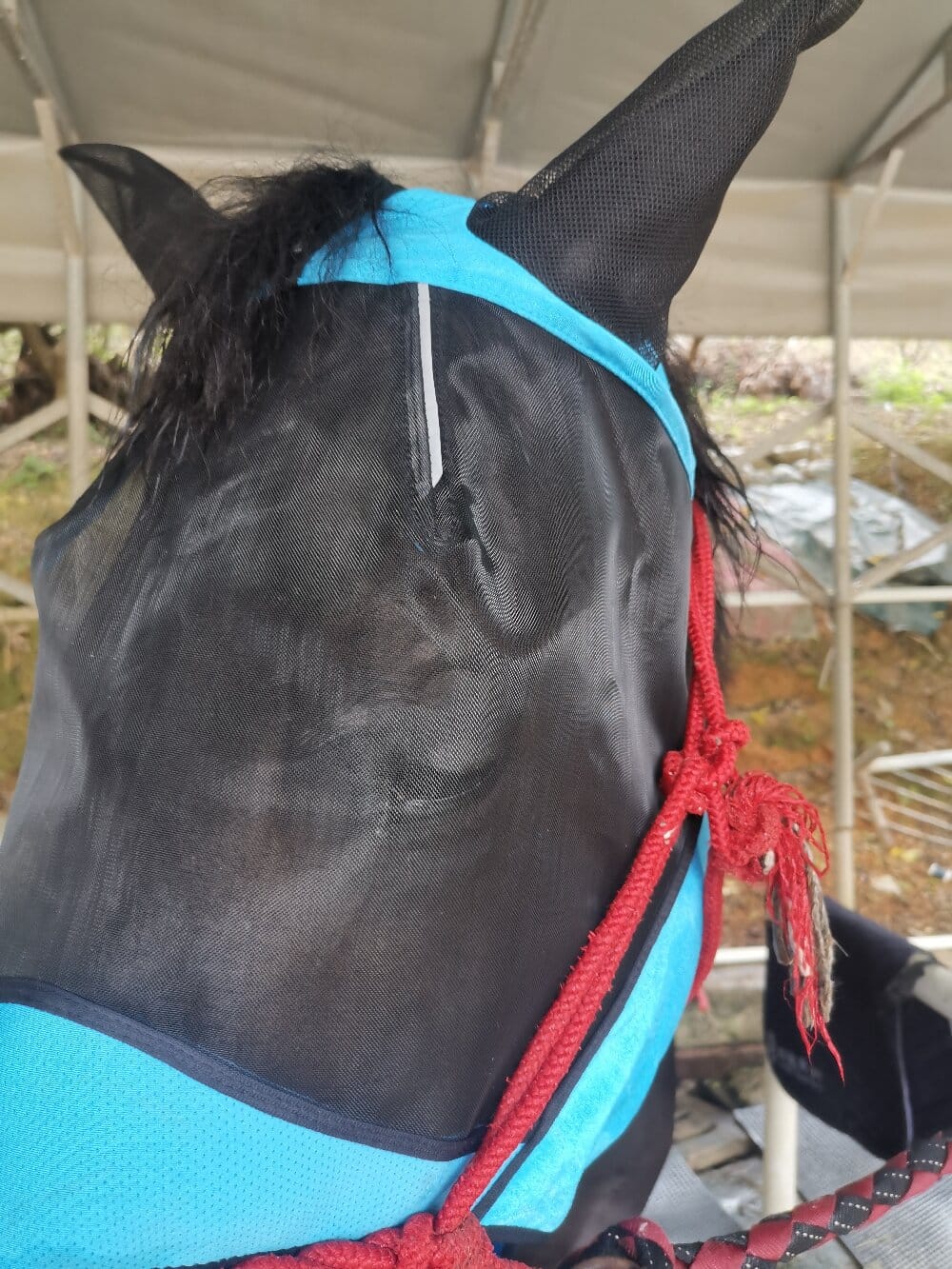
If you have ever watched your horse stomp, swish, and shake its head through an entire summer afternoon, you already know the answer to the fly problem. A quality horse fly mask is one of the simplest, most cost-effective pieces of protective gear you can add to your tack room, yet many owners overlook it until the itching and irritation have already set in. The good news is that solving fly-related discomfort does not require a complicated regimen — it requires the right mask, fitted correctly, and used consistently.
Identifying the Problem: What Flies Really Do to Your Horse
Face flies, stable flies, and gnats target the sensitive areas around a horse’s eyes, ears, and muzzle. The consequences go well beyond a little annoyance. Constant swatting and head tossing can lead to rubbed manes, lost condition, and even injuries from horses striking their heads against fences or stall walls. Face flies also feed around the eyes and can contribute to conjunctivitis and other ocular irritation, while biting midges are notorious for causing sweet itch along the face and ears. Left unmanaged, these pests turn turnout time into a stressful experience and can undermine your horse’s comfort, focus, and overall well-being.
How a Horse Fly Mask Solves the Problem
The principle behind a fly mask is refreshingly straightforward: create a physical barrier that keeps insects away from vulnerable skin without restricting sight or airflow. A well-designed mask blocks flies from landing on the face and eyes, reduces the irritation that triggers head shaking, and lowers the risk of fly-borne eye problems. Unlike topical repellents that need frequent reapplication, a mask provides continuous protection during turnout and can be used alongside sprays, roll-ons, and fly sheets for a complete defense strategy. For horses with pink skin or thin coats, the added UV protection is a welcome bonus that helps prevent sunburn on the muzzle and around the eyes.
Choosing the Right Fly Mask for Your Horse
Not all fly masks are created equal, and the wrong fit can cause more problems than it solves. Keep these factors in mind when shopping:
- Fit and sizing: The mask should sit snugly but not tightly, with no gaps around the eyes where flies can sneak in and no pressure points that rub the forehead or cheekbones.
- Eye clearance: Look for masks with reinforced or domed eye areas so the mesh stays away from the eyelashes and does not chafe.
- Ear and muzzle options: If your horse is troubled by gnats around the ears, choose a model with ear covers; for sun-sensitive muzzles, consider a mask with a nose extension.
- Materials: Breathable mesh is essential for hot weather, while fleece or soft binding at the edges reduces rubbing on sensitive skin.
- Durability and security: Reinforced seams and secure fastenings keep the mask in place through rolling, grazing, and play.
Troubleshooting Common Fly Mask Problems
Even a good mask can present challenges, and solving them early keeps your horse comfortable. If your horse repeatedly removes the mask, check the fit first — a mask that slips or pinches invites rubbing and resistance. Horses turned out in groups may need a sturdier design or a breakaway style for safety. In very hot climates, rotate between masks so one can be washed while the other is worn, and inspect the mesh regularly for tears or stretched openings that let insects through. Introducing the mask gradually, with rewards and short sessions, helps nervous horses accept it without drama.
Practical Tips for Daily Use
Consistency is where the real problem-solving happens. Remove the mask at least once daily to check for rubs, clean the eyes, and make sure no debris is trapped inside. Wash masks regularly with mild soap and warm water, then air dry them to preserve the mesh and binding. During peak fly season, pair the mask with good barn hygiene — removing manure, managing standing water, and using fans in stalls — to reduce the population at its source. Storing the mask in a clean, dry place when not in use extends its life and keeps it ready for the next turnout.
Conclusion
Fly control does not have to be a losing battle. By understanding what insects do to your horse’s face, selecting a well-fitted mask, and maintaining it with a little daily attention, you can eliminate a major source of summer discomfort. A reliable horse fly mask protects the eyes, ears, and muzzle, supports healthy skin, and lets your horse relax and graze in peace — a small investment that delivers comfort season after season.