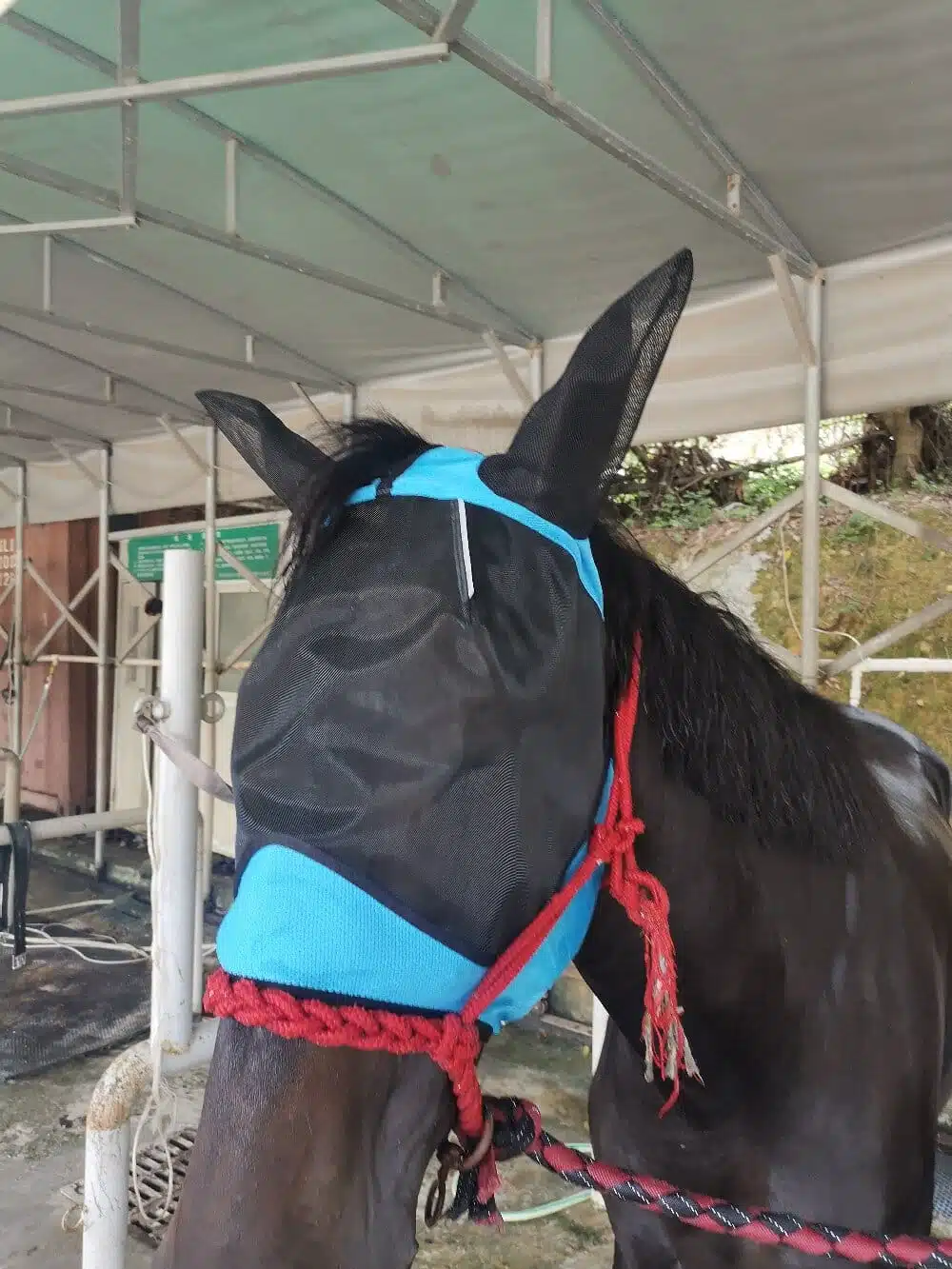

If you have ever watched your horse stamp, toss its head, and rub its face raw against a fence, you already know the misery that flies can cause. A quality horse fly mask is one of the simplest, most effective tools you can add to your daily turnout routine. It creates a physical barrier against biting insects without blocking vision, and it can dramatically reduce the head-shaking, eye irritation, and skin damage that come with fly season. The problem is that not every mask fits every horse or solves every situation, so let’s walk through the common issues and how you can fix them.
Problem: Flies Target the Eyes, Ears, and Muzzle
Face flies and gnats cluster around the eyes and nostrils, while biting midges often attack the ears and delicate skin along the jaw. The result is more than annoyance. Constant irritation can lead to conjunctivitis, corneal ulcers, and rubbed-raw patches that invite infection. Your first step is choosing a mask that covers the areas your horse is actually struggling with. Full-face designs with ear covers protect the most sensitive zones, while simpler eye-only masks suit horses that mainly battle face flies. Match the coverage to the pressure you observe in your pasture rather than buying the first option you see.
Problem: Poor Fit Causes Rubs and Slips
A mask that shifts, twists, or presses on the wrong spots creates new problems instead of solving old ones. To get the fit right, follow these practical checks:
- Measure from the top of the forehead to the end of the muzzle and compare against the manufacturer’s size chart.
- Confirm there is room for the ears to move freely and for the eyes to blink without fabric contact.
- Look for soft binding at the edges and fleece padding at pressure points.
- Test the closure system; hook-and-loop straps are convenient, but buckles or snap closures hold up better for escape artists.
A well-fitted mask stays in place through rolling, grazing, and the occasional gallop, which means fewer replacements and better protection.
Problem: Sun, Dust, and Heat Add to the Misery
Insect pressure rarely travels alone. In bright summer conditions, your horse may also be squinting against UV rays, and dusty paddocks aggravate eyes that are already irritated. Many modern masks combine fly protection with UV-blocking mesh, which is a smart two-in-one solution for horses with sensitive eyes or pale skin around the face. If your climate is hot and humid, prioritize breathable mesh and lighter colors that reflect heat rather than absorb it. Check the mask daily during peak season for trapped debris, and rinse it regularly to prevent dirt buildup from causing rubs.
Problem: One Mask Doesn’t Last Forever
Even the best horse fly mask takes a beating. UV exposure weakens mesh, straps stretch, and pasture buddies love to grab whatever dangles. Extend the life of your investment by rotating between two masks, rinsing them by hand in mild soap, and air-drying them out of direct sun. Inspect seams and closures weekly, and retire any mask with holes over the eyes or frayed edges that could scratch the cornea. Keeping a spare on hand means you are never caught unprotected when one finally gives out.
Solving Fly Season, One Mask at a Time
The right approach comes down to three priorities: cover the areas your horse needs protected, get an accurate fit with soft edges and secure closures, and maintain the mask so it keeps working all season. By treating fly protection as a problem to solve rather than a product to grab, you will reduce irritation, protect sensitive eyes and skin, and keep your horse comfortable through the toughest months of the year. Start with a careful measurement, choose breathable UV-blocking mesh where it helps, and check the fit often. Your horse’s calm, fly-free face will tell you it was worth the effort.