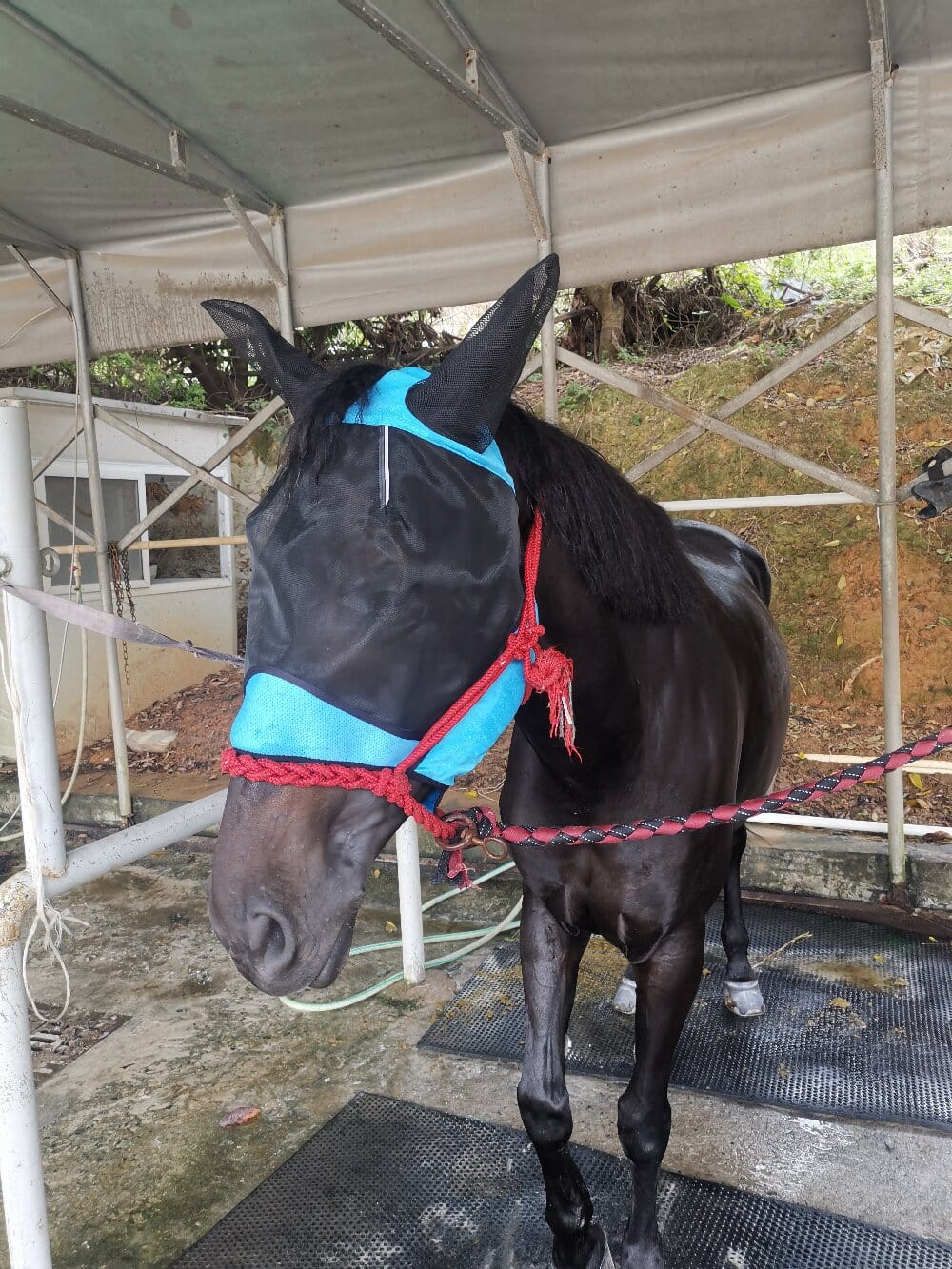
I first encountered the horse fly mask not in a glossy equestrian catalog but hanging from a rusty nail in my grandfather’s barn, stiff with dust and older than I was. To him it was simply a tool, something to keep the flies off his old draft mare during the long Kentucky summers. But the more time I spent around stables, the more I came to understand that this humble piece of mesh and binding sits at the intersection of practicality, regional tradition, and the deep, complicated bond between humans and horses.
The Horse Fly Mask as a Cultural Artifact
In the world of equestrian culture, few objects are as quietly ubiquitous yet as culturally loaded as the fly mask. I’ve noticed that different riding communities treat it in strikingly different ways. Among Western ranchers, a fly mask is often a no-nonsense work item, chosen for durability and cost. In the English show world, by contrast, I’ve seen masks coordinated with saddle pads and trimmed in matching piping, treated almost as fashion accessories. And in the growing natural-horsemanship movement, many owners view a well-fitted fly mask as an act of compassion, a way of letting a horse live more comfortably without constant chemical repellents.
What fascinates me is how these attitudes reveal deeper cultural values. A mask with ear covers speaks to a region’s fly pressure and a handler’s attentiveness. A mask left on year-round hints at a management philosophy, perhaps a belief in minimal intervention or simply the realities of a busy boarding barn. Whenever I walk down a stable aisle and see a row of masks drying on fence posts, I feel like I’m reading a small diary of the people who keep those horses.
Regional Traditions and the Fly Mask
Traveling has taught me that the horse fly mask carries local flavor wherever it goes. In the American South, I’ve met owners who swear by light-colored mesh that reflects the sun and masks with fringe along the brow band to confuse hovering pests. In the United Kingdom, I’ve seen robust, UV-blocking masks designed for horses prone to sweet itch, often paired with fly rugs in a coordinated summer wardrobe. Australian riders, dealing with relentless bush flies, favor full-face designs with nose coverage that would look extreme in a cooler climate.
These regional variations aren’t just about bugs. They reflect climate, husbandry customs, and even local attitudes toward animal welfare. When I asked a breeder in Ireland why she chose a particular style, she laughed and said it was simply what everyone in her village used. That answer, I realized, is culture in its purest form: the quiet authority of shared practice.
Practical Lessons I’ve Learned
Over the years, I’ve picked up habits that make a fly mask work better for both horse and human:
- Measure carefully and check fit often, since a rubbing mask does more harm than good.
- Introduce the mask gradually, letting the horse sniff and inspect it before buckling anything.
- Rotate two or three masks so one can be washed while another is worn.
- Inspect seams and binding regularly, because small tears can become eye hazards.
- Respect the seasons: some horses need protection only at peak fly times, not year-round.
Each of these lessons came from someone willing to share hard-won experience, which is itself a kind of cultural inheritance passed down barn by barn.
A Summary of What the Mask Means to Me
To me, the horse fly mask is far more than protective gear. It is a small object that carries the fingerprints of regional tradition, individual philosophy, and quiet daily care. Understanding it through a cultural lens has changed how I see every stable I visit, and it reminds me that even the most ordinary tack can tell a story worth listening to.