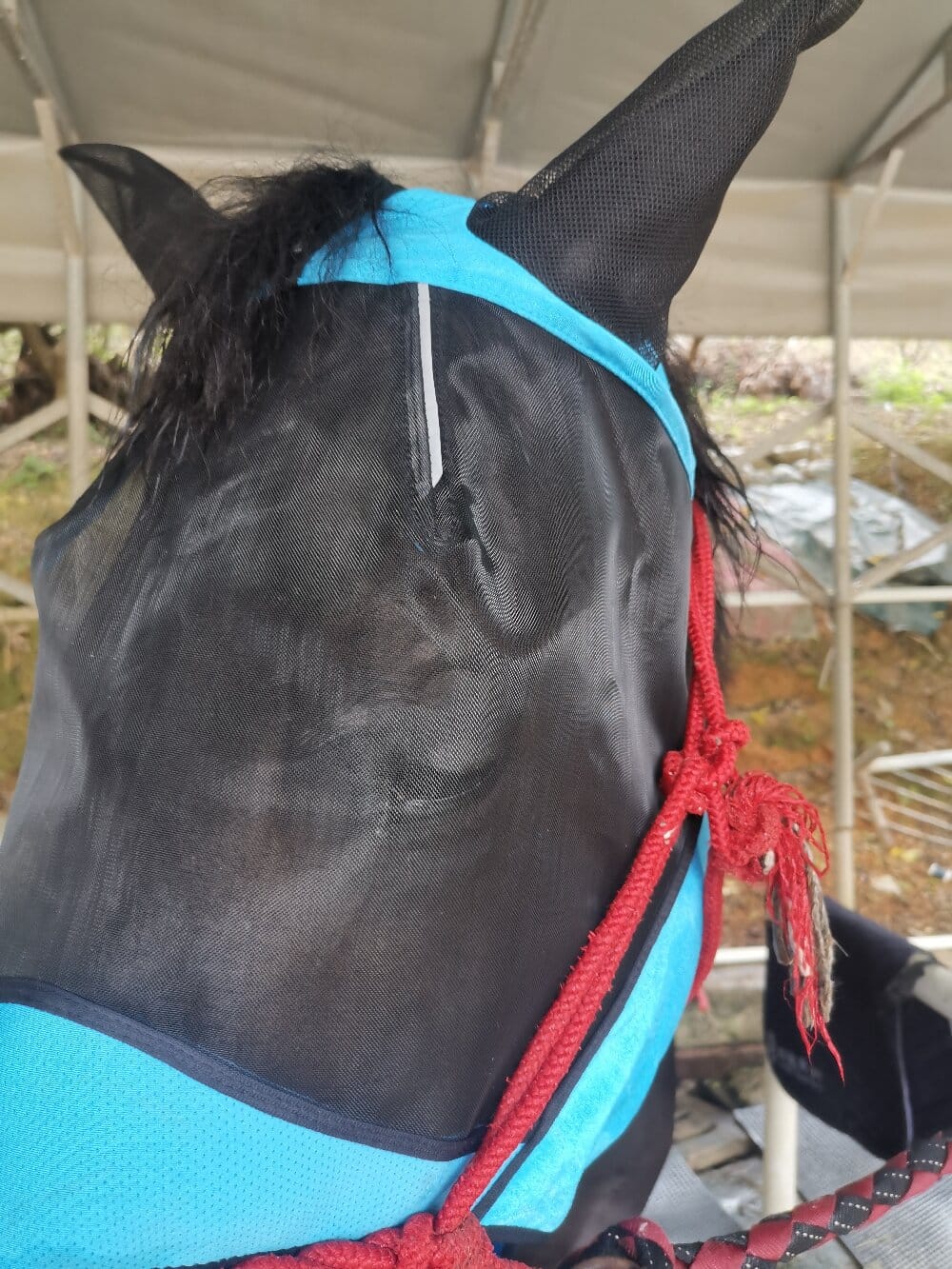
If you have ever watched your horse stamp, toss its head, or rub its face raw against a fence, you already know how relentless flies can be. A quality horse fly mask is one of the simplest, most effective tools you can add to your daily turnout routine. It creates a physical barrier that keeps biting insects away from your horse’s eyes, ears, and muzzle—areas that are difficult to protect with sprays alone. The result is a calmer, more comfortable horse and a lower risk of eye injuries and skin irritation.
Identify the Problem Before You Buy a Horse Fly Mask
Not every horse faces the same pests or pressures. Before you shop, take a moment to observe your horse during turnout and work out exactly what you are dealing with:
- Head-shaking and face rubbing: Often a sign of face flies or gnats attacking the eyes and ears.
- Watery or swollen eyes: Could indicate irritation that a fly mask with eye coverage can help prevent.
- Sores on the muzzle or ears: Biting midges tend to target these soft areas, so look for masks with extended nose or ear protection.
- Escape artists: If your horse removes every mask you try, fit and fastening style matter as much as coverage.
Matching the mask to the actual problem saves you money and keeps your horse comfortable.
Match the Horse Fly Mask to Your Horse’s Needs
Once you understand the problem, choosing becomes much easier. Consider these practical factors:
- Coverage: Standard masks protect the eyes and forehead. If midges are the issue, choose a model with ear covers and a nose extension.
- Fit: The mask should sit clear of the eyelashes and allow full vision. Measure from under the jaw to just above the nostrils, and check the sizing chart before ordering.
- Fastenings: Hook-and-loop straps are quick and adjustable, while buckle or clip systems can be more secure for horses that like to rub masks off.
- Material: Breathable mesh keeps air flowing in hot weather, while sturdier webbing resists wear from playful pasture mates.
- UV protection: Many fly masks also block harmful sunlight, which is a bonus for horses with pink skin or photosensitivity.
Get the Fit Right and Keep It Working
A fly mask only solves the problem if it stays on and stays comfortable. Follow these habits to get the most from your purchase:
- Introduce the mask gradually, letting your horse wear it for short periods before full-day turnout.
- Check underneath the mask daily for rubs, dirt, and trapped debris, especially along the edges and straps.
- Rinse or hand-wash the mask regularly according to the manufacturer’s instructions to remove sweat and grime.
- Inspect straps and mesh for tears, and replace worn masks before they fail mid-season.
- Keep a spare on hand so one can be cleaned while the other is in use.
Solve Fly Season for Good
A horse fly mask is not a luxury—it is a practical, everyday defense against the pests that cause head-shaking, eye irritation, and stress. By identifying the specific problem, choosing the right coverage and fit, and maintaining the mask properly, you can protect your horse’s sensitive face all season long. Start with a well-fitted, breathable mask, check it daily, and enjoy a happier, healthier horse that spends less time fighting flies and more time grazing in peace.