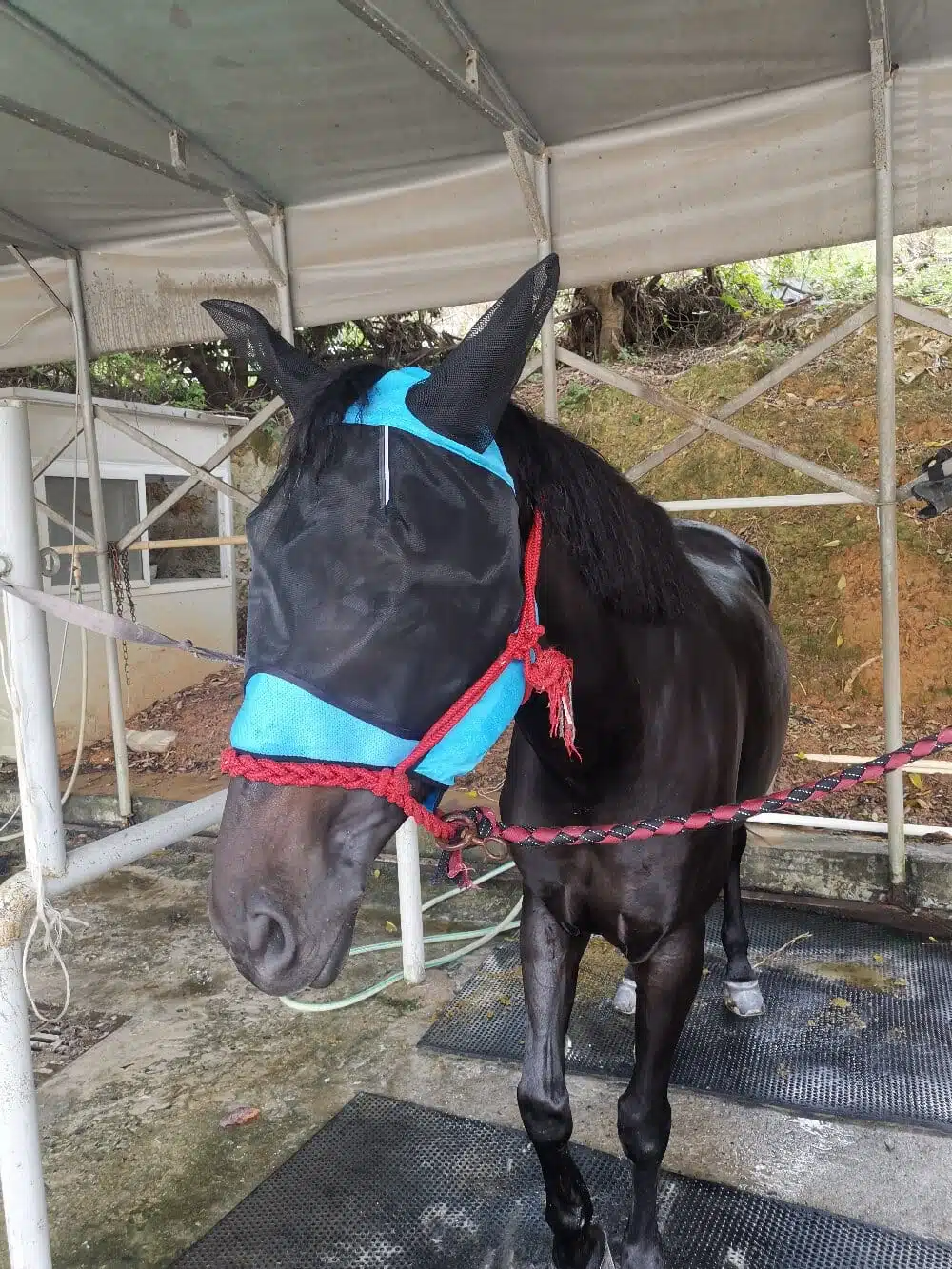

From a methodology standpoint, a horse fly mask is best understood as a physical barrier system rather than a simple piece of tack. Its job is to interrupt the sequence by which flying insects locate, land on, and irritate a horse’s eyes, ears, and face. Rather than repelling pests chemically, the mask relies on mesh density, fit, and coverage to break the insect’s approach path. Evaluated across disciplines—veterinary, behavioral, and practical stable management—the fly mask emerges as a low-risk, high-utility tool when selected and maintained correctly.
A Methodology for Choosing the Right Horse Fly Mask
A structured selection process prevents most common failures, from rubbed hair to masks that slip during turnout. Consider these steps as a repeatable evaluation framework:
- Assess the threat profile. Identify which insects are prevalent—stable flies, face flies, gnats, or horse flies—and whether the horse has a history of uveitis, photosensitivity, or head-shaking behavior.
- Measure fit precisely. Fit should be snug but never compressive. Measure from poll to muzzle and check clearance around the eyes and ear openings.
- Evaluate mesh and materials. Finer mesh blocks smaller insects but reduces airflow and visibility; UV-blocking fabrics add value for sensitive horses. Look for soft binding at pressure points.
- Test attachment security. Check hook-and-loop closures, throat straps, and ear coverage for security during rolling, grazing, and turnout.
- Establish a maintenance schedule. Daily inspection for debris, twice-weekly cleaning, and seasonal replacement of worn straps are part of the method, not an afterthought.
Multiple Perspectives on Fly Mask Use
The veterinary view emphasizes disease prevention. Masks reduce exposure to face flies that contribute to eye infections and help shield horses with recurrent uveitis or squamous cell carcinoma risk from UV light. Vets generally support masks but caution against ill-fitting designs that trap heat or rub the cornea area.
The behavioral view focuses on welfare. A well-fitted mask lowers head-shaking, stomping, and stress behaviors during peak fly season, improving grazing time and rest quality. Behavioral specialists note that habituation matters—introduce the mask gradually, especially for young or sensitive horses.
The management perspective weighs practicality. Barn managers value masks that survive turnout, dry quickly, and can be rotated between horses. They also emphasize checking masks daily, since a shifted mask can do more harm than none at all.
The equine welfare and owner view balances cost against benefit. Owners often pair masks with fly sheets, repellents, and stable hygiene for a layered strategy, recognizing that no single product solves fly pressure alone.
Common Pitfalls and How to Avoid Them
Even a good horse fly mask underperforms when misused. Watch for these issues:
- Masks left on 24/7 without inspection, leading to rubbed skin or trapped debris.
- Improper sizing that allows the mask to rotate over the eyes.
- Ignoring ear coverage when gnats are the primary pest.
- Failing to replace stretched straps, which compromises the barrier entirely.
- Using a dirty mask that accumulates sweat, dust, and bacteria.
Conclusion
Approached methodically, the horse fly mask is a practical, evidence-aligned component of equine fly control. Selecting for fit, mesh quality, and durability—then maintaining it consistently—delivers the greatest protection. Viewed through veterinary, behavioral, and management lenses alike, the mask works best as part of a layered strategy that includes hygiene, turnout timing, and complementary fly protection.