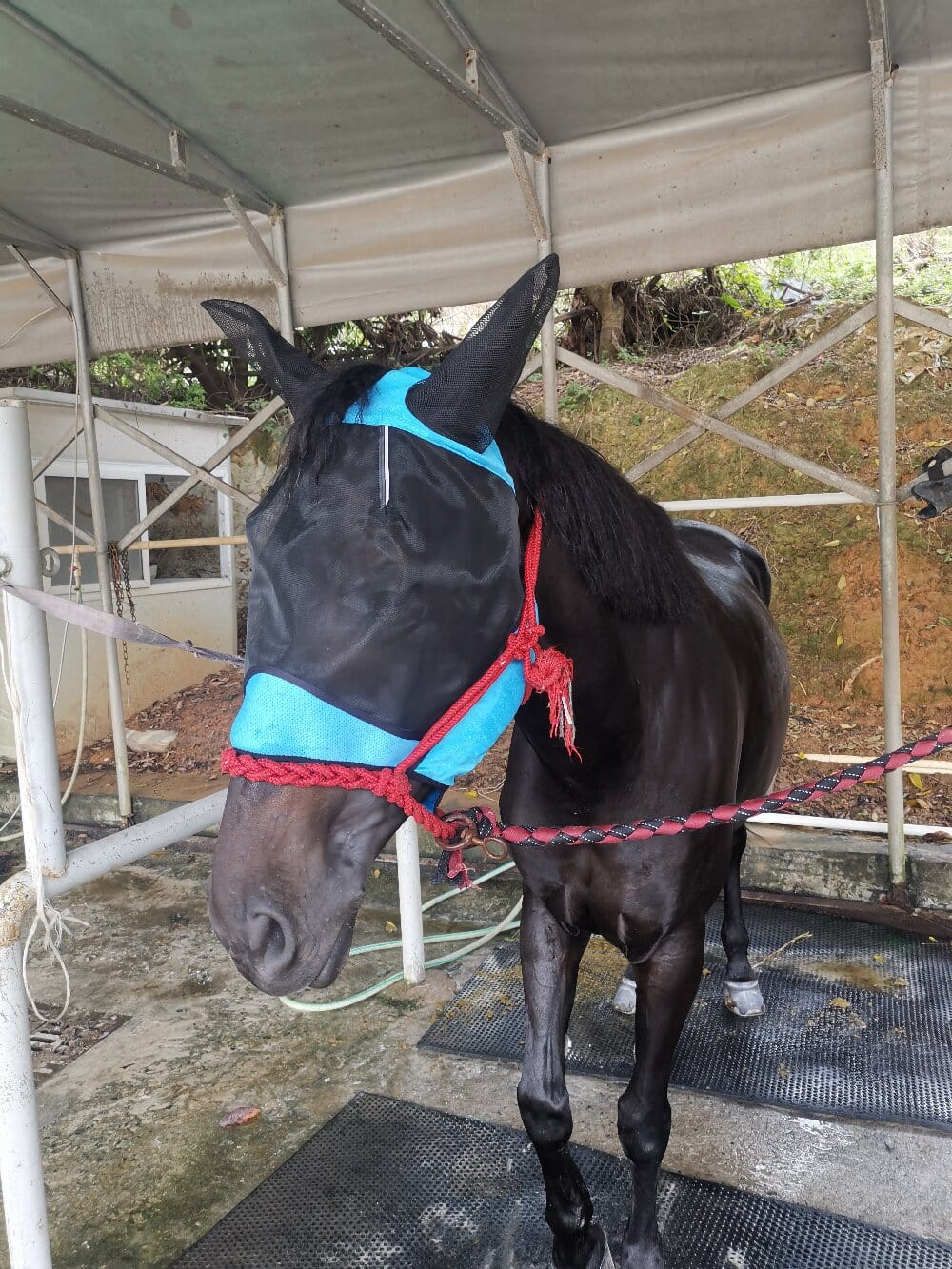
I still remember the first summer I brought my gelding home. Within a week, his eyes were streaming, his face was covered in welts, and he was stomping constantly at the flies buzzing around his head. That’s when a barn friend handed me a horse fly mask and said, “Try this before you buy another spray.” I was skeptical at first, but within days the difference was obvious. If you’re dealing with the same battle against flies, gnats, and summer pests, this practical guide will walk you through everything I’ve learned about choosing, fitting, and maintaining a fly mask so your horse stays comfortable all season long.
What a Horse Fly Mask Actually Does
A fly mask is a lightweight mesh cover that fits over your horse’s face, usually secured with straps around the poll and sometimes under the jaw. The mesh keeps biting insects away from the eyes, ears, and muzzle while still allowing full vision and airflow. I’ve found that the benefits go beyond simple pest protection:
- Reduces eye irritation and watery discharge caused by flies and dust
- Helps prevent conjunctivitis and other eye issues that flare up in summer
- Protects against sunburn on pink-skinned areas of the face
- Can cut down on head-shaking behavior tied to bug pressure
- Keeps small wounds and fly bites on the face covered while healing
Some masks also include ear covers or nose fringes, which I’ve found especially useful for horses bothered by gnats around the muzzle.
How I Choose the Right Fly Mask for My Horse
Not all masks are created equal, and I learned that the hard way after buying a cheap one that rubbed my horse’s face raw within two days. Here’s the checklist I now follow before purchasing:
- Measure first. Use a soft tape to measure from under the jaw, over the forehead, and around the muzzle. Compare against the manufacturer’s size chart rather than guessing.
- Check the mesh quality. Fine mesh blocks tiny gnats, while a slightly more open weave offers better airflow in extreme heat. I keep one of each for different conditions.
- Look at the binding. Soft, fleece-lined edges around the noseband and poll prevent rubbing, which is my number one concern.
- Consider ear protection. Removable ear covers are handy because you can swap them out depending on the bug population.
- Think about visibility. A well-designed horse fly mask should let your horse see clearly in all directions, including peripheral vision. Avoid masks that sit too close to the eyes.
Fitting Tips I Wish I’d Known Sooner
Even a high-quality mask will cause problems if it doesn’t fit properly. I always check for two fingers’ width of clearance between the mesh and the eyes, and I make sure the straps aren’t so tight that they leave indentations. During the first few days, I inspect my horse’s face daily for any sign of rubbing, especially behind the ears and along the cheekbones. I also introduce the mask gradually, letting him wear it during turnout first before leaving it on overnight.
Keeping Your Fly Mask Clean and Durable
I rinse my masks by hand every week or so with mild soap and warm water, then let them air dry completely before putting them back on. Dirt and sweat build up quickly in summer and can irritate the skin, so regular cleaning matters as much as the initial purchase. I also check the straps and mesh for tears each time I clean, and I keep a spare mask on hand so there’s never a gap in protection while one is drying.
Final Thoughts
A good horse fly mask has become a non-negotiable part of my summer routine. Measure carefully, prioritize soft edges and clear visibility, fit it correctly, and keep it clean, and you’ll have a happy, pest-free horse. For the modest cost, it’s one of the most effective comfort upgrades you can make during fly season.