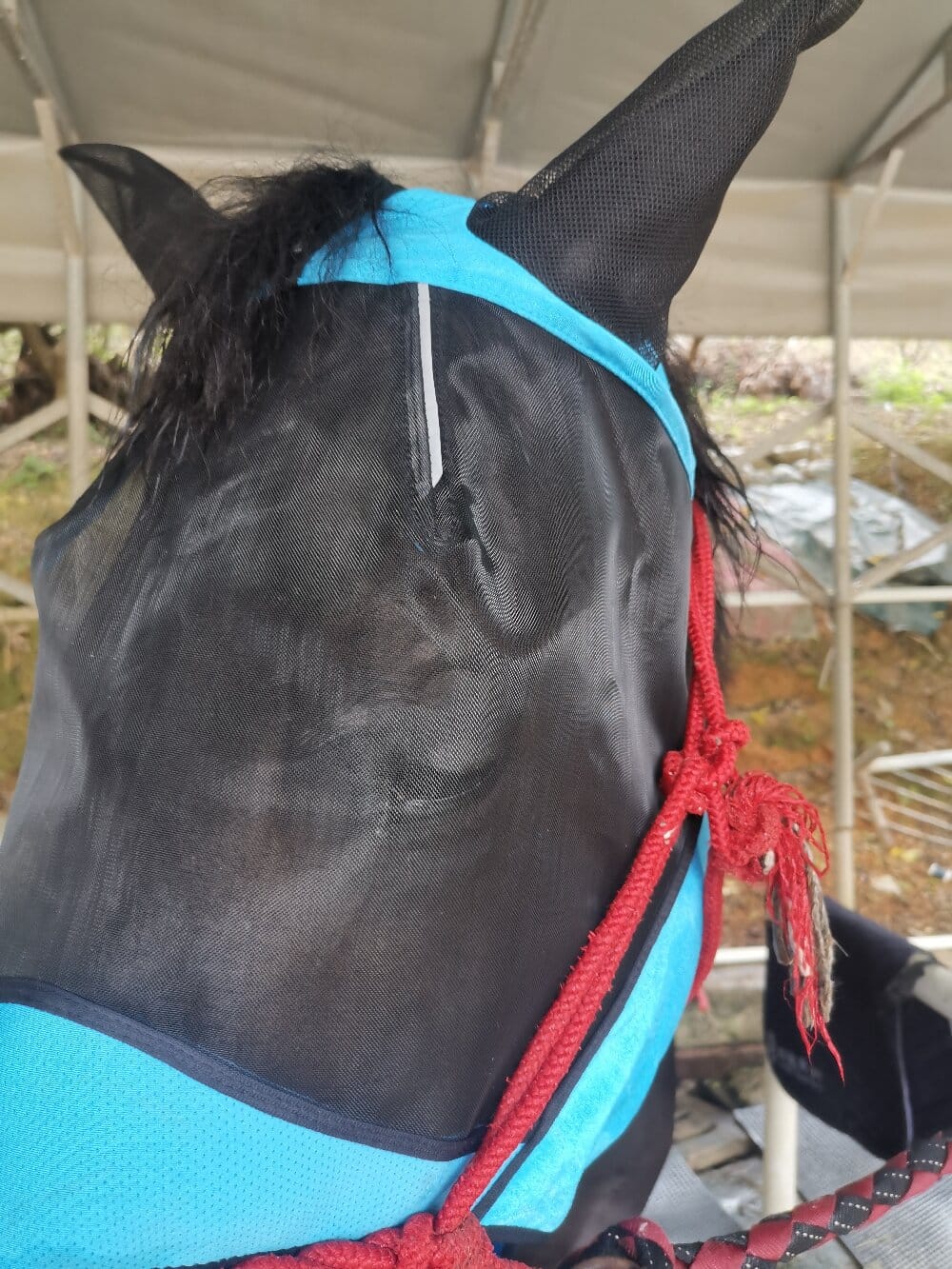
If you have ever watched your horse stomp, toss its head, or rub its face against a fence, you already know the frustration flies cause. A horse fly mask is one of the simplest tools in your tack room, yet the difference between an effective mask and a useless one comes down to measurable details. By looking at the numbers behind fit, coverage, materials, and durability, you can stop guessing and start choosing a mask that genuinely protects your horse season after season.
Reading the Numbers Behind Horse Fly Mask Protection
Manufacturers publish data for a reason, and interpreting it correctly gives you a real advantage. When you compare products, pay attention to these figures:
- UV protection rating: Many masks block 60–90% of UV rays. If your horse has a pink muzzle or thin skin, aim for the higher end of that range.
- Mesh density: Finer mesh keeps out smaller biting insects but reduces airflow. Look for breathable weave specs rather than assuming tighter is always better.
- Coverage area: Masks with ear covers or nose extensions add protection, but they also change sizing. Measure your horse’s head before trusting a label.
- Strap count and placement: Two-point and three-point systems distribute pressure differently. More adjustment points usually mean a more secure fit.
These data points translate directly into comfort. A mask that scores well on paper but slips sideways within an hour offers little real protection.
What Fit Statistics Tell You About Comfort
Fit is where data interpretation becomes practical. Studies of equine head measurements show significant variation between breeds, so a single size chart rarely fits every horse. When you assess a fly mask for horses, check the manufacturer’s sizing ranges against actual measurements of your horse’s forehead, jaw circumference, and muzzle length. A mask that sits too tight can rub the face; one that sits too loose lets insects crawl underneath. Ideally, you should be able to fit two fingers under the straps without resistance. If a product page lists sizing by weight rather than head dimensions, treat that information with caution, because weight is a poor predictor of head shape.
Durability Data: How Long Should a Mask Last?
Cost per season is a useful metric that many owners overlook. A cheap mask replaced three times a year often costs more than a durable one that survives a full grazing season. When you read reviews or product specs, look for:
- Material tensile strength or denier ratings for the mesh.
- Warranty length, which signals the maker’s confidence.
- Replacement part availability, such as spare straps.
- Reported failure points, like stitching at the ear openings.
Interpreting this information helps you predict longevity instead of discovering it after the first wash.
Turning Observation Into Better Decisions
Your own records are data too. Note how often your horse rubs its mask off, whether insects gather at the edges, and how the fabric holds up after cleaning. After a few weeks, patterns emerge that no product listing can capture. Combine those observations with the specifications above, and you gain a clear picture of what works for your horse specifically.
Conclusion
Choosing the right horse fly mask is not about luck; it is about reading specifications, measuring accurately, and tracking results. Focus on UV ratings, mesh density, fit dimensions, and durability indicators, then let your own observations refine the picture. With that data-driven approach, you will keep your horse comfortable and bite-free throughout fly season.