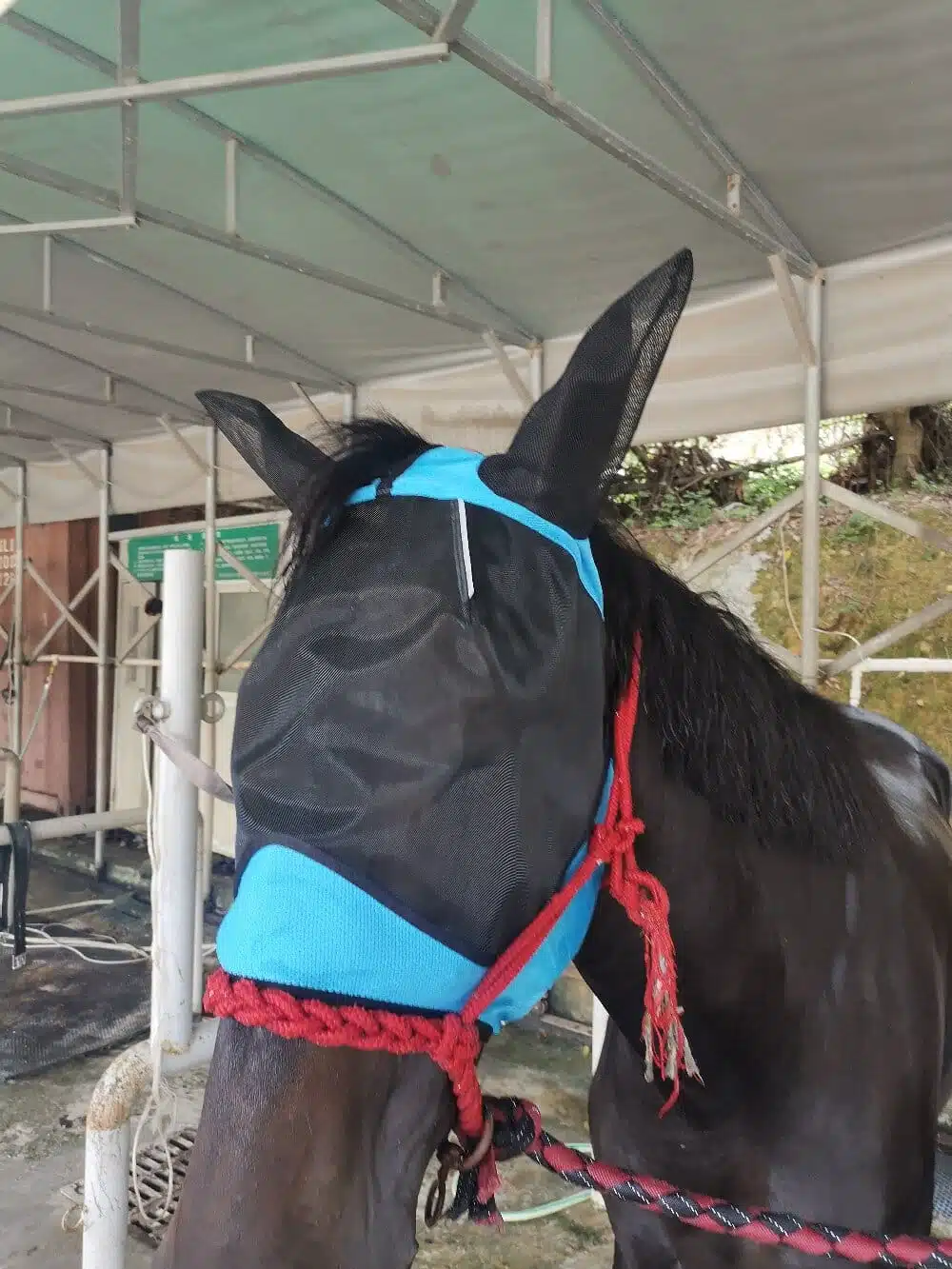

A horse fly mask serves as a physical barrier between the equine eye area and flying insects, and its effectiveness depends on several engineered characteristics rather than simple fabric coverage. From a technical standpoint, the device must balance visibility, ventilation, and durability while maintaining a secure fit that resists displacement during movement. The typical construction involves a mesh panel density measured in holes per square inch, with finer weaves blocking smaller insects such as gnats and midges, while coarser weaves prioritize airflow. Understanding these variables helps buyers evaluate products objectively rather than relying on marketing claims alone.
Mesh Density and Insect Exclusion Performance
The primary performance metric for any fly mask is mesh density. Products are commonly specified in grams per square meter or by aperture size. A finer mesh, generally in the range of 300 to 400 holes per square inch, excludes smaller biting insects but reduces light transmission and airflow. Coarser mesh improves ventilation and visibility but may allow small midges to pass through. Technically, the optimal specification depends on the target pest profile in a given environment. In regions with high gnat pressure, finer mesh is the defensible choice; in hotter climates with larger flies, a coarser weave reduces heat accumulation under the mask.
Fit Geometry, Retention Systems, and Ear Clearance
Fit is a mechanical variable that directly affects both protection and welfare. A well-designed horse fly mask uses elasticized binding at the edges, adjustable throat straps, and fleece padding at pressure points to distribute contact forces. Key fit parameters include:
- Eye clearance: the mesh should stand off the orbital area to prevent corneal contact and eyelash abrasion.
- Ear accommodation: masks with ear pockets must align with the ear base without folding or pinching.
- Retention: double hook-and-loop closures or buckle systems reduce slippage compared with single-strap designs.
Improper fit is the most common cause of field failure, leading to rub lesions or mask loss, so adjustment range should be treated as a core specification.
Material Durability and UV Considerations
Fabric selection determines service life. UV-stabilized polyester mesh resists degradation from sunlight and repeated washing, while non-stabilized synthetics embrittle and tear within a season. Stitching quality, binding tape width, and the tensile strength of elastic components are reliable indicators of build quality. From a maintenance perspective, masks should be hand-washed in mild detergent and air-dried to preserve mesh integrity and elastic recovery. Products with reinforced nose and forehead panels generally show better resistance to abrasion against pasture surfaces and fencing.
Evaluating a Horse Fly Mask Before Purchase
A systematic evaluation reduces the risk of poor selection. Buyers should verify mesh aperture relative to local insect populations, confirm the adjustment range matches the horse’s head measurements, and inspect edge binding and strap hardware for finish quality. Checking whether the design allows for a browband or halter to be worn underneath is also practical, as compatibility affects daily use. Finally, a sizing trial during turnout, observed for the first hour, provides objective evidence of retention and comfort that specifications alone cannot guarantee.
Conclusion
Assessing a horse fly mask through technical criteria—mesh density, fit geometry, retention hardware, and material durability—yields more reliable purchasing decisions than subjective impressions. Matching these specifications to the local pest profile and the individual horse’s head shape ensures effective insect exclusion, adequate ventilation, and sustained comfort throughout the season.