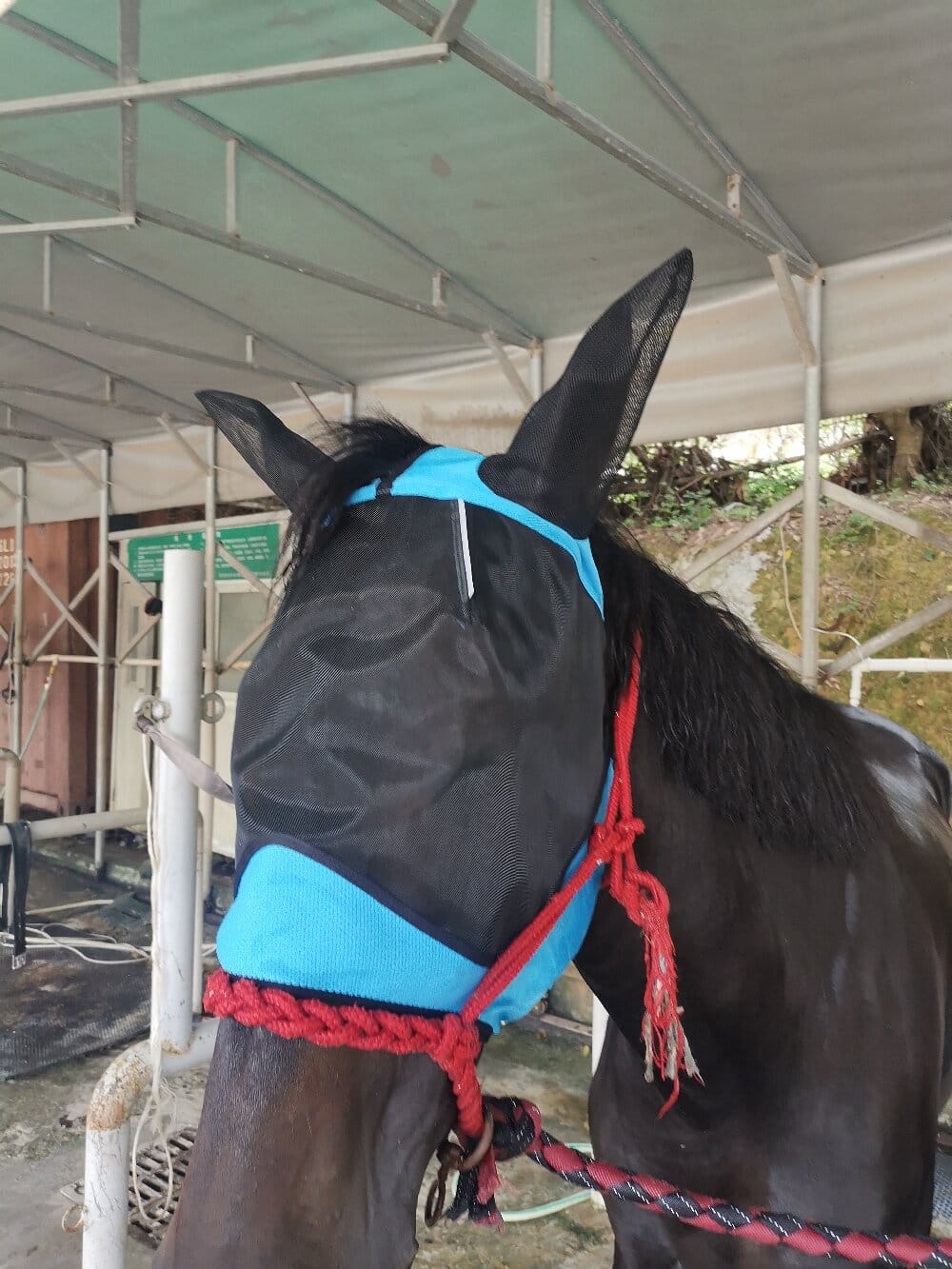

When I first started shopping for a horse fly mask, I treated it like any other tack purchase—grab whatever looked sturdy and move on. After a few seasons of rubbed forelocks, fogged eyes, and masks that vanished somewhere in a pasture, I changed my approach. Now I assess every horse fly mask the way an engineer reads a datasheet: by breaking it down into measurable components, comparing tolerances, and stress-testing the design against real conditions. This technical lens has saved me money and, more importantly, kept my horses comfortable through fly season.
Material Composition and UV Performance Metrics
The first specification I check is the fabric itself. Most quality masks use a woven UV-blocking mesh, and I look for a stated UV protection rating—typically 60% to 90% blockage depending on weave density. A tighter weave blocks more sunlight and biting insects, but it also traps heat. I balance these variables by choosing a mesh with visible airflow when I hold it up to the light. Synthetic blends such as nylon or polyester hold up better to repeated washing than cotton, which stretches and loses shape. I also inspect the binding tape along the edges; double-stitched seams with reinforced binding consistently outlast single-stitch construction by a wide margin in my field tests.
Fit Tolerance and Anatomical Clearance
Fit is where most fly masks fail. A mask that sits too close to the eyes causes rubbing; one that gapes lets insects crawl underneath. I measure three critical clearances: distance from the mesh to the eye socket, coverage over the forehead, and space around the ears. Fleece-lined brow bands reduce pressure points, but I check that the fleece is stitched down rather than glued, since adhesive fails after a few wash cycles. For horses with prominent cheekbones or wide jawlines, I look for adjustable touch-buckle straps that allow micro-tuning of the fit. Ear coverage deserves separate scrutiny—lycra ear pockets stretch over time, so I prefer designs with bound seams that retain their elasticity longer.
Attachment Systems and Retention Analysis
A fly mask is only as good as its fastening system. I evaluate straps on three criteria: adjustability range, hardware durability, and release safety. Hook-and-loop closures offer the widest adjustment range and are easy to replace, but they collect hair and lose grip after repeated use. Web straps with metal buckles hold tension better but require careful positioning to avoid pressure on the jaw. I always check for a breakaway or elastic segment near the throat latch, which lets the mask release if a horse catches it on fencing—a feature that has saved more than one of my masks from becoming a hazard. In my experience, masks with two-point chin straps stay in place noticeably better than single-strap designs during turnout.
Durability Testing and Maintenance Protocol
I run every new horse fly mask through a simple durability protocol before trusting it in the field. First, I machine-wash it in a mesh laundry bag on a gentle cycle to check for seam failure and color bleed. Second, I stretch the ear pockets and leg straps by hand to simulate daily use. Third, I inspect the mesh for snags after a week of pasture turnout. Masks that pass all three stages typically last two to three seasons with proper care. I rotate between two masks per horse so each one air-dries fully between uses, and I store them in a sealed bin away from mice, which will chew through mesh to reach the fleece lining.
Final Assessment
Treating a horse fly mask as a technical product rather than an impulse buy has transformed my selection process. By scoring candidates on mesh density and UV rating, anatomical clearance, strap retention, and wash durability, I can predict performance before a single fly lands. The payoff is straightforward: fewer replacements, no rub marks, and horses that keep their protection on through the whole season. When you evaluate your next fly mask against these specifications, you will likely find that the cheapest option rarely scores well—and the right one pays for itself many times over.