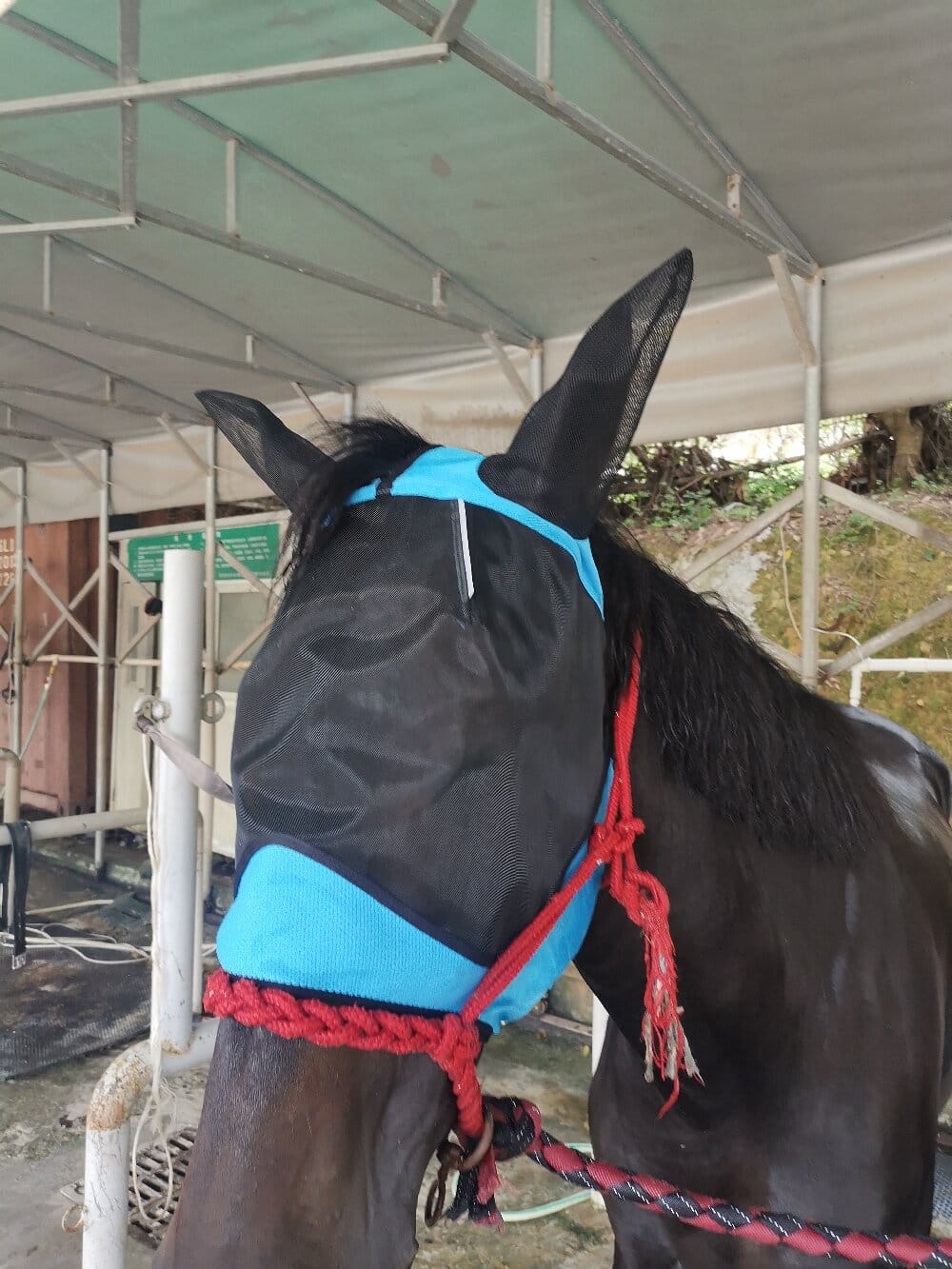
If you have spent any amount of time around horses, you already know that summer brings more than just sunshine and long trail rides. It brings the relentless buzzing, biting, and head-shaking that comes with fly season. Over the years, I have tried just about every fly control product on the market, and one piece of gear that has consistently earned its place in my tack room is a horse fly mask. In this article, I want to share my firsthand experience so you can decide whether one belongs in your barn this season.
My gelding used to come in from turnout with his eyes squeezed shut, tears streaming down his face, and welts along his brow from face flies. I tried sprays, roll-ons, and wipes, but they wore off within hours and required constant reapplication. A friend suggested I try a horse fly mask, and honestly, the difference was noticeable within a single week. The mask created a physical barrier that kept flies away from his eyes and ears, and the constant head-shaking stopped almost entirely.
What surprised me most was how quickly he accepted wearing it. Most horses adjust to a well-fitted mask within a day or two, especially once they realize it brings relief.
Choosing the Right Fly Mask for Your Horse
Not all fly masks are created equal, and picking the wrong one can cause rubs, slipping, or an escape artist who leaves it in the pasture. Here is what I have learned to look for:
- Proper fit: The mask should sit comfortably over the eyes without pressing on the eyelashes, and the ears should fit without pinching.
- Breathable mesh: Look for fine mesh that blocks flies but still allows airflow, especially in hot climates.
- UV protection: Many quality fly masks also shield sensitive skin and eyes from harsh sunlight, which is a bonus for horses with pink skin.
- Secure fastenings: Adjustable straps under the jaw and over the poll keep the mask in place during rolling and grazing.
- Ear and nose coverage: Decide whether you need ear covers for midge protection or an extended nose piece for horses prone to sunburn.
How to Introduce a Horse Fly Mask Without Stress
I always recommend a slow introduction rather than simply strapping it on and walking away. Start by letting your horse sniff the mask and rub it gently along his neck. Then place it on for short periods, rewarding calm behavior. Once he is comfortable, you can leave it on during turnout. Check daily for rubbing, dirt buildup, and fit changes, and wash the mask regularly with mild soap to keep it clean and effective.
Common Mistakes I Made So You Don’t Have To
My first fly mask was a size too small, and it left rub marks along my horse’s cheekbones. I also learned the hard way that leaving a wet, dirty mask on for days invites skin irritation. Rotating two masks and checking fit weekly has solved both problems. Finally, do not assume a fly mask replaces good barn management—pair it with clean stalls, fly traps, and strategic turnout times for the best results.
Final Thoughts on Horse Fly Mask Use
A horse fly mask is one of the simplest, most effective tools for protecting your horse’s eyes and face during fly season. From my experience, the key is choosing a well-fitted, breathable design and introducing it patiently. If you invest a little time in proper fit and routine care, you will likely see a calmer, more comfortable horse—and that makes every summer ride more enjoyable for both of you.