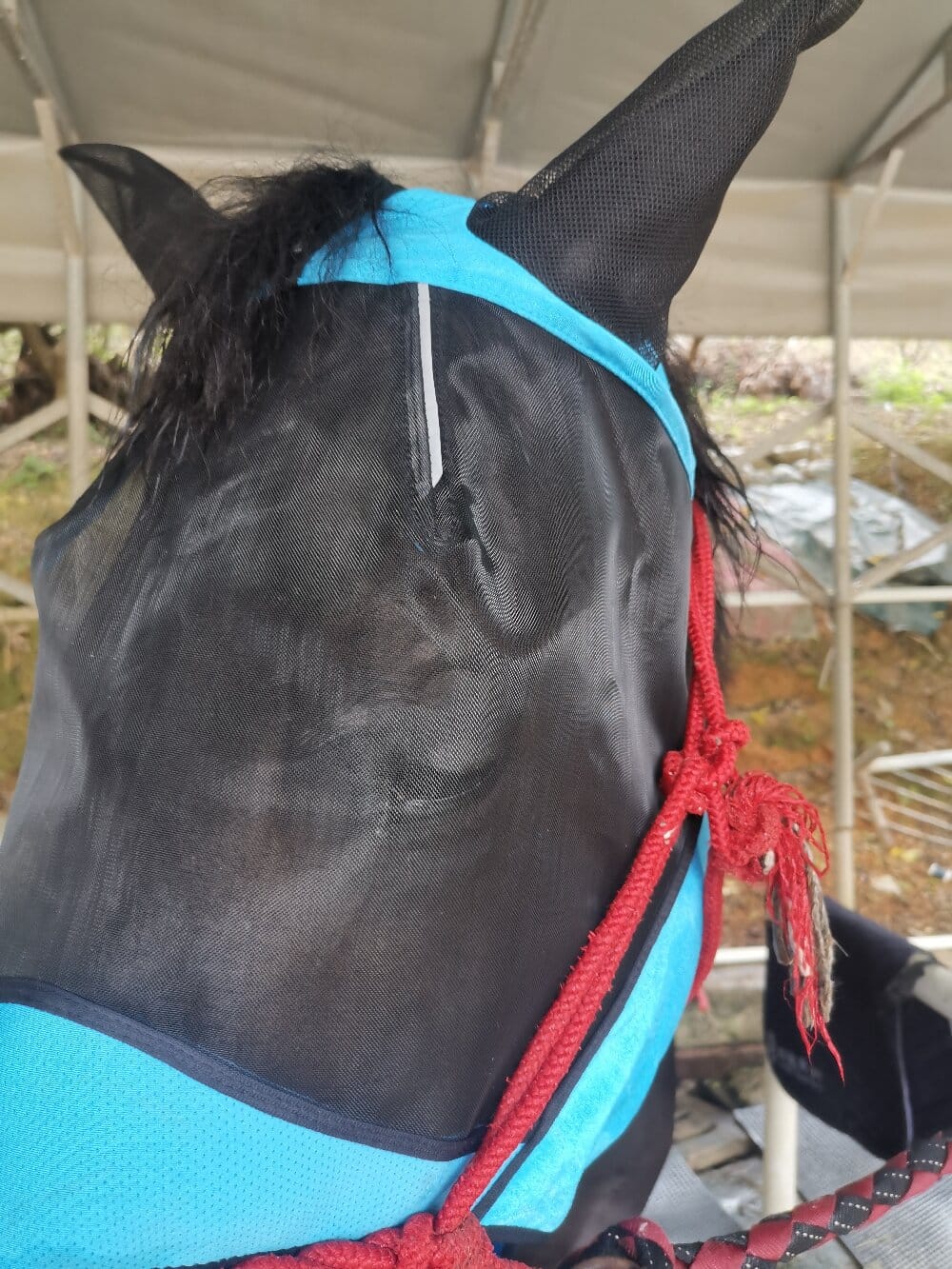
I still remember the first summer I brought my gelding home. Within a week, his face was covered in bites, his eyes were streaming, and he was constantly tossing his head. That’s when a barn friend handed me my first horse fly mask and told me I’d never look back. She was right. Over the years, I’ve tested dozens of designs, learned what actually holds up in the field, and made plenty of mistakes along the way. If you’re shopping for your first fly mask or upgrading an old one, here’s the practical guide I wish someone had given me.
What a Horse Fly Mask Actually Does
Before you buy, it helps to understand what these masks are and aren’t. A fly mask is a lightweight mesh cover that fits over your horse’s face, typically secured with hook-and-loop straps under the jaw or over the poll. It creates a physical barrier that keeps biting insects away from the eyes, muzzle, and ears. My vet also pointed out that masks reduce irritation from flies, which in turn lowers the risk of eye infections and head-shaking behaviors during turnout.
What they don’t do is replace fly spray, shade, or good barn management. Think of a mask as one layer in your summer pest-control plan, not the whole plan.
How to Choose the Right Horse Fly Mask
After years of trial and error, I narrow my choices down using a few key criteria. Here’s what I check before spending money:
- Fit and sizing: A mask should cover the face without pressing on the eyes or rubbing the ears. Measure from the poll to the muzzle and check the manufacturer’s size chart.
- Mesh quality: Fine mesh blocks tiny gnats, while coarser mesh offers better airflow. For horses with sensitive eyes, I lean toward finer weaves.
- Eye clearance: Look for darts or shaping around the eyes so the mesh stays off the eyeball and lashes.
- Ear coverage: Removable or integrated ear covers help with midges, but only if your horse tolerates them.
- Fastenings: Wide hook-and-loop straps with fleece binding are gentler than thin cords and less likely to rub.
- UV protection: Many masks now block a percentage of UV rays, which matters for horses with pink skin around the muzzle.
Fitting Tips I Learned the Hard Way
Even a great mask fails if it fits badly. I always introduce a new mask in the stable first, let my horse wear it for short periods, and check for rub marks daily during the first week. Straps should sit snug but allow two fingers underneath. I also check the eye area every time I put the mask on, since a twisted mask can press against the cornea. If your horse shares turnout with a playful herd, choose a tougher mask with reinforced binding, because field mates love to grab straps.
Care and Replacement Schedule
Masks take a beating. I rinse mine weekly in cool water with a mild soap, air-dry them in the shade, and inspect the seams and straps for wear. Most quality masks last one to two seasons with regular use. Replace any mask with torn mesh, stretched straps, or exposed stitching, since a damaged mask can catch on fencing or fail to protect the eyes.
Final Thoughts
A horse fly mask is one of the cheapest, most effective tools I’ve added to my summer routine. Focus on fit, mesh quality, and eye clearance, introduce it gradually, and maintain it well. Do that, and you’ll have a calmer, more comfortable horse through fly season.