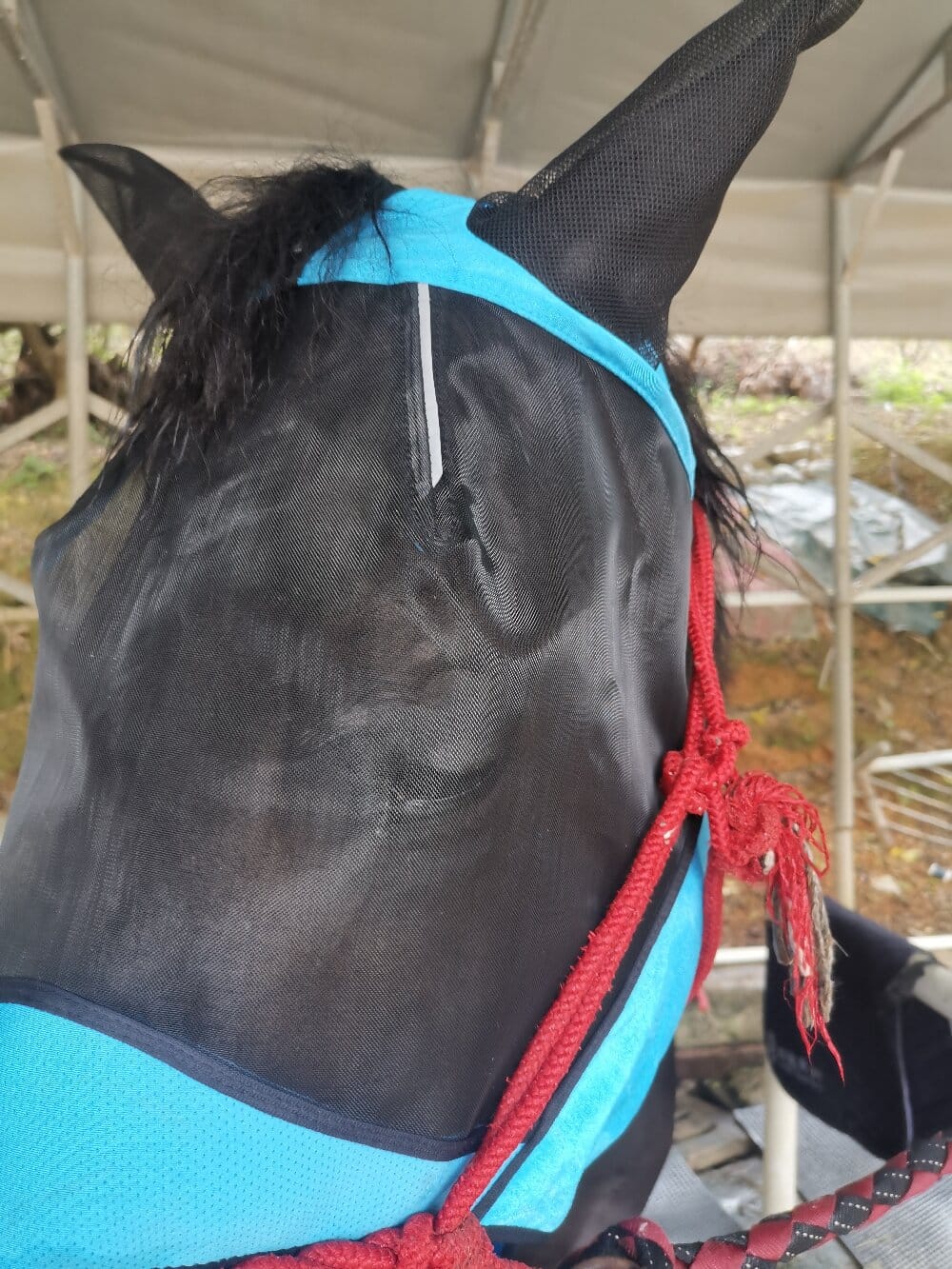
In equine operations where insect pressure is persistent, the horse fly mask has become a standard piece of protective equipment. This case study examines a mid-sized boarding and training facility that introduced fly masks across a herd of 24 horses during a two-season period, documenting the practical outcomes, limitations, and management considerations observed by staff and owners.
Background and Initial Challenge
The facility, located in a region with humid summers and nearby standing water, reported recurring problems each year: head-shaking, squinting, facial abrasions from rubbing, and general herd irritability. Staff noted that conventional fly sprays and topical repellents required frequent reapplication and offered inconsistent protection around the eyes and ears. The decision to trial a horse fly mask was driven by a need for continuous, low-labor protection during peak fly season.
Implementation of the Horse Fly Mask Program
Masks were introduced in late spring, with the following protocol:
- Fit checks for each horse, with attention to clearance over the eyes and positioning around the ears
- Daily inspection before turnout and removal during ridden work
- Rotation of two masks per horse to allow washing and drying
- Weekly cleaning according to manufacturer guidance
- Documentation of wear, rubbing, and horse acceptance
The facility selected breathable mesh designs with ear coverage and fleece trim at pressure points. Horses with sensitive skin or unusual head shapes received modified or custom-fit options.
Observed Outcomes
Over two seasons, staff recorded several measurable and qualitative results:
- Reduced head-shaking and face-rubbing behaviors during turnout, particularly in the first six weeks of fly season
- Fewer facial abrasions and hairless patches around the eyes and muzzle
- Improved horse compliance during handling, likely linked to reduced irritation
- Lower reliance on daily spray application, though masks were not treated as a full replacement
Challenges also emerged. Two horses repeatedly removed their masks, requiring different styles. One pony developed mild rubbing behind the ears until a fleece-lined design was substituted. UV-blocking masks were added for horses with pink skin around the muzzle and eyelids, reflecting emerging evidence on sunburn risk in lighter-coated animals.
Key Considerations for Equine Managers
The case highlights several practical points for anyone considering fly masks for horses:
- Fit matters more than style: A well-fitted basic mask outperformed a feature-rich but poorly sized one.
- Inspection is essential: Daily checks catch rubbing, damage, and debris before they cause injury.
- Hygiene affects performance: Dirty mesh reduces airflow and visibility; regular cleaning extends usable life.
- Not a standalone solution: Combining masks with pasture management, fly traps, and targeted repellents produced the best overall result.
- Individual variation: Temperament and head shape influence acceptance, so trial periods are advisable.
Cost analysis showed that a durable mask, rotated and maintained properly, offered favorable value compared with repeated topical applications across a full season.
Conclusion
This case study indicates that the horse fly mask can be an effective, practical component of an integrated insect-control plan when fit, inspection, and hygiene are prioritized. The facility continues to use masks seasonally, pairing them with environmental management and monitoring to protect herd comfort and skin health.