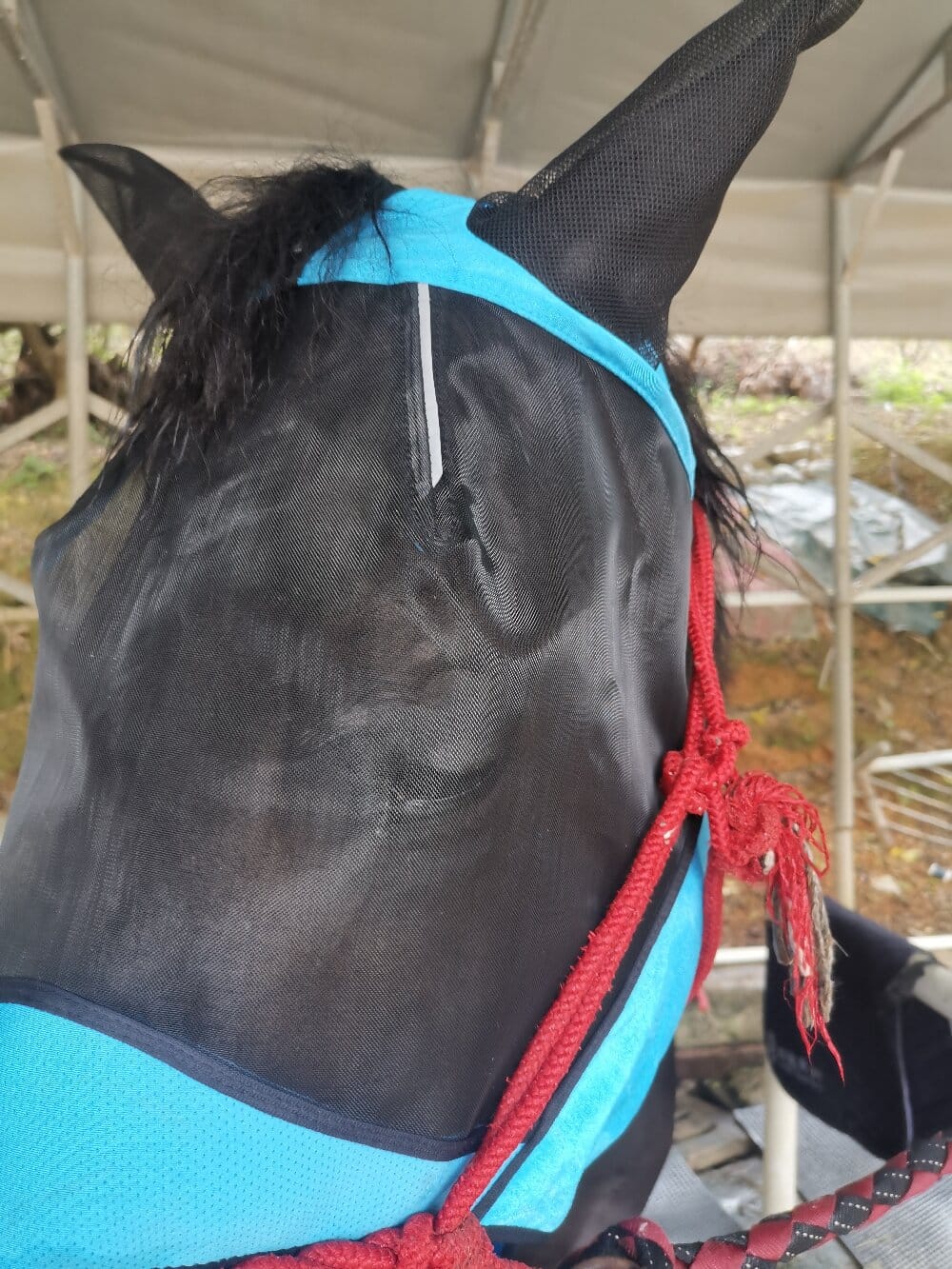

When you notice your horse stomping, tossing its head, and rubbing its face against the fence, you are watching the early signs of fly irritation that can quickly escalate into a serious problem. In this case study, you will follow a scenario many owners recognize: a bay gelding named Cooper who spent every summer battling face flies, stable flies, and the painful irritation they cause. The solution that changed his routine was a well-fitted horse fly mask, and the lessons from his case can help you protect your own horse more effectively.
Case Background: How Fly Pressure Affected One Horse
Cooper lived on a small boarding farm bordered by a creek and dense hedgerows, conditions that attracted flies in enormous numbers from late spring through early autumn. His owner first noticed the problem when Cooper began refusing to stand still for grooming and developed small, weepy sores at the corners of his eyes. The veterinarian ruled out infection but confirmed that fly bites and constant rubbing were the cause. This is a common pattern: flies gather around the eyes, ears, and muzzle, and a horse’s natural defense—rubbing—often makes the damage worse.
The owner tried sprays and ointments, but they wore off within hours, and Cooper disliked the smell. That is when she began researching physical barriers, and the fly mask for horses quickly emerged as the most practical option.
Choosing the Right Horse Fly Mask for the Situation
Not every mask suits every horse, and Cooper’s case illustrates why fit matters as much as design. His owner evaluated several options before settling on a model with the following features:
- Full eye and ear coverage: Cooper’s ears were a favorite target for biting flies, so a mask with ear protection reduced his head shaking noticeably.
- Fleece-lined edges: These prevented rub marks along the browband and cheek areas during long turnout hours.
- Breathable mesh: Adequate airflow kept the area around his eyes from becoming sweaty, which can invite skin irritation.
- Adjustable straps: A secure but comfortable fit meant the mask stayed in place without pressing on his eyes.
The owner also purchased two masks so one could be washed while the other was worn, a small investment that extended the product’s life and kept hygiene standards high.
Results: What Changed After Introducing the Mask
Within the first week, the difference was obvious. Cooper stopped head tossing during turnout, the sores around his eyes began to heal, and his coat in that area looked cleaner. By the second week, his owner reported that he stood calmly for grooming again. Over the course of the summer, the mask reduced his exposure to face flies and other biting insects, which in turn lowered his stress levels and supported better weight maintenance.
The case also revealed practical maintenance lessons worth applying to your own routine:
- Check the mask daily for fit and for debris caught in the mesh.
- Rinse or wash the mask weekly, especially in hot weather.
- Inspect the seams and straps regularly, replacing worn items before they fail.
- Introduce the mask gradually so your horse accepts it calmly.
Lessons From the Case Study for Your Own Horse
Cooper’s experience shows that fly protection is not a luxury but a basic welfare measure during insect season. A properly fitted horse fly mask acts as a simple physical barrier that reduces bites, prevents rubbing damage, and supports eye health. Combine it with good stable management—clean bedding, prompt manure removal, and strategic turnout timing—to limit fly breeding areas. If your horse shows persistent eye discharge, swelling, or signs of infection despite wearing a mask, consult your veterinarian promptly.
In summary: this case study demonstrates that selecting a well-fitting fly mask, maintaining it diligently, and pairing it with sensible barn hygiene can transform a horse’s summer comfort. Start by assessing your horse’s specific needs, measure carefully before buying, and monitor results closely—your horse’s calmer demeanor and healthier skin will be the clearest evidence that the investment paid off.