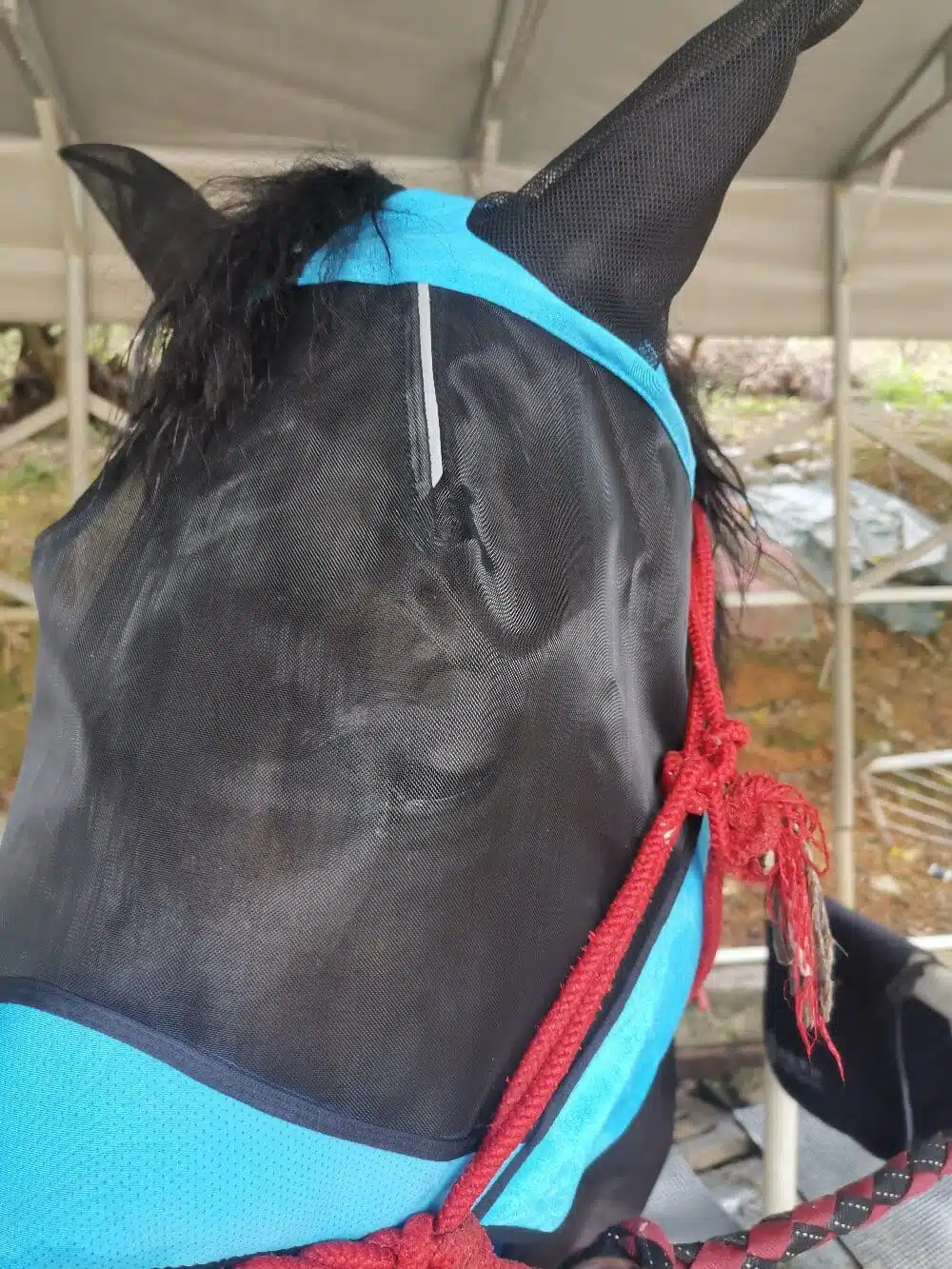

During the warmer months, keeping horses comfortable becomes a daily challenge, especially when flying insects seem to appear out of nowhere. After trying a variety of fly control methods over the years, I have found that a well-fitted horse fly mask is one of the simplest and most effective tools for protecting a horse’s eyes and face. This article shares practical experience and objective observations about selecting and using these masks, based on real barn routines and common horse-keeping situations.
Flies, gnats, and other biting insects are not just a nuisance. They can cause eye irritation, excessive tearing, head shaking, and even secondary infections when a horse rubs its face against fences or stalls. A horse fly mask creates a physical barrier over the eyes and sometimes the ears and nose, reducing direct contact with insects. In my experience, horses that wear a mask during peak fly season show noticeably less head tossing and eye drainage compared with those left unprotected.
Beyond comfort, there is a practical training benefit. A horse that is constantly bothered by flies is harder to handle, less focused under saddle, and more prone to accidents. Reducing that irritation supports better behavior and safer riding sessions.
Choosing the Right Horse Fly Mask for Your Horse
Not all masks are the same, and the right choice depends on your horse’s build, living situation, and sensitivity. Here are the key factors I have learned to evaluate:
- Fit: The mask should sit off the eyes and not press against the eyelashes. A mask that is too tight can rub hair away; one that is too loose can slide and block vision.
- Material: Mesh density matters. Finer mesh blocks smaller insects but can reduce airflow. A breathable, durable mesh works best for most climates.
- Coverage: Some designs cover only the eyes, while others include ears, a nose extension, or a forelock opening. Horses with sensitive ears often benefit from ear coverage.
- Fastenings: Hook-and-loop straps are common, but buckles and elastic combinations can be more secure for horses that rub. Check all closures daily for wear.
- UV protection: Many masks also filter ultraviolet light, which is helpful for horses with photosensitivity or pink skin around the eyes.
I recommend measuring your horse’s head before ordering, and if possible, trying a mask from a local tack shop before buying online. A mask that fits one horse perfectly may be useless on another.
Practical Tips from Daily Use of a Horse Fly Mask
Even the best mask only works if it stays on and stays clean. Through trial and error, I have adopted a few habits that make a real difference:
- Inspect the mask every morning for tears, stretched straps, or debris caught in the mesh.
- Rinse the mask with plain water weekly to remove dust, sweat, and fly residue.
- Rotate between two masks so one can dry while the other is worn.
- Introduce the mask gradually, using positive reinforcement, especially for young or head-shy horses.
- Remove the mask during turnout in extreme heat if your horse tends to overheat, and always check underneath for rubs.
It is also worth noting that a horse fly mask is not a substitute for good barn management. Manure removal, fly predators, and fans all reduce insect pressure. The mask is one layer of a broader strategy.
Common Mistakes to Avoid
One frequent error is leaving a damp mask on for days, which can cause skin irritation and bacterial growth. Another is ignoring a horse that has learned to remove the mask; this usually signals a fit problem rather than stubbornness. Finally, do not assume a mask is indestructible. Pasture mates may chew or pull at it, so check turnout groups and consider a breakaway design if safety is a concern.
Final Thoughts on Protecting Your Horse’s Face
A horse fly mask is a low-cost, high-value piece of equipment that supports eye health, reduces stress, and improves daily handling. The key is proper fit, consistent maintenance, and realistic expectations. Combined with sensible stable management, a quality mask can make summer far more pleasant for both horse and owner. Start with one well-fitted mask, observe your horse’s response, and adjust as needed.