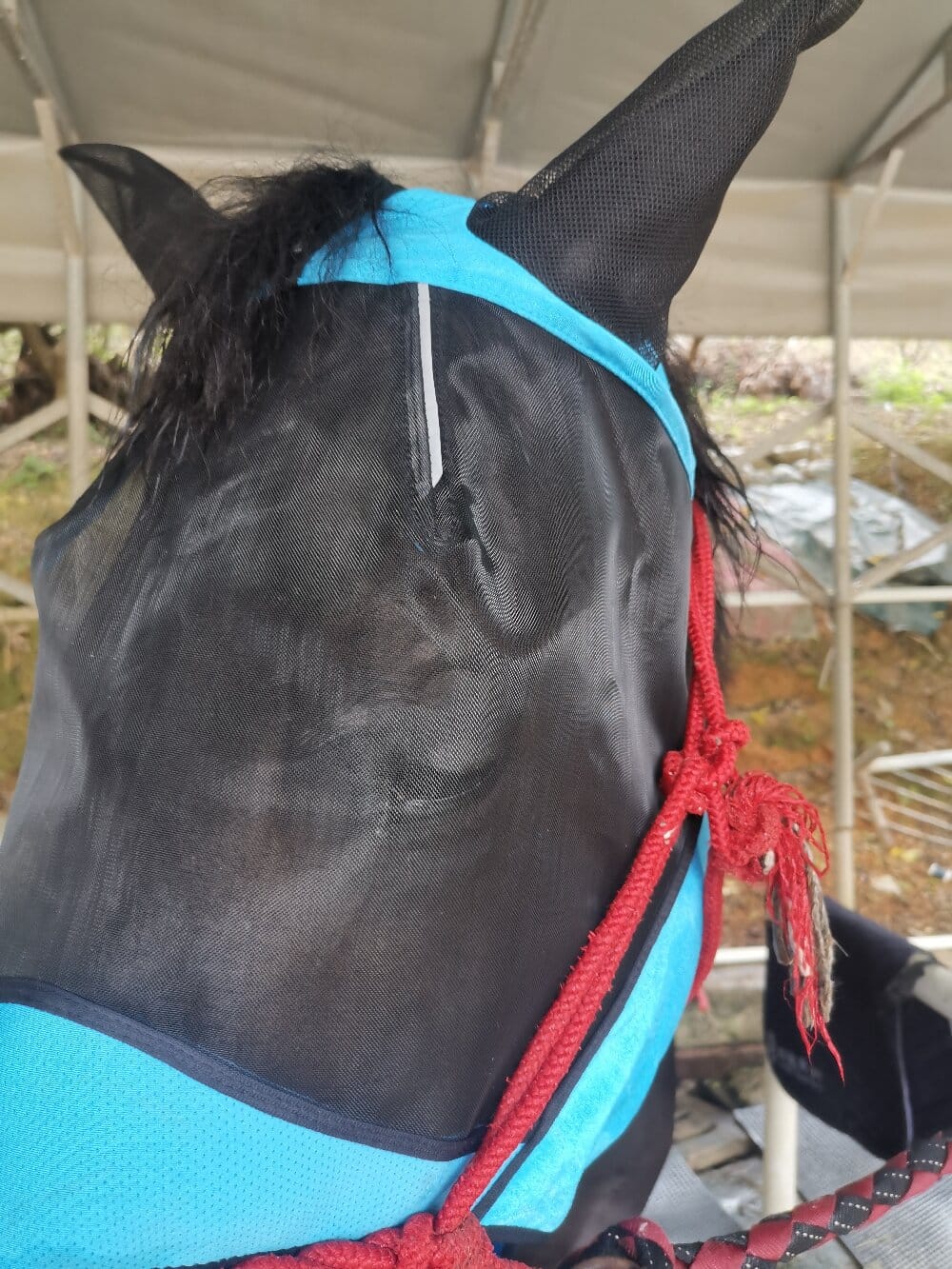
When I first brought my gelding home, I underestimated how much flies would affect him. Within a week, he was stomping, tossing his head, and rubbing his face against the fence until the hair around his eyes thinned out. That’s when a barn friend handed me my first horse fly mask and told me to give it a try. I was skeptical — I pictured something flimsy that would slide off in the pasture — but after one summer of consistent use, I won’t turn my horses out without one. Here’s what I’ve learned along the way, from picking the right fit to keeping the mask clean and actually on my horse’s head.
Choosing the Right Horse Fly Mask for Your Horse
Not all fly masks are created equal, and I learned that the hard way. My first purchase was a cheap mesh mask that fit loosely around the ears, and my horse had it off within an hour. Since then, I’ve become picky about construction and fit. When I shop for a fly mask now, I look for:
- Proper sizing: Measure from the poll to the end of the nose, and check the ear length. A mask that’s too small rubs; one that’s too big slips.
- Fleece or soft binding: This reduces rub marks along the browband and nose, especially for horses with sensitive skin.
- UV protection: Many masks block a meaningful percentage of UV rays, which matters for horses with pink skin or photosensitivity.
- Ear coverage options: Some horses tolerate ear covers fine; others shake them off. I keep both styles on hand.
- Draft-free visibility: Good mesh should let your horse see clearly while still keeping gnats and flies off the eyes.
I also keep a spare in the tack trunk. Masks get lost, torn, or muddy, and having a backup means my horse is never unprotected while I wait for a replacement to arrive.
Fitting Tips I Wish I’d Known Sooner
Getting the fit right took some trial and error. My biggest lesson: check the mask daily during the first week. Straps stretch, and a mask that fit perfectly on day one can shift after a few rolls in the dirt. I adjust the throat latch so I can slide two fingers underneath — snug enough to stay put, loose enough to avoid pressure points. I also lift the forelock out of the way so it doesn’t wad up under the browband, which is a common cause of rubbing. For horses turned out 24/7, I check ears and eye openings every morning for signs of chafing.
Keeping Your Fly Mask Clean and Durable
Dirt and sweat build up fast in summer, and a grimy mask can irritate skin. I rinse mine in lukewarm water with a mild soap every week or so, then air-dry it flat. I avoid the dryer entirely — heat warps the mesh and shrinks the binding. I also inspect seams and straps monthly, because a small tear near the ear opening turns into a lost mask in a windstorm. Rotating two masks extends the life of both and gives each one time to dry completely.
What a Fly Mask Has Actually Done for My Horse
The difference was noticeable within days. The head tossing stopped, the rubbing eased, and the hair around his eyes grew back. He’s calmer in the pasture and less reactive under saddle. I still use fly spray and good barn management, but the mask does the heavy lifting around his face and ears. If you’re on the fence about trying one, start with a well-fitted, quality mask and check it daily — your horse will likely tell you it was worth it.