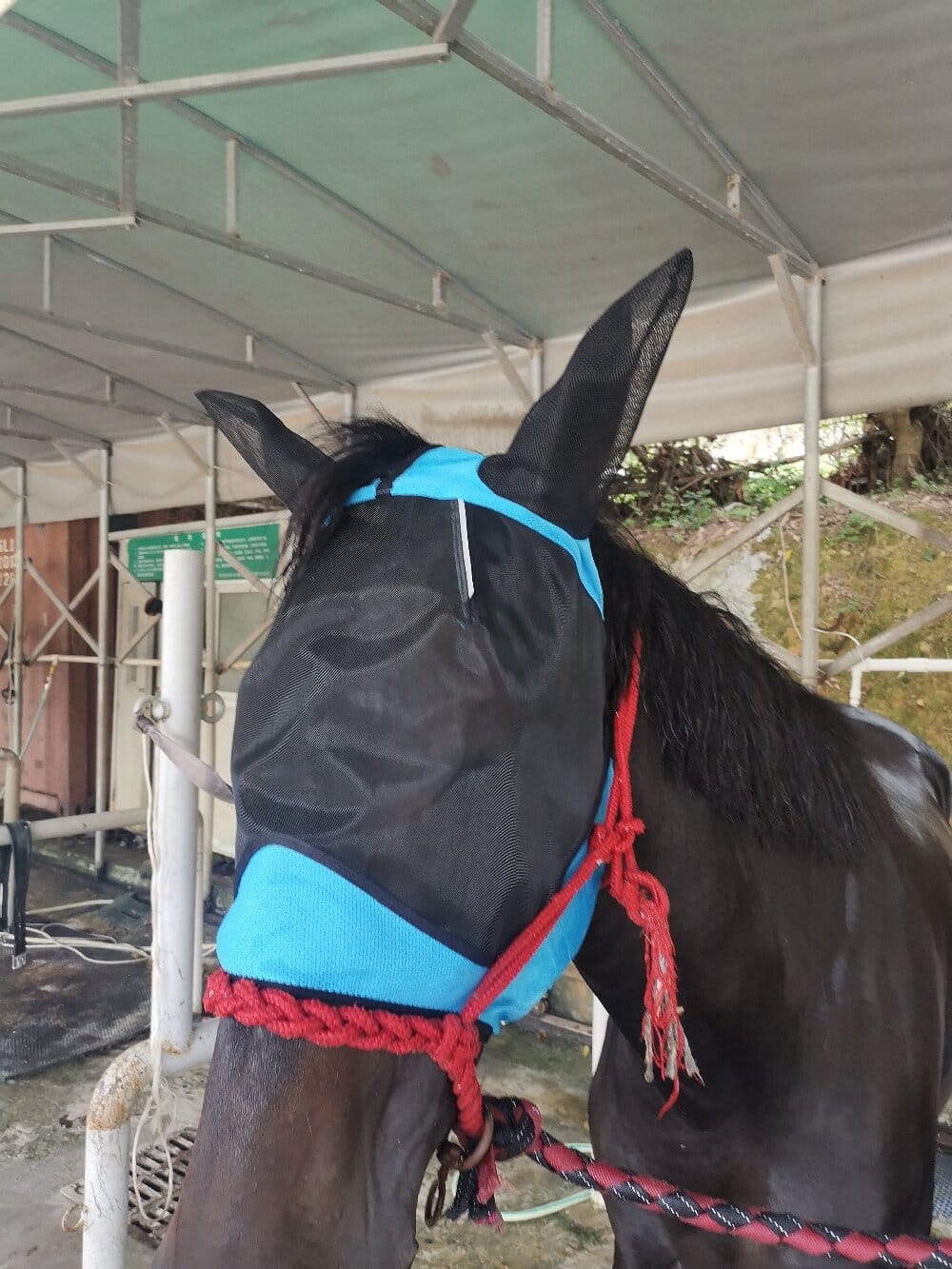
If you’ve ever watched your horse stomp, swish, and head-toss through an entire summer afternoon, you already know how brutal biting insects can be. A quality horse fly mask is one of the simplest, most affordable pieces of protective gear you can add to your tack room, yet plenty of owners still overlook it or buy the wrong one. I’ve tested dozens of masks on my own horses over the years, and I’ve learned that the difference between a mask that lasts one season and one that lasts five comes down to a few practical details.
Flies, gnats, and midges don’t just cause irritation — they can trigger real health problems. Face flies spread pinkeye, which can become a recurring nightmare once it takes hold. Tiny Culicoides midges cause sweet itch along the mane and ears, leading to rubbed, raw skin. And constant head-shaking from eye irritation can even interfere with training and temperament. A well-fitted fly mask acts as a physical barrier, keeping bugs off the eyes, ears, and sometimes the muzzle without relying on chemical repellents that need constant reapplication.
Choosing the Right Horse Fly Mask for Your Situation
Not every mask suits every horse or every environment. Here’s how I break down the options:
- Standard eye masks: Cover the eyes and forehead only. Great for horses that tolerate minimal gear and for mild fly pressure.
- Ear and eye combo masks: Add mesh ear covers, which I consider essential if midges or ticks are a problem on your property.
- Full-face masks with nose coverage: Extend down over the muzzle. Ideal for horses prone to sunburn on pink noses or those bothered by face flies near the nostrils.
- Long-nose styles: Reach almost to the upper lip and offer maximum UV protection, though some horses find them claustrophobic at first.
Material matters just as much as style. Look for fine, dark mesh that blocks UV rays while still allowing airflow. Cheap, stiff mesh can rub the face raw, and light-colored mesh often lets too much sunlight through. I also prefer masks with soft fleece binding along the edges, since that’s where most rubbing occurs.
Getting the Fit Right — This Is Where Most People Go Wrong
I can’t count how many times I’ve seen a mask hanging loose around a horse’s jaw or pressed so tightly that it leaves welts. A proper fit sits snug but not tight, with the eye darts aligned directly over the eyes so the mesh doesn’t touch the eyeball itself. You should be able to slide two fingers under the cheek straps. If the mask rotates or slips down over the eyes when your horse grazes, it’s either the wrong size or the wrong shape for that head.
A good test: put the mask on, turn your horse out, and check it after an hour. If it’s still in place and there’s no rubbing, you’ve found a winner. If it has twisted sideways, try a different brand — head shapes vary enormously between breeds, and what fits a Quarter Horse may slide right off an Arabian.
Daily Care and Common Sense Checks
Even the best mask needs maintenance. I rinse mine in cool water every few days during peak fly season to clear out dust and sweat, and I inspect the seams weekly for tears. Remove the mask at least once daily to check for rubbed spots, debris trapped inside, or any sign of eye discharge. Never leave a mask on a horse turned out with pasture mates who like to grab and pull — a caught mask can become a dangerous entanglement. And if your horse has an active eye injury, skip the mask entirely and call your vet.
Final Thoughts
A horse fly mask isn’t glamorous gear, but it’s one of the highest-value purchases you can make for your horse’s comfort and eye health. Focus on breathable mesh, secure soft edging, and an accurate fit for your horse’s head shape. Rotate two masks so you always have a clean one on hand, and replace them once the mesh stiffens or tears. Do that, and you’ll spend far less time fighting flies and far more time enjoying your horse.