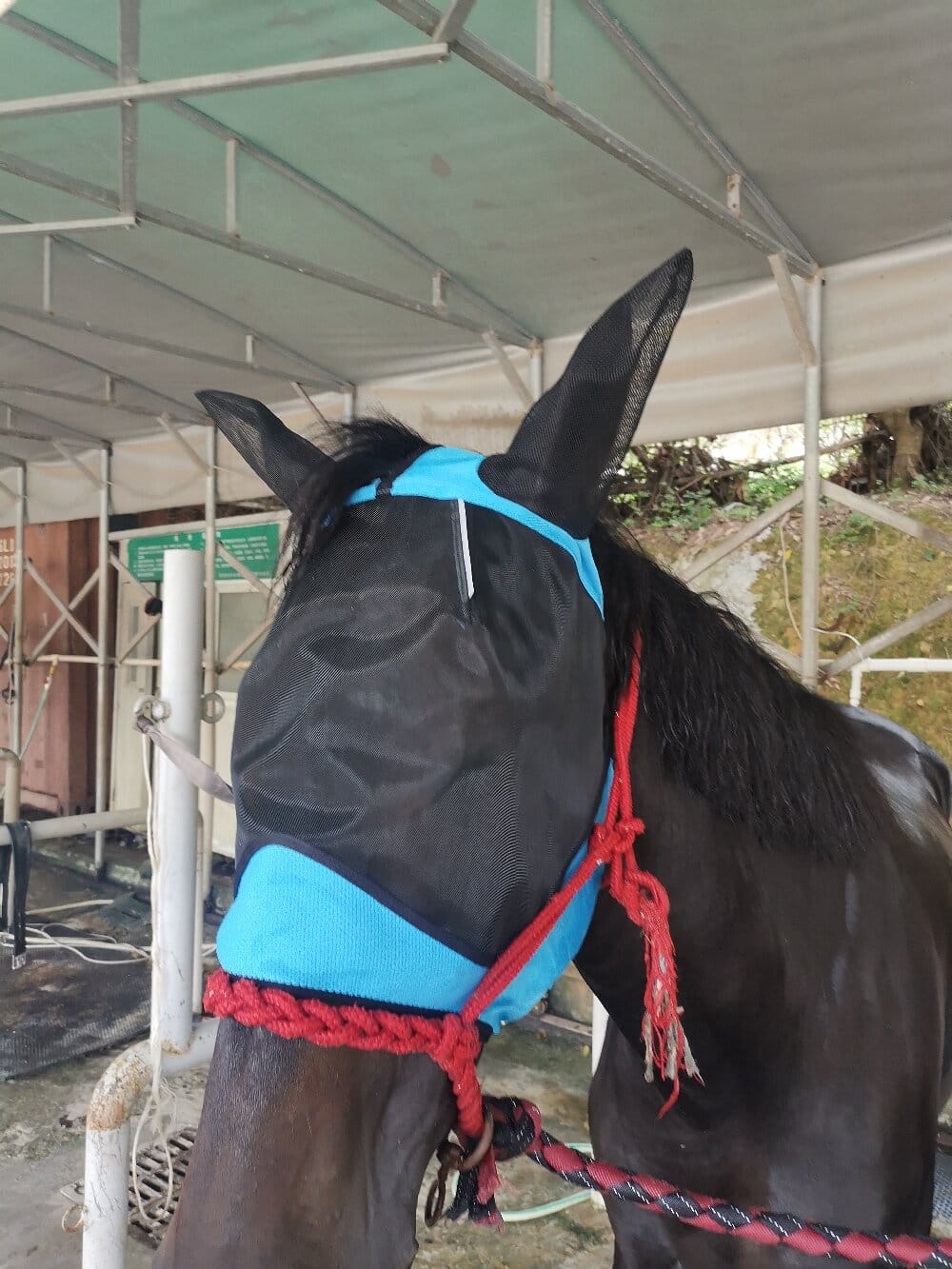
I still remember the first summer I brought my gelding home. Within a week, his face was covered in tiny bumps, his eyes were watering constantly, and he would stamp and swish with frustration every time I brought him in from the pasture. A barn friend handed me a horse fly mask and told me to give it a try. Honestly, I was skeptical at first — I thought it would be uncomfortable or that he would tear it off in minutes. Two seasons later, I can say without hesitation that it is one of the simplest, most effective pieces of tack I own. If you are dealing with flies, gnats, or UV sensitivity, here is what I have learned from hands-on experience.
Choosing the Right Horse Fly Mask Matters More Than You Think
My first mistake was buying the cheapest mask I could find online. It fit poorly, rubbed behind my horse’s ears, and the mesh was so coarse that midges still got through. After a bit of trial and error, I learned that fit and fabric are everything. A good mask should sit off the eyes, cover the ears when possible, and fasten securely without pinching. I now look for soft binding around the edges, breathable mesh with tiny holes, and adjustable straps that stay put during turnout. For horses with sensitive skin, fleece trim is a lifesaver.
My Daily Routine With Fly Protection Gear
Over time, I developed a routine that keeps my horse comfortable through the worst of fly season. Here is what works for me:
- Put the mask on before turnout, not after — flies are worst in the morning.
- Check the fit weekly, since straps stretch and hair coats change with the seasons.
- Rinse the mask every few days to remove sweat and dust that can irritate the skin.
- Keep a spare on hand so one can dry while the other is in use.
- Combine the mask with a fly sheet and repellent for full-body protection.
This small routine has cut down on vet visits, eye ointment, and those stressful evenings when my horse would rather stomp than eat.
What I Wish I Had Known About Fly Masks for Horses
Looking back, there are a few lessons I would share with anyone starting out. First, not all masks are created equal — UV-blocking options are worth the extra money for light-colored horses or those with eye conditions. Second, a mask is not a substitute for shade, clean paddocks, and good manure management; it works best as part of a broader plan. Third, and this is the big one, desensitize your horse early. I spent a few short sessions rewarding my gelding for wearing the mask, and now he lowers his head on his own when he sees it. That alone has made my life easier.
Final Thoughts on Fly Protection
A horse fly mask is a small investment that pays off in comfort, health, and peace of mind. I have watched my horse go from miserable and head-shy in summer to relaxed and bright-eyed, and I credit much of that change to consistent, well-fitted fly protection. Whether you are new to horse ownership or looking to upgrade your summer routine, start with a quality mask, check the fit often, and pair it with sensible barn management. Your horse will thank you — and you will spend far less time worrying about flies and far more time enjoying the ride.