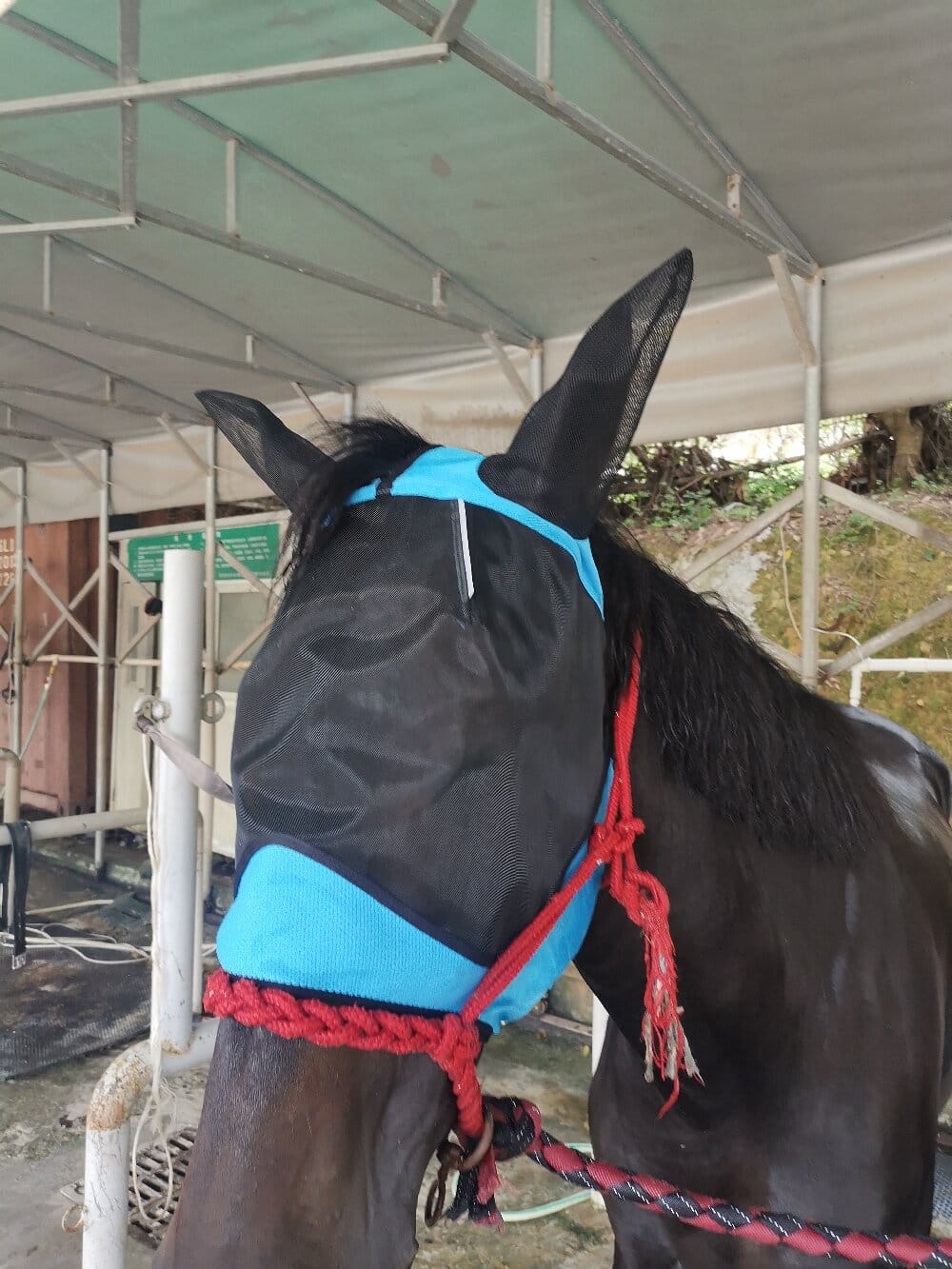
A horse fly mask is a lightweight, mesh-based piece of equine equipment designed to protect a horse’s face and eyes from flying insects, debris, and ultraviolet light. While the product appears simple, owners frequently encounter practical challenges: masks that rub, slip, trap heat, or fail to stay in place during turnout. Addressing these issues requires an objective look at fit, materials, and management practices. This article examines common problems associated with fly masks and offers practical solutions for each.
Common Fit Problems and How to Solve Them
Poor fit is the most frequent complaint among owners. A mask that is too loose can shift over the eyes or be pulled off by pasture mates, while one that is too tight creates pressure points and rub marks, particularly around the ears and cheekbones.
To resolve fit issues, measure the horse’s head from the poll to the end of the muzzle and compare the result with the manufacturer’s sizing chart. Adjustable straps at the throat latch and under the jaw allow fine-tuning. For horses with unusually wide or narrow heads, look for brands offering multiple shell sizes rather than a one-size-fits-all design. Checking fit after the first hour of wear, and again after a full day, helps identify early rubbing before it becomes a sore.
Choosing the Right Horse Fly Mask for the Environment
Environmental conditions directly influence which mask design performs best. Horses on lush pasture with tall grass face different pressures than those in dry paddocks or stables.
- Turnout in high-insect areas: Choose a mask with fine mesh and ear coverage to block biting midges and stable flies.
- Hot climates: Select lighter-colored mesh with UV protection to reduce heat absorption while shielding against sunburn.
- Horses prone to eye irritation: Use masks with a reinforced brow band that keeps mesh away from the eyes.
- Pasture with abrasive fencing: Opt for rip-stop fabric and bound edges that resist snagging.
Matching the mask to the specific environment reduces wear and tear and improves comfort, which in turn encourages consistent use.
Managing Rubs, Heat, and Hygiene
Even a well-fitted mask can cause problems if it is worn continuously without inspection. Dirt, sweat, and hair accumulate in the mesh and along the binding, creating friction and bacterial growth.
A practical routine includes removing the mask daily to check the face for redness or hair loss, rinsing the mesh with mild soap and water weekly, and allowing it to air-dry fully before reapplying. During extreme heat, some owners rotate between two masks or provide scheduled mask-free periods in a shaded area. For horses with sensitive skin, seamless edge designs and fleece-lined straps at pressure points offer additional protection.
Addressing Durability and Behavioral Resistance
Masks frequently tear at the ear openings or straps, and some horses learn to remove them by rubbing on fences. Reinforced stitching and double-layered ear panels extend service life. For horses that persistently remove their masks, check that the throat strap is correctly tensioned and consider a style with a browband that sits securely behind the ears. Introducing the mask gradually, alongside positive reinforcement, reduces resistance in young or nervous horses.
Summary
Effective use of a horse fly mask depends on accurate sizing, environment-appropriate selection, and consistent maintenance. By measuring carefully, matching mesh and coverage to local insect pressure and climate, inspecting daily for rubs, and choosing durable construction, owners can resolve the most common problems. These straightforward steps protect the horse’s eyes and skin while extending the useful life of the equipment.