
I have to admit it — for years I dismissed the humble horse fly mask as a cosmetic gimmick. After comparing a dozen models side by side across two blistering summers, though, I’ve completely changed my mind. A quality fly mask for horses has become one of the few pieces of tack I refuse to stable my gelding without. The difference between a cheap mesh bonnet and a well-designed fly mask is not subtle; it shows up in your horse’s eyes, in his attitude at feeding time, and in your veterinary bills. Here is what I learned when I put these products under the microscope.
My turning point was a horsefly bite that swelled my gelding’s eyelid shut for three days. Insect bites around the eye can lead to conjunctivitis, corneal ulcers, and a miserable, head-shaking horse. Once I started researching, I realized insects are not just an annoyance — they are a genuine health risk. That is when I began comparing designs instead of grabbing whatever was on sale.
What I found is that fly masks vary enormously in coverage, fit, and durability. A bargain bin mask might last a season, but it may also rub the ears raw or slip sideways after a good roll in the pasture. I now evaluate every mask against three criteria: protection, comfort, and longevity.
Comparing Fly Masks: My Head-to-Head Findings
I tested masks with ears, without ears, with nose extensions, and with long guards designed for drafts and other large-headed breeds. Here is how the major categories stacked up in my unofficial trial.
- Standard earless masks: The lightest and cheapest option. Great for horses that despise anything touching their ears, but they leave the ears exposed to gnats and biting midges.
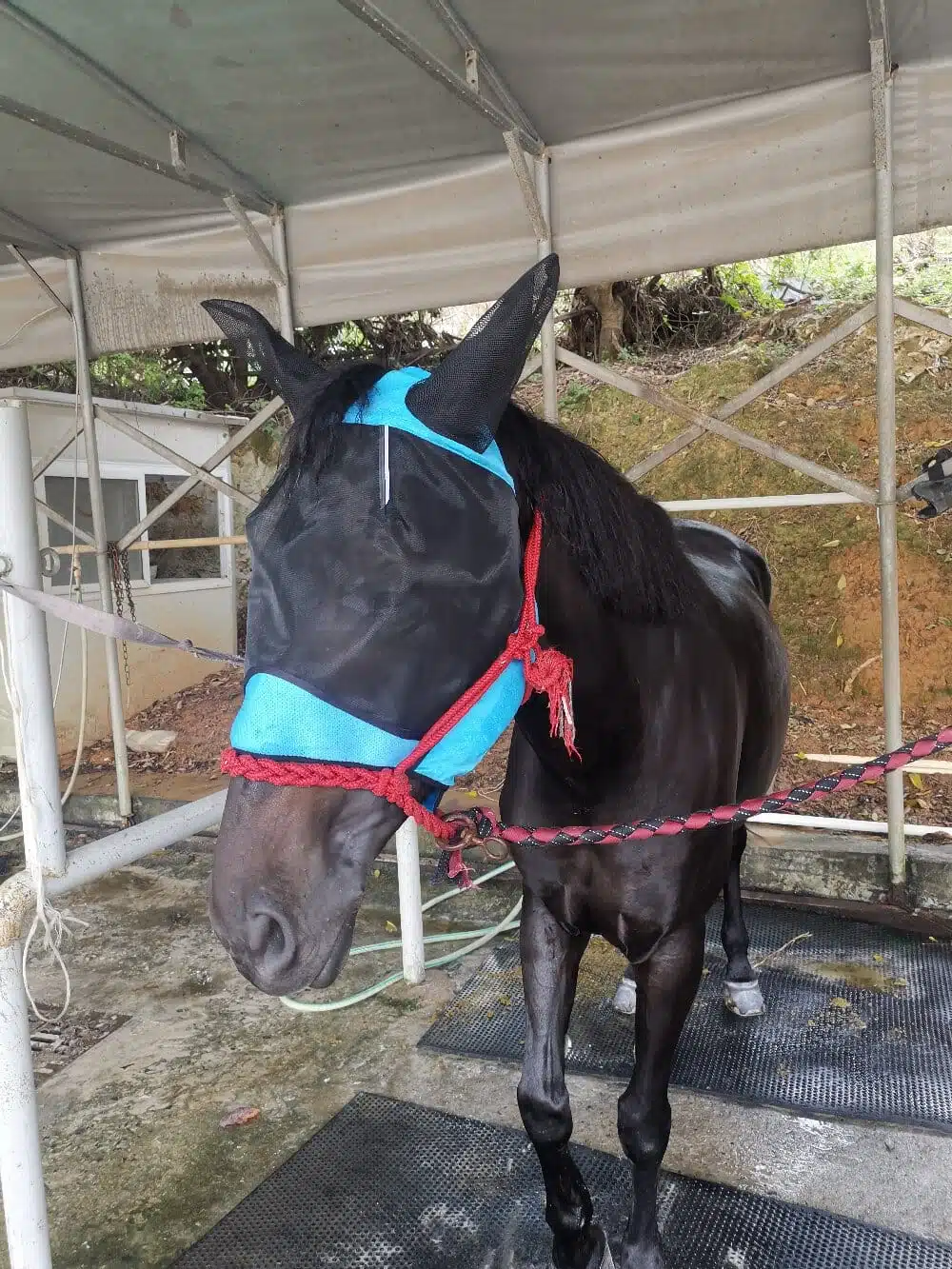
- Masks with ears: My personal favorite for general turnout. They continue the fine mesh over the ears, and the best versions use soft, breathable fabric that does not trap heat.
- Masks with nose coverage: Ideal for horses prone to sunburn on pink muzzles or for pastures with aggressive deer flies. The trade-off is slightly reduced airflow.
- Full-face and long-nose guards: These offer the most complete coverage for sensitive breeds, but they demand a precise fit or they will gap at the throatlatch and let insects walk straight in.
What Surprised Me Most About Fit and Fabric
Fit matters more than any single feature. A mask that shifts will rub the eyelashes, and a mask that sits too low can obstruct peripheral vision. In my comparison, the models with adjustable double hook-and-loop straps at the throatlatch consistently stayed put better than elastic-only designs.
Fabric quality also separated the winners from the losers. Fine, tightly woven mesh blocks even no-see-ums, while coarser netting lets tiny midges through. I also learned to check UV protection ratings; many fly masks for horses double as sun shades, which is a bonus for light-colored horses with pink skin. Washable, colorfast material held up far better over repeated rinsing, and I appreciated masks with reinforced stitching at stress points.
My Comparative Verdict
After all that testing, I keep coming back to two essentials: a well-fitted mask with ears for daily turnout and a nose-covering version for peak fly season. Neither is expensive, but both have paid for themselves in comfort alone. My gelding no longer paces the fence line trying to escape the bugs.
If you take one lesson from my comparisons, let it be this: measure your horse’s head before buying, prioritize adjustable straps and fine mesh over flashy colors, and inspect the mask weekly for wear. A little diligence turns a small piece of mesh into serious protection.