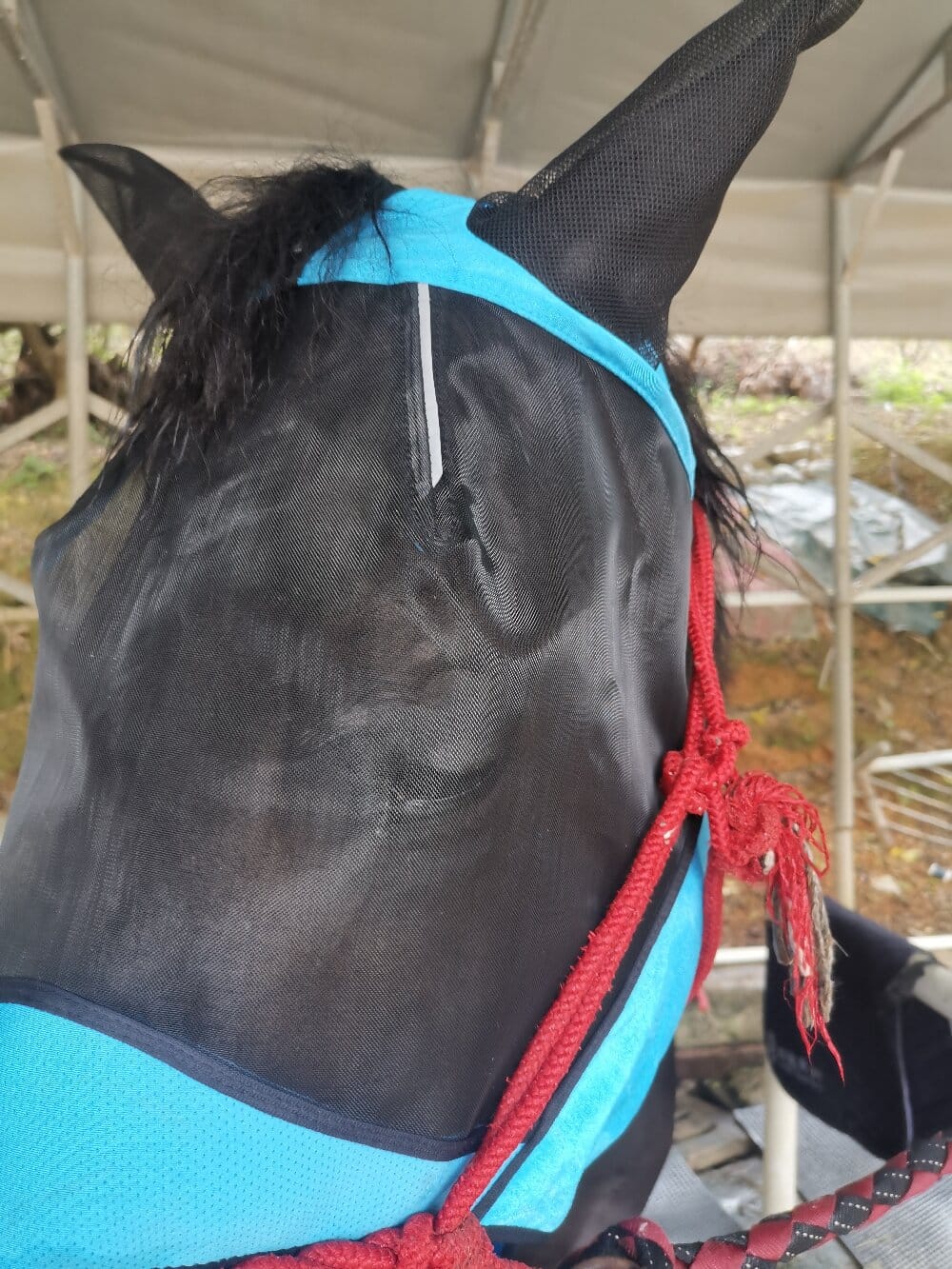
A horse fly mask is a specialized piece of equine equipment engineered to protect the animal’s head, eyes, and ears from flying insects, ultraviolet radiation, and environmental debris. From a technical standpoint, the product combines textile engineering, ergonomic design, and equine anatomy considerations. This analysis examines the construction, performance variables, and selection criteria that determine the effectiveness of modern fly masks for horses.
Construction and Material Analysis of the Horse Fly Mask
Modern equine face protection relies on tightly specified materials. The primary mesh component is typically a UV-stabilized polyester or nylon weave, rated between 60 and 90 percent UV blockage depending on filament density. Manufacturers measure mesh openness — the ratio of open area to total surface — because this value directly governs airflow, insect exclusion, and visibility. A finer mesh (approximately 0.5 mm aperture) blocks smaller insects such as midges and gnats, while coarser weaves favor ventilation in hot climates.
Binding and trim materials also affect durability. Reinforced nylon edging resists abrasion at contact points, and fleece or soft-binding linings reduce rubbing along the cheek and jawline. Elasticized straps, often with hook-and-loop closures, provide adjustable retention. From a stress-analysis perspective, the critical failure points are the ear openings and the throat strap anchors, where repeated tension concentrates force during head movement.
Ergonomic Fit and Anatomical Compatibility
Fit is the single largest determinant of real-world performance. A correctly sized mask should sit clear of the eyelashes, allow full eyelid function, and avoid pressure on the orbital bone. Technical fitting parameters include:
- Forehead-to-nose length relative to the horse’s head profile
- Ear opening diameter and placement for breeds with different ear carriage
- Throat strap tension — tight enough to prevent removal, loose enough to permit jaw movement
- Clearance over the eyes to prevent corneal contact during grazing or rolling
Ill-fitting masks create friction points that can lead to hair loss or skin irritation, so measurement against manufacturer size charts is a non-negotiable step. Draft breeds and ponies frequently fall outside standard sizing curves and require extended or cob-specific patterns.
Performance Variables: UV Protection, Ventilation, and Insect Exclusion
Three performance metrics define mask quality. First, UV protection reduces photic damage to sensitive ocular tissue and lowers the risk of conditions such as squamous cell carcinoma in susceptible breeds. Second, ventilation keeps the face dry; inadequate airflow can cause heat accumulation and condensation, particularly during summer turnout. Third, insect exclusion depends on mesh aperture and seal integrity at the edges — gaps at the noseband or ear openings negate the benefit of fine mesh entirely.
Durability testing typically evaluates tear strength, colorfastness after repeated washing, and elastic fatigue. Users should expect a service life of one to two seasons under daily turnout conditions, with more frequent replacement for horses that rub or remove headgear.
Selection and Maintenance Criteria
When evaluating options, buyers should prioritize mesh specification, fit adjustability, and washability. Removable ear covers and nose extensions add modularity. Maintenance protocols matter equally: hand washing in cool water, air drying to preserve elastic memory, and regular inspection of seams and straps. A damaged strap or torn mesh compromises both protection and safety, since loose fittings can snag on fencing.
Conclusion
From a technical perspective, the horse fly mask is a precision-engineered barrier product in which mesh density, fit geometry, and material durability determine outcomes. Selecting a mask that matches the horse’s head conformation and the local insect pressure — then maintaining it correctly — delivers measurable protection against ocular irritation, UV exposure, and fly-borne discomfort.