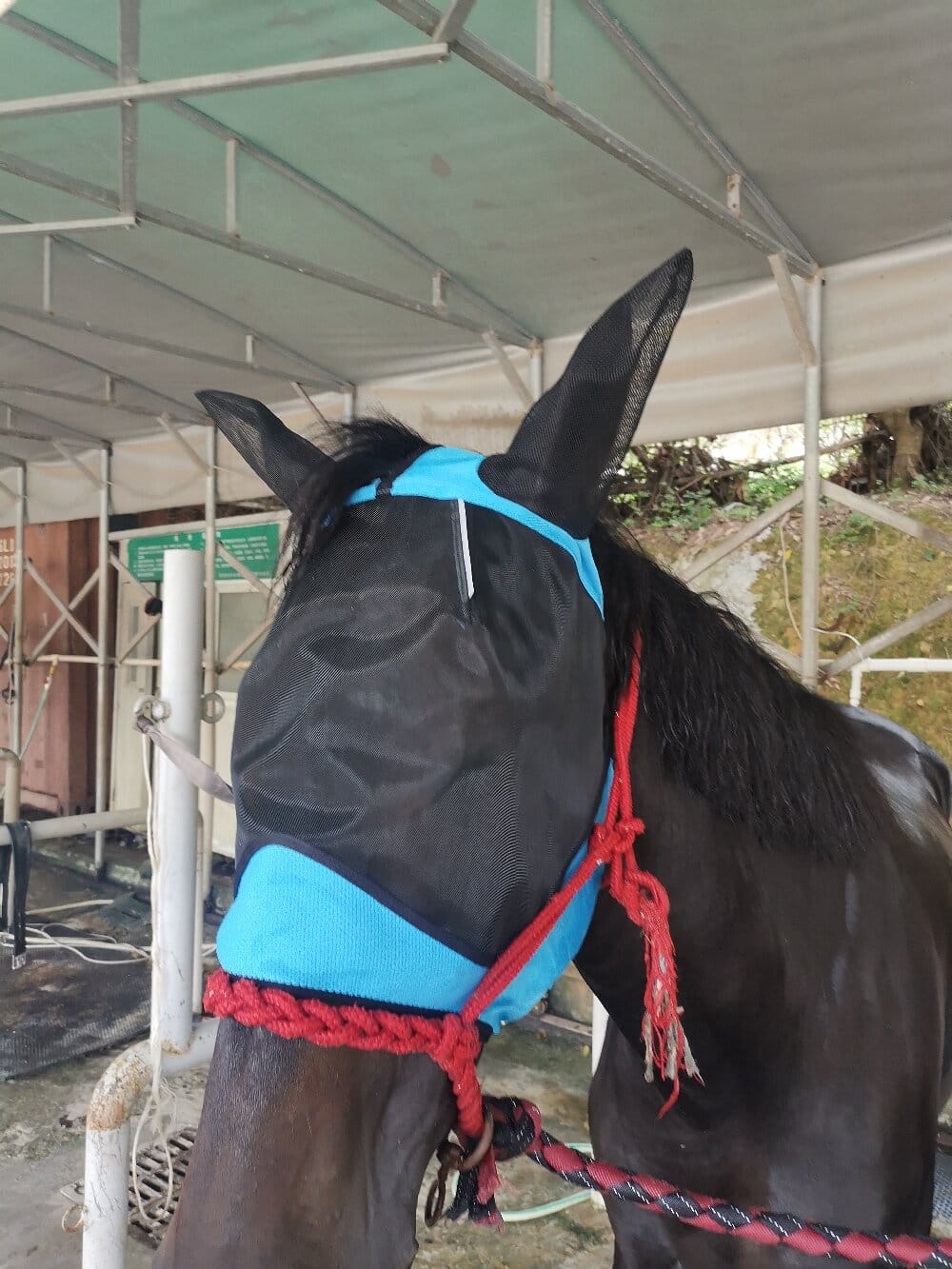
When I first brought my gelding home, I underestimated how much time I’d spend thinking about fly protection. After watching him stomp, swish, and rub his face raw one summer, I began comparing every horse fly mask I could get my hands on. What I discovered is that these seemingly simple pieces of mesh vary enormously in fit, durability, visibility, and comfort — and the differences genuinely affect how willingly a horse wears one day after day.
Fit and Coverage: The First Thing I Compare in a Horse Fly Mask
Fit is where most fly masks succeed or fail, and it’s the first criterion I check. A mask that gaps at the cheeks lets in determined flies, while one that pinches behind the ears gets rubbed off within minutes. I’ve tested standard pull-on styles, wrap-around designs with ear holes, and longer masks that extend down the nose. From my experience:
- Pull-on masks stay put well but can drag against the eyes during removal.
- Forehead-and-ear coverage matters most for horses prone to sweet itch along the poll.
- Nose extensions help with sensitive pink-skinned muzzles but collect burrs on trail rides.
My advice: measure your horse’s head rather than guessing by breed, and check that the eye darts sit clear of the lashes.
Mesh, Visibility, and Breathability Compared
Not all mesh is created equal. I’ve compared fine no-see-um netting against coarser woven fabric, and the trade-offs are real. Finer mesh blocks tiny biting midges but can reduce airflow and, in some designs, limit peripheral vision. Coarser mesh breathes better and lets more light through, yet smaller insects slip past. I look for soft, knot-free mesh that stands away from the eyes rather than pressing on them, and I prefer masks with a darker or tinted panel because they seem to reduce squinting in bright sun. Breathability matters more than most people expect — a mask that traps heat gets rejected fast, even by tolerant horses.
Durability, Fastenings, and Real-World Wear
Over a season, I’ve watched cheap binding fray and elastic stretch out, while better-constructed masks held their shape through daily turnout. When comparing fastenings, I favor wide Velcro straps that don’t catch mane hair, plus reinforced stitching at stress points like the throat and ear openings. I also weigh washability: masks that survive repeated gentle cycles without losing shape earn a permanent spot in my tack room. Price alone tells you little — a mid-priced mask with sturdy binding often outlasts a bargain version several times over.
Comfort and Behavioral Signals I Watch For
The best comparison test isn’t on paper — it’s watching the horse. I note whether he accepts the mask without head tossing, whether he rubs it against fences, and whether he keeps it on overnight. Head-shaking, ear pinning during application, or frantic rubbing are clear signals to try a different design. In my comparisons, masks with padded browbands and soft fleece edging consistently caused less irritation, especially on horses with sensitive skin or thin coats.
My Practical Buying Checklist
- Measure head length and width before ordering.
- Prioritize eye clearance and soft binding.
- Match mesh density to your local insect pressure.
- Check strap quality and stitching.
- Confirm the mask is machine washable.
Conclusion
Comparing horse fly masks taught me that the right choice balances fit, mesh density, durability, and comfort rather than following brand hype. Start with accurate measurements, watch how your horse responds, and don’t be afraid to rotate two masks for different conditions. A well-chosen fly mask keeps your horse calm, protected, and comfortable through the worst of fly season — and that’s worth the comparison shopping.