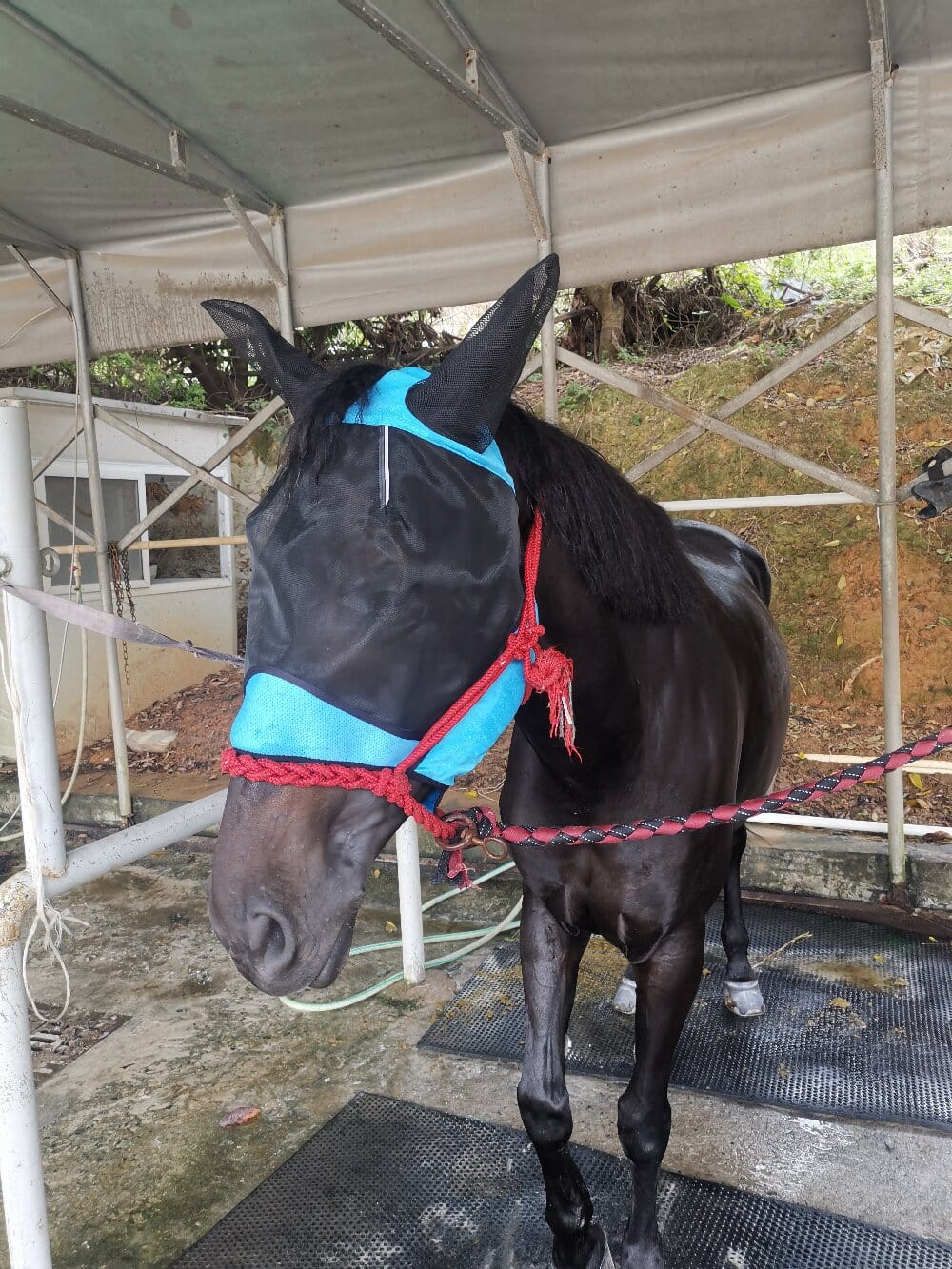
Long before modern manufacturers began stitching mesh and nylon, the horse fly mask was born out of pure necessity. If you have ever watched a horse stamp its feet in misery during blackfly season, you understand why. Historical records from the 1800s describe crude face coverings made from leather, canvas, and even woven horsehair, designed to shield sensitive eyes and ears from biting insects. These early prototypes were heavy and often irritated the skin, but they proved one thing: protecting a horse’s face from flies was not a luxury, it was a practical welfare decision. I find it fascinating that this simple piece of equipment has such a deep, working-class agricultural history.
From Barnyard Improvisation to the Modern Horse Fly Mask
As I trace the evolution of the horse fly mask, I see a clear shift from homemade solutions to specialized gear. In the mid-20th century, farmers began experimenting with fine wire mesh and cotton gauze, often sewn by hand and secured with string. These designs were a leap forward, but they lacked durability and frequently trapped heat. During the 1970s and 1980s, equestrian suppliers started producing purpose-built fly masks with elasticized edges and fleece padding, mirroring advances in human sportswear. I think this era was the real turning point, because it moved the fly mask from a cheap afterthought to a respected piece of tack. The introduction of UV-blocking fabrics in the 1990s further cemented the horse fly mask as an essential tool for horses with sensitive skin and eye conditions.
Key Milestones in Fly Mask Design
Looking back, I can identify a handful of design changes that truly mattered for horse owners:
- 1950s: Hand-sewn cotton covers with string ties, offering basic fly relief but poor fit.
- 1970s: Elasticized edges and fleece trim reduced rubbing and improved comfort.
- 1980s: Ear covers and nose extensions became standard on many models.
- 1990s: UV-protective mesh helped prevent sunburn and eye irritation.
- 2000s–present: Breathable, lightweight fabrics, adjustable straps, and durable stitching for long turnout use.
Each of these improvements reflected feedback from real riders and veterinarians, not just marketing trends. I appreciate that history because it shows the horse fly mask was refined through practical experience rather than corporate guesswork.
Why Historical Perspective Still Matters Today
Understanding where the horse fly mask came from helps us judge the quality of what we buy now. Older designs taught manufacturers that fit and ventilation matter more than fancy patterns, and that a secure but gentle closure prevents horses from losing their masks in the pasture. When I examine a modern fly mask, I look for the same features that early users demanded: protection for the eyes, relief for the ears, and fabric that does not trap sweat. Secondary keywords like fly protection, equine face covering, and insect control all trace back to that same timeless need. The history reminds us that good equine care is built on observation and iteration, not just innovation for its own sake.
Conclusion
The story of the horse fly mask is a quiet but meaningful chapter in equine welfare. From rough canvas coverings to breathable UV-blocking mesh, this simple piece of gear has evolved alongside our understanding of horse comfort. I believe that knowing this history makes us smarter shoppers and more thoughtful caretakers, because it connects every modern design choice to a real problem faced by horses and their handlers for generations.