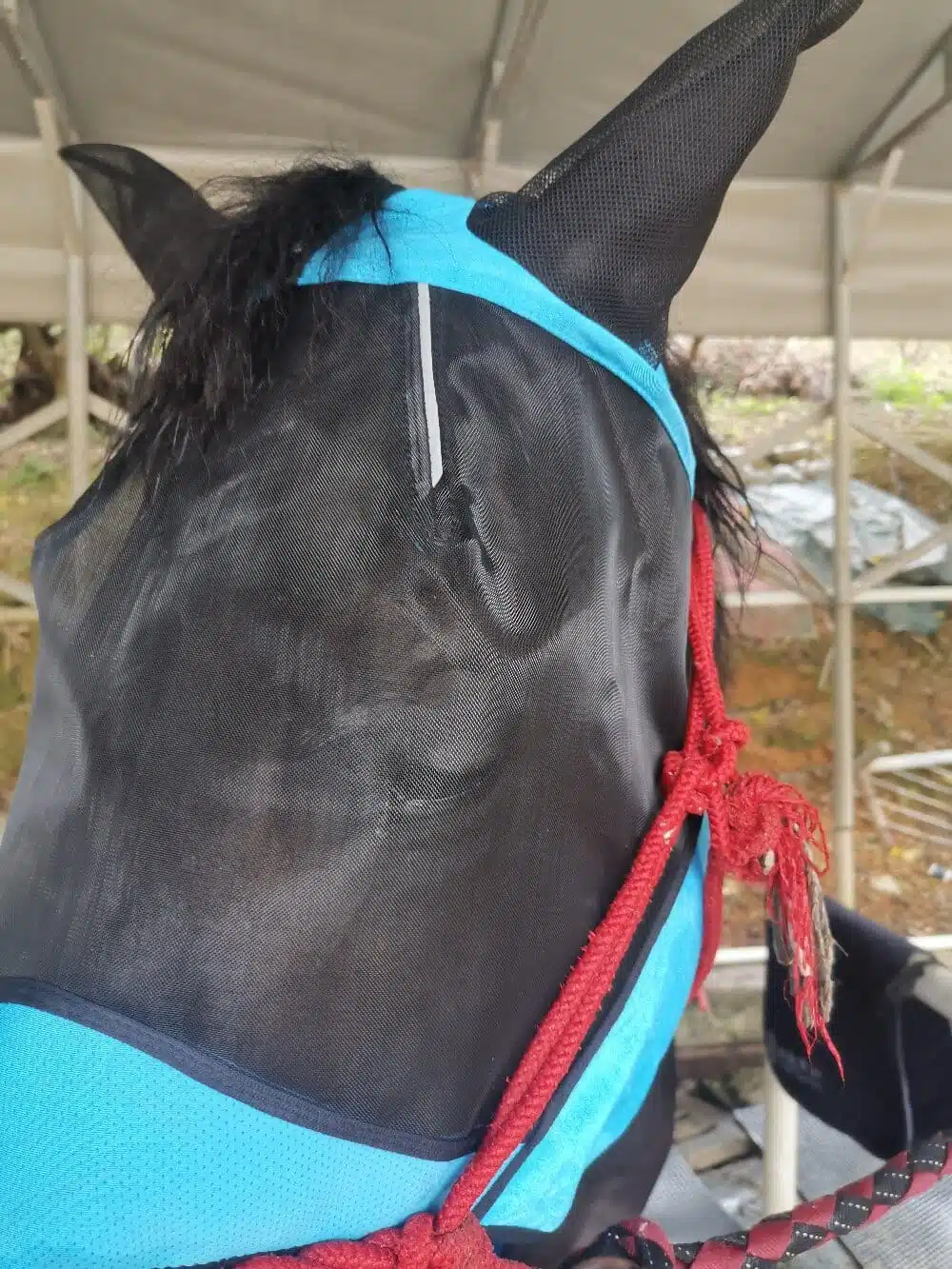

For as long as humans have worked alongside horses, they have sought ways to shield their animals from biting insects, and the modern horse fly mask is the product of centuries of gradual refinement. Historical records from ancient Egypt and Rome describe rudimentary face coverings made from woven reeds and leather, designed to keep flies away from the eyes and muzzle of working animals. These early devices were crude but effective, establishing a principle that would endure: a physical barrier offers the simplest defense against flying pests. Over time, this concept evolved through medieval farriery and into the industrial age, when improved textiles and stitching techniques made more comfortable and durable designs possible.
From Folk Craft to Manufactured Gear: The Evolution of the Horse Fly Mask
During the eighteenth and nineteenth centuries, equine care manuals began recommending gauze veils and fringed browbands for horses troubled by flies. These items were often homemade, cut from surplus netting and fastened with straps or cords. The rise of organized cavalry and carriage services further encouraged standardization, as stablemasters needed reliable protection for horses standing for long hours in open terrain. By the early twentieth century, saddlers and harness makers were producing purpose-built fly veils with reinforced edges and adjustable buckles, and the term fly mask began appearing in catalogs and agricultural journals.
The mid-twentieth century brought synthetic materials that transformed the category. Nylon mesh replaced cotton gauze, offering greater durability and visibility while reducing weight. Manufacturers experimented with fleece-lined edges to prevent rubbing, and with ear covers that addressed a common source of irritation. Veterinary research also contributed, documenting how ultraviolet exposure and insect bites affect equine eyes, which gave buyers a clearer rationale for investing in protective facewear.
Design Innovations and Regional Traditions
Different equestrian cultures shaped the fly mask in distinct ways. In the United States, Western riders favored sturdy masks with long nose coverage for trail and pasture use, while English riders often selected streamlined designs compatible with bridles and bonnets. Australia and New Zealand, where fly pressure is intense, drove demand for full-face veils with UV-blocking fabric. European makers emphasized breathability and ergonomic fit.
Notable milestones in the historical timeline include:
- 1950s: Widespread adoption of synthetic mesh in stable equipment.
- 1970s: Introduction of fleece trim to reduce pressure points.
- 1990s: UV-rated fabrics marketed for eye protection.
- 2000s: Ergonomic patterns and ear-and-muzzle combinations.
- 2010s: Lightweight, breathable designs for competition and turnout.
Modern Standards and the Horse Fly Mask Today
Contemporary equine fly masks reflect decades of accumulated knowledge. Designers now balance coverage with airflow, using fine mesh that excludes biting insects while permitting clear vision. Adjustable straps, elasticized throat closures, and reinforced binding have become standard. Owners can choose from earless styles for everyday turnout, models with nose fringe for sensitive skin, and UV-protective versions for horses prone to sun-related eye conditions.
Materials science continues to push the category forward, with moisture-wicking fabrics and antimicrobial treatments entering the market. At the same time, traditional craftsmanship persists in small workshops that hand-finish leather trim and custom sizing, linking today’s products to their historical roots.
Conclusion
The history of equine face protection reveals a steady arc from woven reeds to engineered mesh. What began as a simple folk remedy has become a refined piece of animal husbandry equipment, shaped by veterinary insight, regional riding traditions, and material innovation. Understanding this legacy helps today’s horse owners appreciate not only the utility but also the heritage behind every protective veil they fasten.