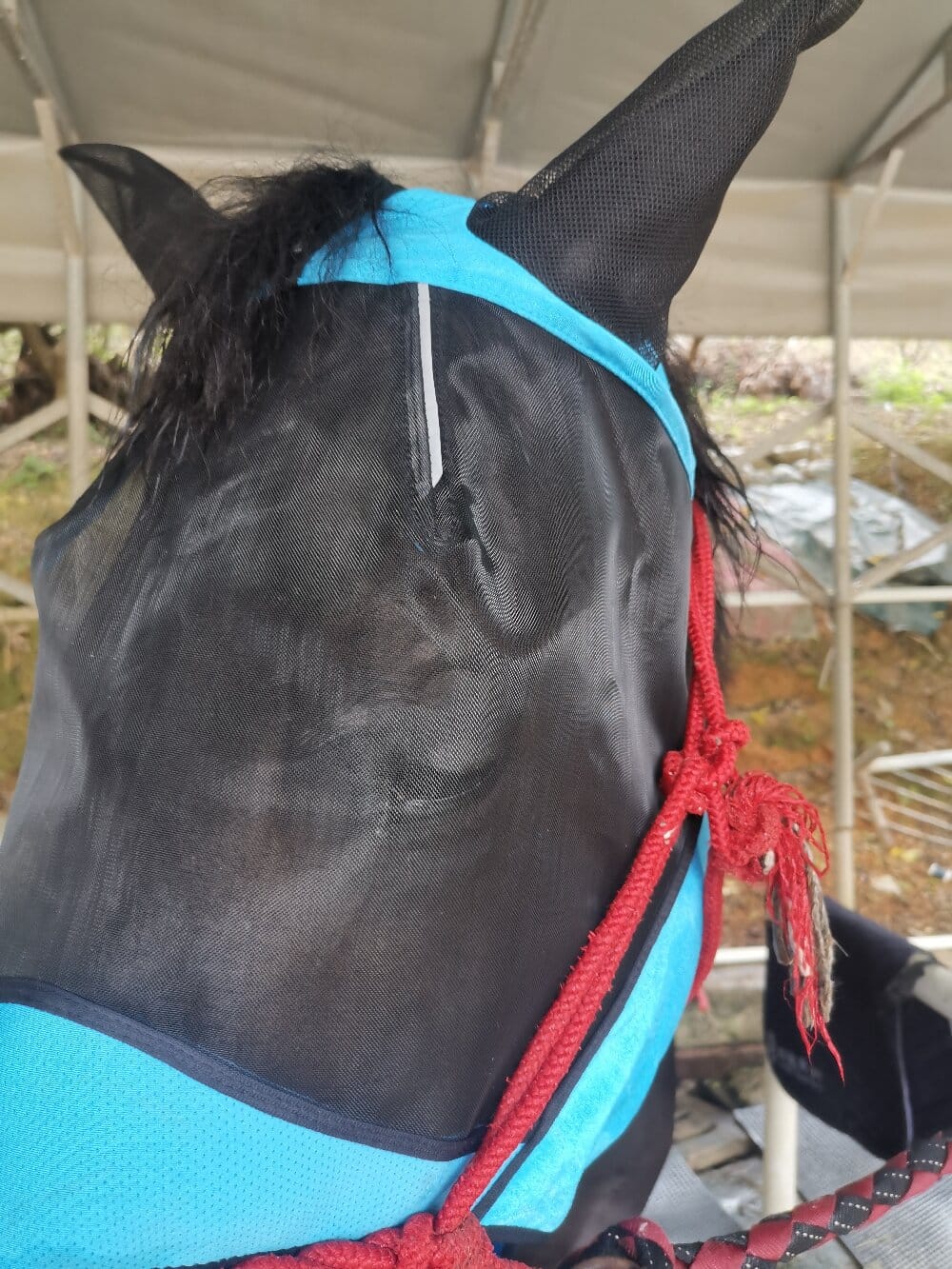
Long before synthetic fabrics and adjustable straps, horse owners understood a simple truth: a horse fly mask was less a luxury than a necessity. I find it fascinating that ancient horsemen in arid regions wrapped their animals’ faces in loosely woven cloth during the biting season, a practice that echoes the mesh veils we use today. These early coverings were crude, often stiff with dust and sweat, yet they reveal a timeless concern for equine comfort. The horse fly mask, in its many evolving forms, has always been a response to a specific torment—the relentless assault of flying insects on sensitive eyes and skin. Looking back, I cannot help but admire the ingenuity of those first attempts, even as I wince at their clumsiness.
From Folk Remedies to Refined Design: A Horse Fly Mask Timeline
By the nineteenth century, equestrian culture in Europe and North America had begun to formalize what had once been folk practice. Leather fringe, crocheted netting, and oiled canvas appeared in stable catalogs, each promising relief from botflies and face flies. I think of these decades as the awkward adolescence of fly protection—earnest, inventive, and frequently impractical. The horse fly mask of that era was often heavy, prone to rubbing, and maddeningly difficult to secure during a spirited ride. Yet each flawed prototype taught makers something valuable about ventilation, visibility, and fit. Historians of tack and harness will tell you that the real turning point came with the development of lightweight, breathable mesh—a material revolution that finally allowed a horse fly mask to shield without smothering.
Why the Modern Horse Fly Mask Owes Everything to Its Past
When I examine a contemporary fly veil with its fleece-lined browband and UV-blocking fabric, I see centuries of trial and error stitched into every seam. The horse fly mask has evolved from a desperate wrap of cloth into a precise piece of protective equipment, but the underlying goals remain unchanged: keep insects away from the eyes, reduce irritation, and allow the animal to graze and work in peace. Secondary keywords like fly veil, insect protection, and equine face covering all trace back to the same lineage. I would argue that no other piece of horse gear has been so consistently underestimated by casual observers and so fiercely valued by caretakers. That tension between humble appearance and genuine utility is, to me, the heart of the story.
Lessons the Historical Record Teaches Today’s Riders
What can a modern equestrian learn from this long history? Quite a bit, actually. I believe the past offers practical guidance that still holds up:
- Fit matters more than fashion—ill-fitting protection rubs and frustrates, a complaint recorded in stable notes for over a century.
- Breathability is not a modern obsession; earlier makers learned that trapped heat caused as much distress as the flies themselves.
- Durability earned through repeated repair, not just initial purchase, has always defined a worthwhile horse fly mask.
- Seasonal use, cleaned and stored properly, extends the life of any protective veil.
These principles feel almost like inherited wisdom, passed down through generations of horsemen who never wrote a formal manual but certainly knew their animals.
Conclusion: A Small Accessory with a Long Memory
Tracing the evolution of equine face protection reminds me that practical inventions rarely spring from nowhere. The horse fly mask we snap into place today carries the fingerprints of countless unnamed makers and riders who refused to accept insect torment as inevitable. I find that history both humbling and reassuring. Whether you call it a fly veil, an insect shield, or simply good sense, this modest piece of gear deserves more respect than it usually receives—and its story is far from finished.