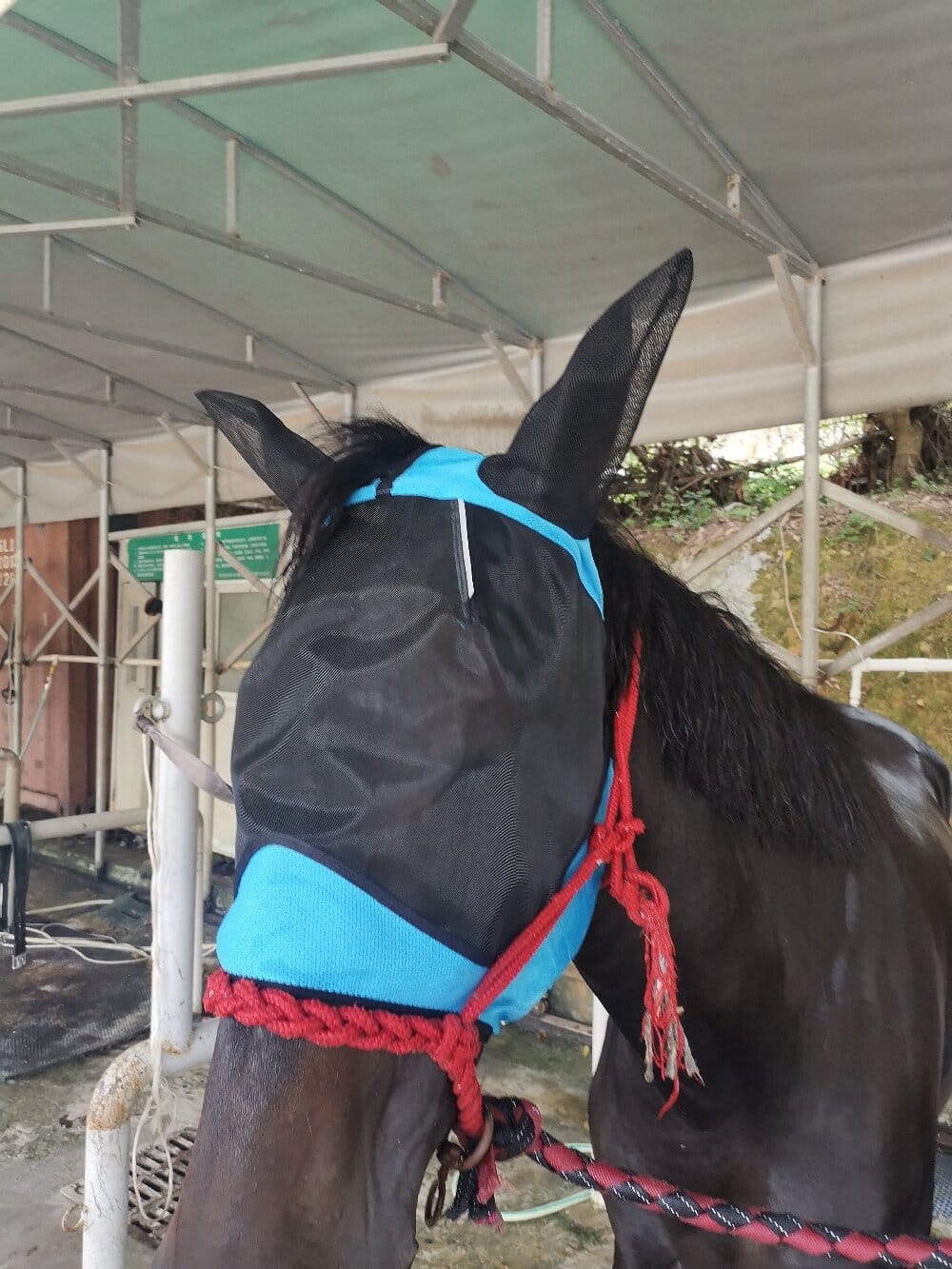
By the mid-2030s, the humble horse fly mask is expected to transform from a simple mesh screen into an intelligent, data-driven wearable. As researchers, veterinarians, and engineers converge on solutions for equine ocular health, the fly mask will become a central component of preventive care. No longer just a barrier against insects, it will integrate sensors, predictive analytics, and adaptive materials to protect horses in ways that today’s owners can only imagine.
From Passive Shield to Smart Companion
Future fly masks for horses will likely resemble lightweight smart goggles more than traditional mesh. Embedded micro-sensors will monitor ultraviolet exposure, dust levels, and insect activity in real time. When a horse enters a high-risk environment—such as a damp pasture at dusk when biting midges swarm—the mask will automatically darken its visor or emit a low-frequency deterrent that remains inaudible to the animal. This shift from passive protection to active prevention will significantly reduce cases of equine recurrent uveitis and insect-borne infections.
How the Horse Fly Mask Will Integrate with Herd Management
By 2040, most commercial stables will use a centralized herd health platform. Each smart equine eye protector will sync with this system, transmitting data on tear production, blink rate, and skin temperature around the eyes. Machine learning algorithms will flag early signs of irritation or infection days before visible symptoms appear. Owners and trainers will receive mobile alerts suggesting adjustments—such as increasing shade or changing turnout times. The mask becomes not just a protective layer but a diagnostic tool, reducing veterinary costs and improving welfare outcomes.
- Predictive insect forecasting: Masks will cross-reference local weather data with historical pest patterns to predict fly population surges.
- Self-cleaning surfaces: Nanotextured materials will repel dust and bacteria, eliminating daily washing and reducing skin irritation.
- Solar-powered operation: Flexible photovoltaic threads woven into the mask’s frame will keep sensors charged without batteries.
- Custom fit via 3D scanning: Each mask will be printed from a digital scan of the horse’s head, ensuring comfort and full coverage.
Materials and Sustainability in 2050
Environmental concerns will drive radical changes in how these masks are made. Petroleum-based plastics will be replaced by biodegradable biopolymers derived from hemp and mycelium. These materials will match the durability of current synthetics while breaking down safely in soil. Moreover, modular design will allow individual components—straps, lenses, sensors—to be replaced rather than discarding the entire mask. This circular economy approach will appeal to eco-conscious equestrians and reduce long-term costs.
Challenges and Ethical Considerations
Despite the promise, several hurdles will remain. Data privacy for animals raises questions: who owns the health metrics collected from a horse? Will insurance companies use that data to adjust premiums? Additionally, over-reliance on technology could lead to complacency. A fully automated mask might discourage owners from performing daily visual checks. Future regulations will likely require fail-safes and manual override options to ensure the horse’s immediate comfort never depends solely on software.
Preparing for the Next Generation of Equine Eye Protection
Between now and 2050, owners can expect a gradual shift. Early smart masks will appear in high-performance racing and show barns, then trickle down to recreational riders. Prices will start high—perhaps several hundred dollars—but scale quickly. Veterinarians will begin prescribing specific mask models for horses with chronic eye conditions, much as they recommend corrective shoes today. Breeders will select for traits that pair well with wearable tech, though welfare advocates will caution against over-engineering.
In summary, the future horse fly mask will be far more than a piece of mesh. It will be a predictive health monitor, a pest deterrent, and a sustainability statement—all while remaining comfortable for the horse. The most successful designs will balance advanced functionality with simplicity, ensuring that technology serves the animal rather than overwhelming it. As with all equine innovations, the guiding principle will remain unchanged: do no harm, and always put the horse first.