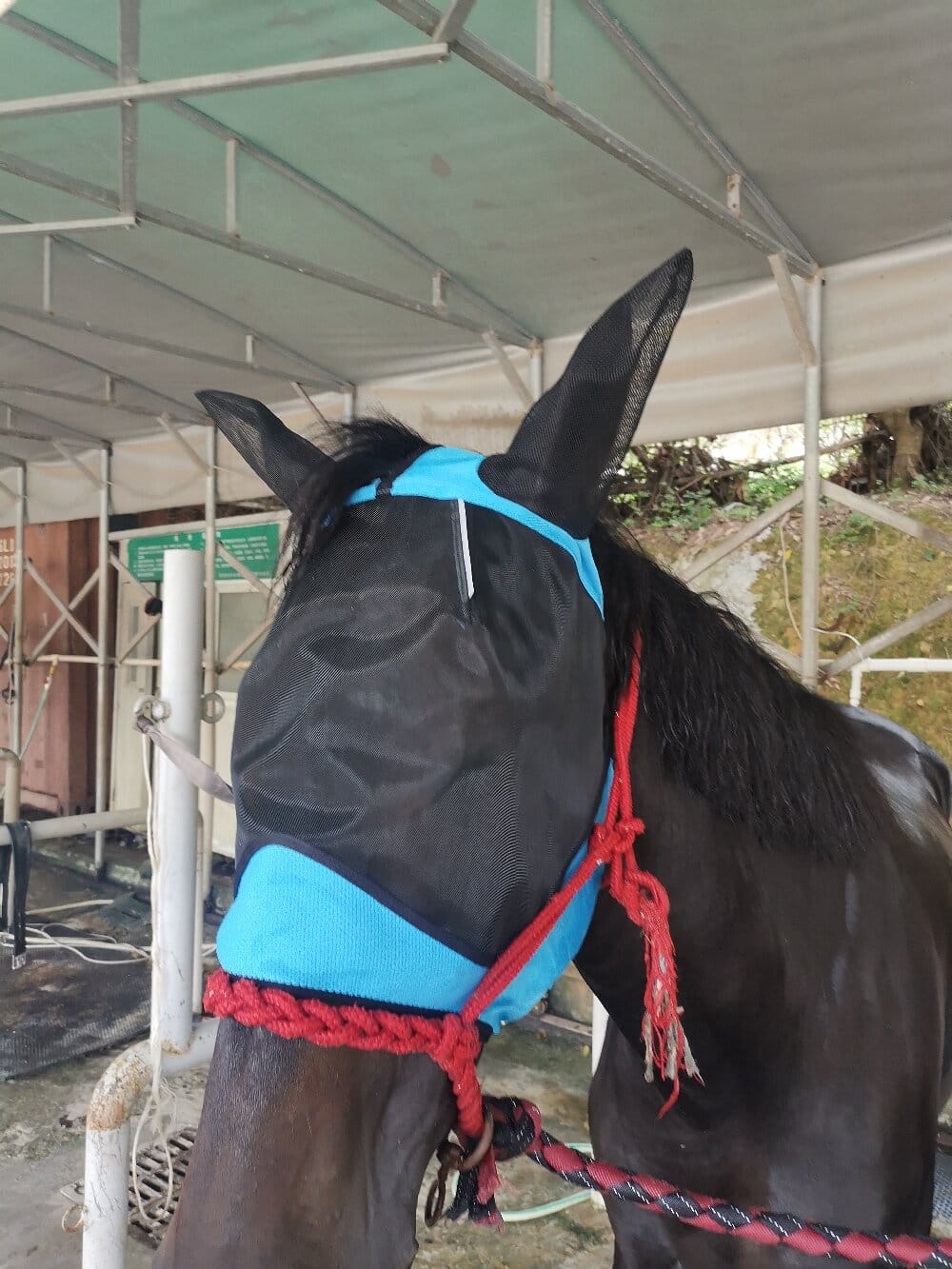
If you’ve ever watched a horse stamp and swish for hours on end, you already know why a horse fly mask earns its place in the tack room. I’ve tested dozens of them across different seasons, and my perspective is simple: the right fly mask is the difference between a relaxed horse and a miserable one. In this comparative look, I’ll walk you through what actually matters when you’re choosing among the endless options on the market, from mesh density to fit and durability, so you can spend less time shopping and more time riding.
Horse Fly Mask Fit: The Comparison That Matters Most
Before I compare materials or prices, I always start with fit, because a poorly fitted mask is worse than no mask at all. In my experience, the three main styles behave very differently:
- Pull-on masks are the simplest and usually the most affordable. They slip over the head and stay put on quiet horses, but I’ve found they can rub behind the ears during long turnout sessions.
- Adjustable strap masks offer a more customized fit with hook-and-loop closures under the jaw. They’re my go-to for horses with unusual head shapes, though the straps need regular checking for wear.
- Ear-and-forelock styles add coverage for sensitive ears and provide extra protection around the poll. I reach for these during peak fly season when biting insects are relentless.
When I compare fit across brands, I measure the distance from the browband to the noseband and check clearance around the eyes. A good mask should sit slightly away from the eyes, never pressing on lashes, and it should leave room for the ears to move freely.
Mesh Density and UV Protection Compared
Here’s where comparisons get interesting. Not all mesh is created equal, and I’ve learned to read the fine print. Finer mesh blocks more tiny biting midges, which is a huge plus in humid regions, but it also traps more heat. Coarser mesh allows better airflow, which I prefer for hot summer days, though it lets through the smallest pests. Many quality masks now include UV-blocking fabric, and I’ve noticed a real difference in horses with pink skin around the muzzle, where sunburn is a genuine concern. When I weigh fine versus coarse mesh, I usually recommend owning one of each so you can rotate based on weather and insect pressure.
Durability, Visibility, and Price: My Side-by-Side Take
Durability is the category where cheap masks reveal themselves fast. I’ve had budget masks tear at the seams within a single season, while reinforced models with double-stitched binding and sturdy binding tape have lasted multiple years. Visibility matters too; I favor bright colors or reflective trim because a dark mask on a dark horse is nearly impossible to spot in a pasture at dusk. On price, my honest comparison is this: a mid-range mask with quality stitching almost always outperforms the cheapest option over time, and it costs far less than replacing a torn mask every few months. If you’re comparing two masks at similar prices, choose the one with stronger binding and a more generous ear design.
My Practical Checklist Before You Buy
- Measure your horse’s head and compare against each brand’s size chart rather than guessing.
- Check whether the mask is designed for turnout or stable use, since turnout masks need tougher materials.
- Look for soft fleece or binding at pressure points behind the ears and under the jaw.
- Confirm the mask offers UV protection if your horse has light-colored skin.
- Read reviews specifically about longevity, not just initial appearance.
Final Thoughts on Choosing Wisely
After all these comparisons, my conclusion is straightforward: prioritize fit and stitching over flashy features, match mesh density to your climate and pest pressure, and don’t overlook UV protection for sensitive-skinned horses. A well-chosen fly mask protects your horse’s eyes and face, reduces stress, and pays for itself in comfort and durability. Compare carefully, measure twice, and your horse will thank you with a calm, fly-free summer.