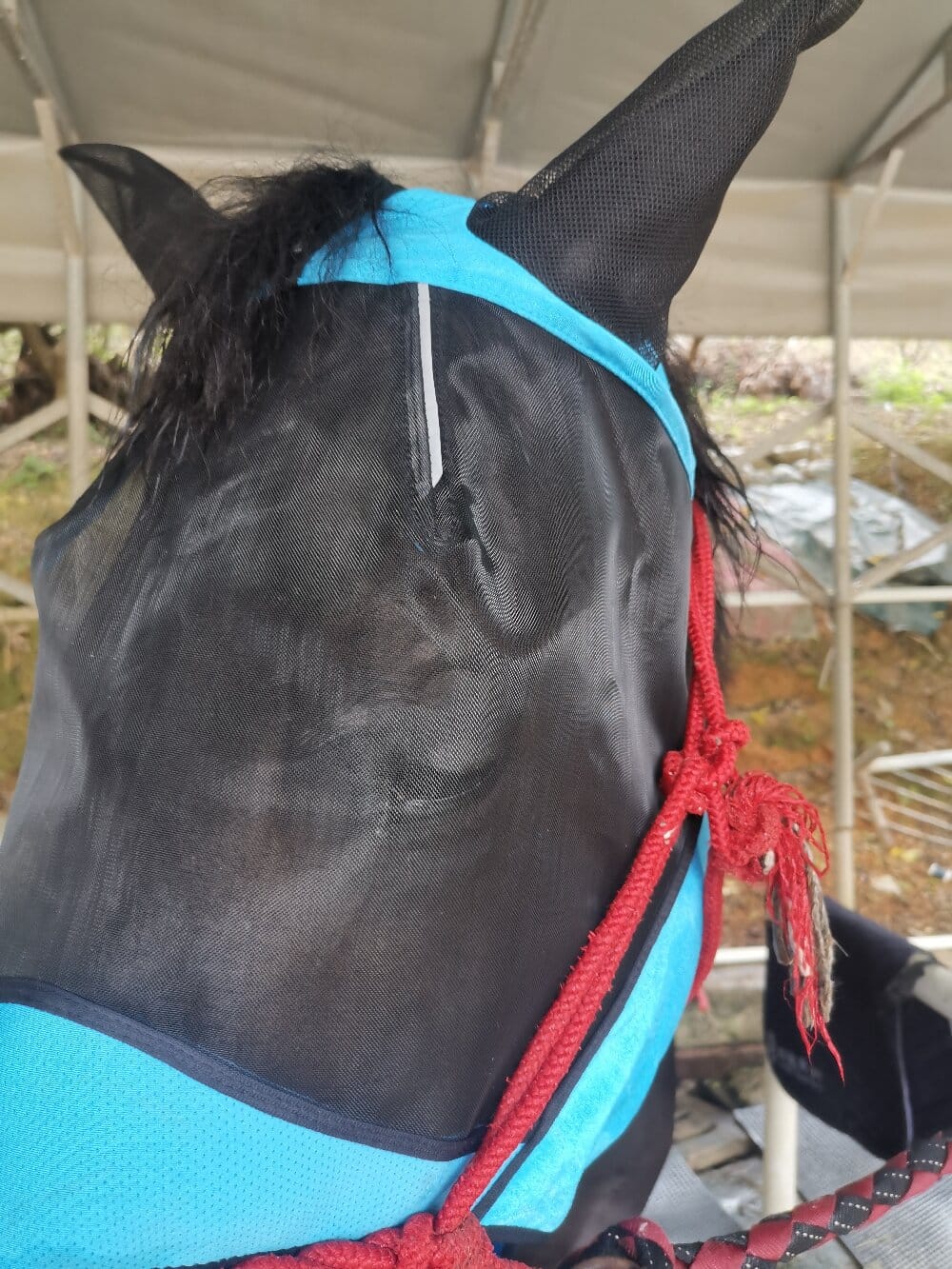
A horse fly mask is a lightweight, mesh face covering designed to protect a horse’s eyes, ears, and muzzle from biting insects, UV rays, and environmental debris. Unlike full fly sheets that cover the body, this piece of tack focuses specifically on the most sensitive areas of the head, where flies tend to cluster. For horse owners dealing with seasonal pests, a well-fitted fly mask is often the first line of defense against irritation, infection, and stress. This practical guide explains how these masks work, how to choose the right one, and how to maintain them for reliable, long-term protection.
How Fly Masks Protect Horses
Flies, gnats, and mosquitoes target the eyes and ears because these areas offer thin skin and easy access to moisture. Constant biting can lead to conjunctivitis, corneal ulcers, and summer sores, while head tossing and rubbing can cause self-injury. A quality fly mask creates a physical barrier without restricting vision or airflow. Many models also block a significant percentage of ultraviolet light, which is helpful for horses with photosensitivity or pink skin around the eyes. Ear covers add protection against midges, and nose extensions shield the muzzle from stable flies.
Key Features to Consider When Buying a Horse Fly Mask
Not all masks are built the same, and fit matters as much as material. Use the following checklist when shopping:
- Mesh density: Finer mesh blocks smaller insects but reduces airflow; choose a balance suited to your climate.
- UV rating: Look for documented UV protection if your horse has sensitive skin or lives in a sunny region.
- Ear and nose coverage: Detachable or built-in ear covers help with midges; nose extensions suit horses bothered by stable flies.
- Fleece binding: Soft edges along the brow and nose reduce rubbing and hair loss.
- Adjustable straps: Two or three-point closures keep the mask secure without overtightening.
- Darting and shaping: Properly shaped masks stay clear of the eyes and allow full eyelid movement.
Fitting a Horse Fly Mask Correctly
A poorly fitted mask is worse than none at all. Position the mask so the mesh sits away from the eyelashes and the binding rests smoothly against the skin. You should be able to slide two fingers under the throat strap. Check that ear covers do not fold down and that the nose piece does not obstruct breathing. Introduce the mask gradually, especially for young or head-shy horses, and inspect the face daily for rub marks. During turnout, confirm the mask stays in place after rolling or rubbing on fences.
Maintenance and Replacement Guidelines
Wash masks regularly in mild soap and water, rinse thoroughly, and air-dry away from direct heat. Inspect straps, buckles, and mesh for tears each week, since small holes can enlarge quickly. Replace any mask with broken hardware, stretched elastic, or frayed binding. Many owners keep two masks per horse so one can dry while the other is worn. In high-fly seasons, a daily rinse may be necessary to remove sweat and debris that attract insects.
Pairing Fly Masks With Other Fly Control Methods
Masks work best as part of an integrated strategy. Combine them with fly sheets, insect repellents approved for equine use, fans in stalls, and manure management to reduce breeding sites. Rotate masks between day and night turnout if your horse is turned out continuously, and monitor for signs of rubbing or eye discharge. If irritation persists despite consistent use, consult your veterinarian to rule out underlying conditions.
Conclusion
A horse fly mask is a practical, affordable investment in equine comfort and eye health. By selecting the right mesh, fit, and coverage, and by maintaining the mask properly, owners can significantly reduce insect-related stress during peak fly season. Consistent inspection and pairing with broader fly control measures will keep your horse protected and comfortable throughout the warmer months.