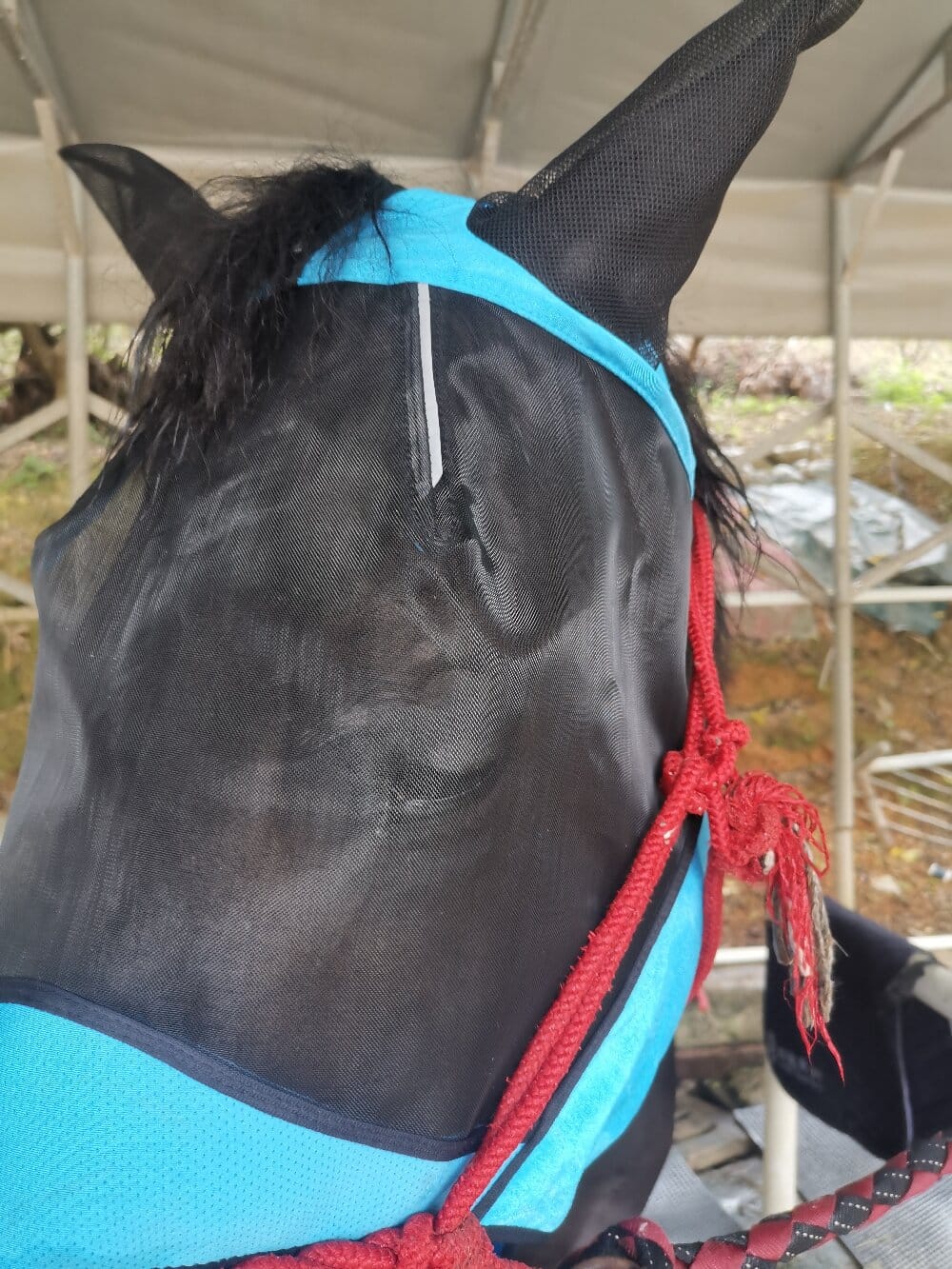
Few things are as frustrating as watching your horse toss its head, stamp its feet, and rub its face raw against the fence while deer flies and face flies swarm around its eyes and muzzle. A well-chosen horse fly mask solves this problem by creating a physical barrier that keeps biting insects away from the most sensitive parts of the face, but only if it fits properly and suits your horse’s daily routine. From the perspective of a barn manager, a veterinarian, and a weekend trail rider, the same basic questions come up: does it stay on, does it rub, and does it actually reduce the irritation that leads to head shaking and eye infections?
Insect pressure varies by region, season, and even time of day, yet the underlying problem is consistent. Flies congregate around the eyes, ears, and nostrils because those areas offer moisture and thin skin. When a horse cannot escape them, the result is stress, reduced grazing time, and sometimes serious eye trauma from constant rubbing. A quality fly mask for horses addresses this at the source rather than relying only on sprays and ointments, which wear off quickly in heat and sweat.
From a veterinary standpoint, the benefits extend beyond comfort. Horses with recurrent uveitis, corneal ulcers, or light-sensitive eyes often need consistent protection during turnout. A UV-blocking fly mask can reduce glare and dust exposure while keeping flies off healing tissue. From the rider’s perspective, a horse that is not constantly fighting insects is calmer to catch, halter, and tack up, which makes the whole barn routine smoother.
How to Solve the Most Common Fly Mask Problems
Most complaints about these masks fall into a few predictable categories, and each has a practical fix.
- Masks that slip or rotate: Look for adjustable straps under the jaw and behind the ears, plus a browband that sits clear of the eyes. Measure the distance from the top of the head to the end of the muzzle before ordering; sizing charts vary by brand.
- Rubbing behind the ears or along the nose: Introduce the mask gradually, check seams daily during the first week, and choose fleece edging or rolled binding where the fabric meets skin. Never leave a wet, dirty mask on for long periods.
- Flies getting under the mesh: Fine mesh blocks the smallest gnats, while a deeper drop over the muzzle keeps face flies from crawling up from below. Masks with ear covers help with black flies and midges.
- Tearing and loss in the pasture: Breakaway or elastic safety straps are essential for turnout. A mask that pops off under pressure is far safer than one that traps a horse’s head.
- Eye irritation despite protection: Ensure the mesh does not touch the eyelashes, and remove the mask at night if your horse tends to roll or rub. Check eyes daily for discharge or cloudiness.
Care and rotation matter as much as fit. Hand wash masks in mild soap, rinse thoroughly, and air dry flat so the mesh keeps its shape. Keeping two masks in rotation means one can be cleaned while the other protects your horse, and inspecting straps and binding weekly catches wear before it becomes a rub.
Choosing Protection That Matches Your Horse’s Needs
Not every horse needs the same level of coverage. A sensitive show horse in a sandy paddock may do well with a lightweight, UV-blocking mask with ear covers, while a hardy pasture horse in a biting-fly hotspot may need a heavier-duty design with a nose extension. Consider the horse’s coat color, existing eye conditions, turnout hours, and whether it shares a field with playful companions who like to grab straps. Consulting your veterinarian is wise if your horse has a history of eye disease, and a trial period with supervised turnout will reveal fit issues quickly.
In short, the right horse fly mask is a simple, low-cost solution to a persistent problem: it protects delicate skin, reduces insect-related stress, and supports eye health when it fits well and stays clean. Measure carefully, prioritize safety straps and soft edging, rotate and wash regularly, and monitor your horse’s face daily. Small habits around a well-fitted mask deliver calmer turnout, healthier eyes, and a more comfortable horse through fly season.