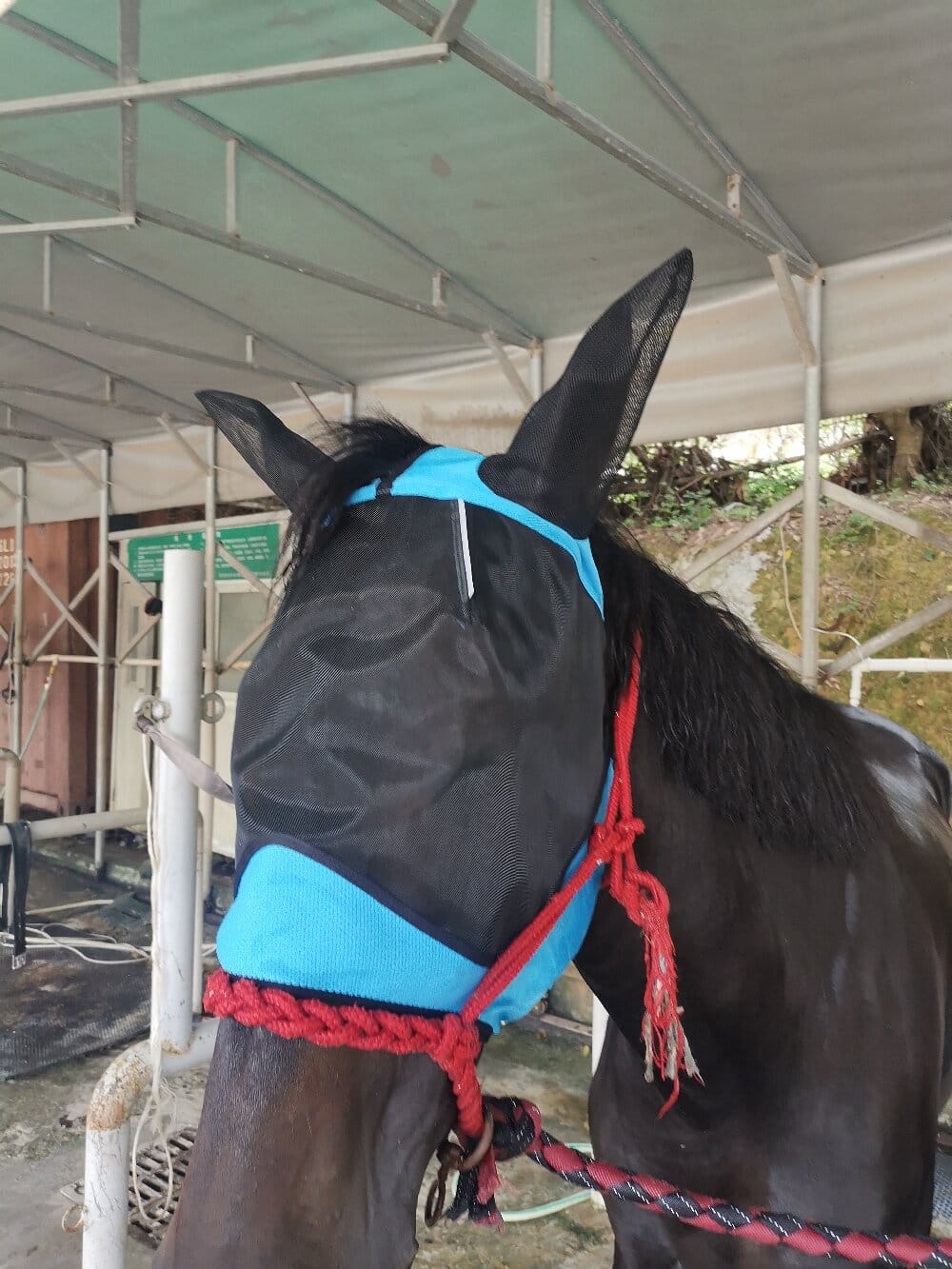
Last summer, my mare came in from the pasture with tiny specks of blood along her muzzle and eyelids, and I knew immediately what was happening. The flies had found her again. I tried sprays, ointments, and fly sheets, but nothing gave her real relief around her face. That was the summer I finally invested in a horse fly mask, and it changed our daily routine completely. If you are dealing with the same frustrating cycle of bites, swelling, and head-shaking, this is what I learned about choosing and using one effectively.
Identifying the Real Problem Behind Fly Irritation
Before I bought anything, I had to understand what I was actually solving. Flies do more than cause momentary annoyance. They cluster around the eyes and ears, spread bacteria, and can trigger conjunctivitis or summer sores. My mare was rubbing her face on fences, which only made things worse. The core problems I needed to address were:
- Constant biting around sensitive areas like eyes, ears, and muzzle
- Eye irritation and discharge caused by face flies
- Stress that affected her appetite and temperament
- Repeated rubbing that damaged her skin and coat
Once I framed it as a protection problem rather than a repellent problem, the answer became obvious. A physical barrier designed for the face was the missing piece.
Choosing the Right Horse Fly Mask for My Horse
Not all masks are equal, and I learned this the hard way. My first purchase was too loose and slid down over my mare’s eyes within minutes. The second was too tight and left rub marks behind her ears. Here is the checklist I now use before buying:
- Measure your horse’s face from poll to nose and compare with the sizing chart.
- Look for fleece padding at the browband and ear edges to prevent rubbing.
- Choose a mesh fine enough to block tiny flies but breathable enough for hot weather.
- Check whether the mask is UV-blocking, which also helps horses with photosensitivity.
- Confirm ear coverage if your horse is bothered by gnats and mosquitoes.
- Verify that the closure is adjustable and uses durable hook-and-loop straps.
I also learned that a horse fly mask with a nose extension is worth considering for horses prone to muzzle bites, though it is not necessary for every horse.
Putting the Mask to Work in My Daily Routine
Consistency was the key to making this work. I put the mask on every morning before turnout and remove it at night, checking for dirt and adjusting the straps. During peak fly season, I keep a second mask on hand so one can be washed while the other is worn. I also inspect the mesh weekly for tears, because a small hole lets in exactly what I am trying to keep out. Since making this part of our routine, my mare’s head-shaking has nearly stopped, and the small wounds around her eyes have healed completely.
What I Would Tell Another Horse Owner
If flies are making your horse miserable, do not wait for the problem to escalate. A well-fitted, breathable horse fly mask is one of the least expensive and most effective tools I have found for protecting the face during fly season. Measure carefully, prioritize padding and fit, and check the mask daily. For me, this simple piece of equipment turned a stressful summer into a manageable one, and my mare finally spends her turnout time grazing instead of fighting off flies.