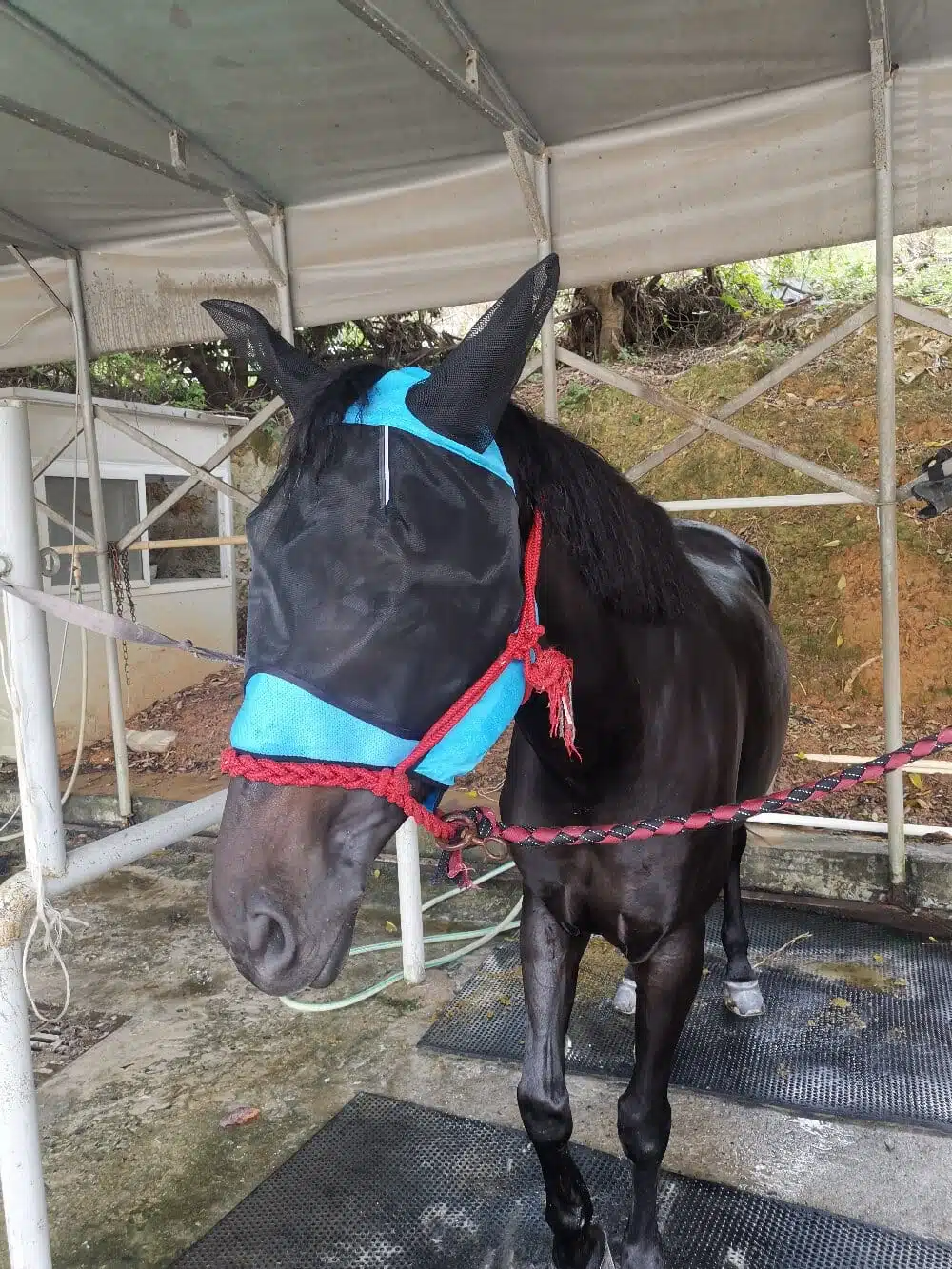

Like many horse owners, I used to grab the first horse fly mask I found at the tack shop and hope for the best. After watching my gelding, Toby, rub his face raw during fly season one summer, I realized I needed to do some real comparative research. Over the past two seasons, I have tested and compared several styles of equine fly masks, and I want to share what I learned so you can make a smarter choice for your own horse.
Key Features I Compared in a Horse Fly Mask
Before diving into specific styles, I compared every mask against a consistent set of criteria. Here is what mattered most in my evaluation:
- Coverage: Does the mask protect the eyes, ears, and muzzle, or only the eyes?
- Fit and adjustability: Are the straps adjustable, and does the mask stay put during turnout?
- Material and breathability: Mesh density affects airflow and protection from tiny biting insects.
- Durability: How well does the fabric hold up to pasture buddies and fence rubs?
- Visibility and comfort: Can the horse see clearly through the mesh, and does it cause rubbing?
Comparing Standard Eye Masks vs. Full-Face Fly Masks
The most common type is the standard eye mask, which covers the eyes and sometimes the ears. In my comparison, these worked well for sensitive horses that dislike anything over their muzzle. However, I noticed Toby still got bites around his nose and jawline. The full-face fly mask, with a long nose extension, offered noticeably better coverage for horses bothered by face flies and gnats. The trade-off is that full-coverage styles can feel restrictive at first, so I introduced mine gradually. If your horse has a history of nasal irritation or sweet itch around the face, the extended coverage is worth the adjustment period.
Ear Coverage: An Underrated Comparison Point
I used to overlook ear coverage until I saw how many flies gathered inside Toby’s ears. When I compared masks with ear protection against those without, the difference was striking. Masks with soft mesh ear covers kept insects out without muffling sound too much, though I recommend checking that the ear fabric is light and flexible. Stiffer ear cups caused Toby to shake his head, while softer ones he barely noticed.
Materials and Breathability Compared
Not all mesh is created equal. I compared fine, dense mesh against looser weaves, and the finer mesh blocked even the smallest gnats while still allowing decent airflow. Heavier UV-blocking fabrics offered sun protection for pink-skinned horses, but I found they trapped more heat on scorching days. For peak summer, I lean toward lightweight, breathable mesh; for horses with photosensitivity, a UV-rated mask is the better pick. Checking the fabric against your horse’s skin before a full day of turnout is a habit worth adopting.
Durability and Fit: What Held Up Over Time
After a full season, the masks that survived the best were those with reinforced stitching and double-locking straps. Elastic straps stretched out faster than hook-and-loop closures, and cheap binding frayed after a few washes. I also learned to compare fit carefully: a mask that sits too loose slides over the eyes, while one that is too tight leaves rub marks along the cheekbones. Measuring from poll to jaw before buying saved me from repeat returns.
My Final Takeaway
Comparing fly masks taught me there is no single best option, only the best fit for your horse’s needs. Eye-only masks suit easygoing horses, full-face designs protect sensitive muzzles, and ear coverage is essential in fly-heavy pastures. Prioritize breathable mesh, secure adjustable straps, and durable stitching, and introduce any new mask slowly. A little comparison shopping now will save your horse a lot of head-shaking later.