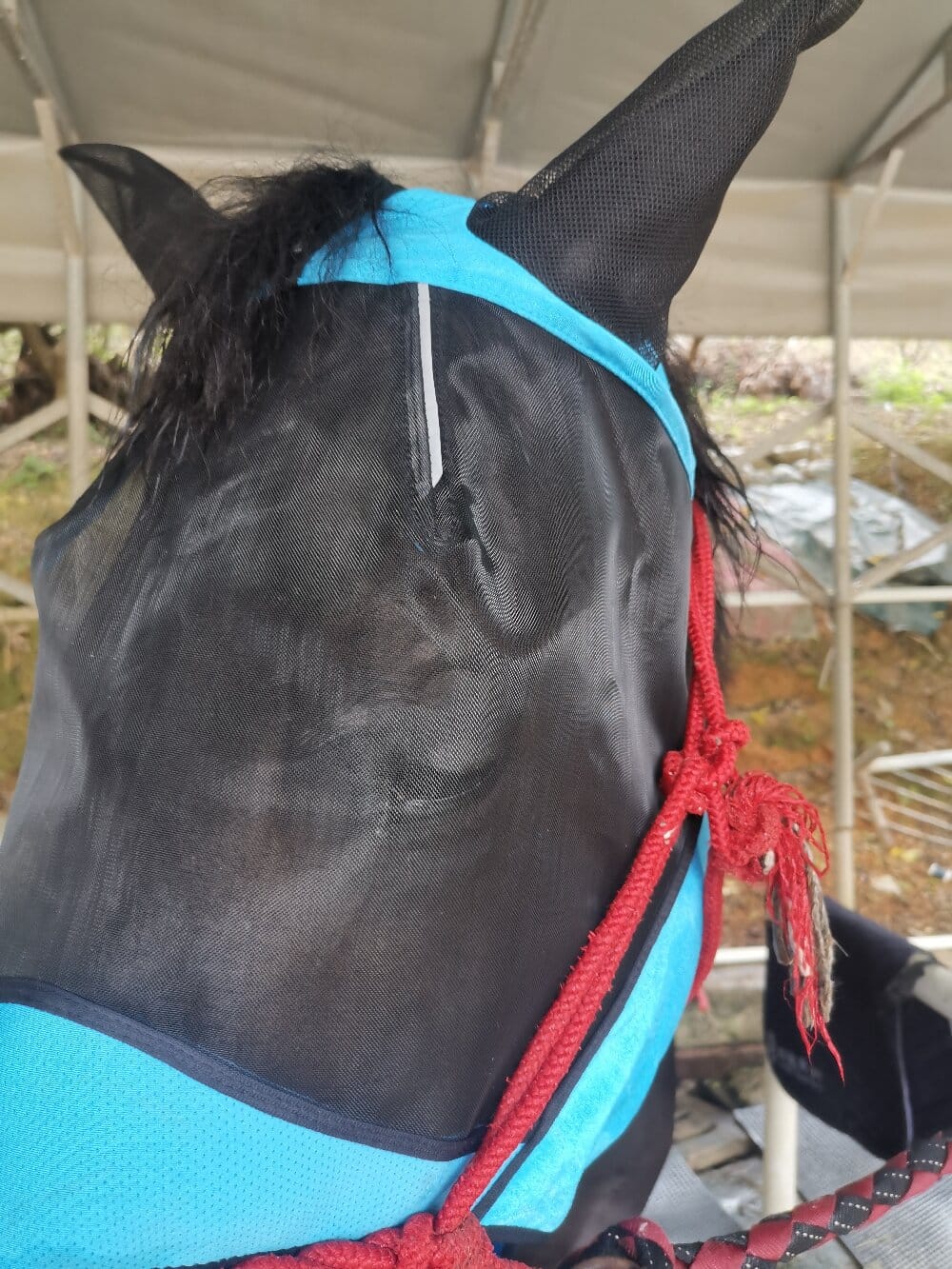
A horse fly mask is one of the most practical and affordable pieces of equine tack available, yet many owners underestimate its value until their horse comes in from turnout with a swollen, weeping eye or a face covered in welts. From a practical standpoint, choosing and using a fly mask correctly can dramatically reduce irritation, prevent secondary infections, and keep horses comfortable through the warm months when biting insects are most active.
Flies, gnats, and midges are not merely a nuisance. They cluster around the eyes and ears, feed on tears and mucus, and can transmit bacteria that lead to conjunctivitis. In severe cases, relentless irritation causes head shaking, rubbing on fences, and even corneal damage. A well-fitted fly mask acts as a physical barrier, keeping insects away from sensitive tissue while still allowing full vision. It also offers protection against dust, debris, and sunlight, which is particularly useful for horses with light-colored faces or photosensitivity.
Key Features to Evaluate Before Buying a Horse Fly Mask
Not every mask on the market performs the same job. Practical buyers should compare products across several categories before committing.
- Coverage: Basic masks shield the eyes only. Extended designs add ear covers, nose fringe, or full-face panels, which help with midges that target the muzzle and ears.
- Durability: Look for reinforced stitching, double-locking closures, and tough mesh. Cheap masks often tear within weeks when horses rub or play.
- Ventilation: Fine mesh blocks tiny insects, but it must still allow airflow to prevent overheating in hot weather.
- UV protection: Masks with UV-blocking fabric are a smart choice for horses prone to sunburn or photosensitivity.
- Fit and adjustability: Straps under the jaw and over the poll should be adjustable without creating pressure points.
How to Fit a Horse Fly Mask Correctly
Fit is the difference between effective protection and constant frustration. A mask that is too loose slides down over the eyes; one that is too tight rubs the face and restricts movement. Follow these practical steps:
- Measure from the poll (behind the ears) to just below the cheekbone, and compare with the manufacturer’s sizing chart.
- Place the mask so the eye openings sit fully around the eyes without pressing on lashes.
- Adjust fastenings so two fingers fit comfortably under each strap.
- Check for gaps at the throat latch where insects could sneak in.
- Watch the horse move in turnout; if the mask shifts or twists, try a different style or size.
Maintenance and Safety Checks for Daily Use
Even a high-quality fly mask requires routine attention. Inspect it daily for holes, frayed edges, and loose straps, since a damaged mask can catch on equipment or trap insects inside. Rinse off dirt and sweat with mild soap, and allow the mask to air dry completely before reuse to prevent skin irritation. In very hot conditions, remove the mask during peak heat and reapply it for evening turnout when biting insects are most active. Rotating between two masks extends the life of each and ensures one is always clean and ready.
Common Mistakes to Avoid
Owners frequently leave masks on around the clock without checking underneath, which can hide wounds or rub marks. Another common error is buying solely on price; inexpensive masks often fail at the seams and offer poor UV protection. Finally, never use a mask as a substitute for fly control. Combining it with repellents, fans in stables, and prompt manure removal delivers the best results.
Conclusion
A horse fly mask is a small investment with a large payoff: healthier eyes, calmer horses, and fewer veterinary visits. By prioritizing proper fit, durable materials, and consistent maintenance, owners can get full seasonal value from this simple but essential piece of protective equipment.