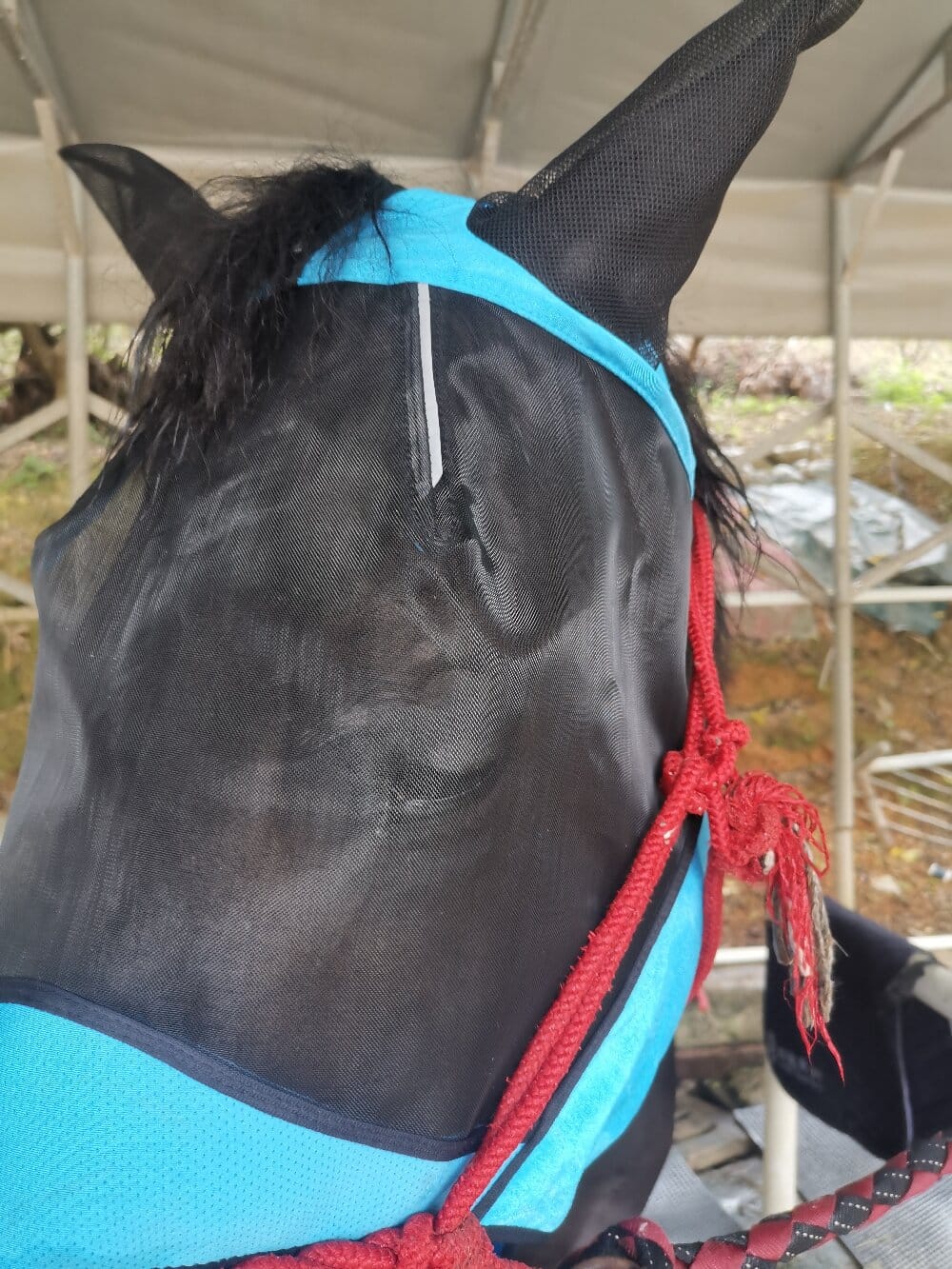
A horse fly mask is a specialized piece of equine equipment engineered to provide physical barrier protection against flying insects, particularly during peak pest seasons. From a technical standpoint, the product combines lightweight textile engineering with anatomical design to shield the sensitive areas of the horse’s face—eyes, ears, and muzzle—without restricting vision or airflow. Understanding the construction and performance variables of these masks allows equestrians to make informed purchasing decisions based on measurable criteria rather than anecdotal claims.
Key Technical Components of a Horse Fly Mask
The performance of any equine fly mask depends on several interdependent design factors. Each component influences durability, comfort, and protective efficacy:
- Mesh Density and Weave: Most masks use a UV-stabilized polyester or nylon mesh. Finer weaves (typically 300–600 denier) block smaller insects such as midges and gnats, while coarser mesh improves airflow. The mesh’s light transmission rating directly affects the horse’s visibility and stress levels.
- UV Protection Rating: Quality masks specify a UPF rating, often UPF 50+, which blocks over 98% of ultraviolet radiation. This is relevant for horses with pink skin or photosensitivity conditions.
- Binding and Stitching: Reinforced binding along edges prevents fraying and abrasion. Double-stitched seams at stress points—such as ear openings and strap anchors—extend service life under field conditions.
- Fastening Systems: Hook-and-loop closures remain the industry standard, though buckle and elastic combinations offer redundancy. Fit adjustment range should accommodate varying head sizes without creating pressure points.
- Ear and Forelock Accommodation: Removable or integrated ear covers add protection against biting midges, while forelock openings reduce interference with natural fly-swatting behavior.
Performance Variables and Selection Criteria for a Horse Fly Mask
Selecting an appropriate fly mask requires matching technical specifications to environmental and individual horse factors. The following criteria serve as a practical evaluation framework:
- Insect Pressure Profile: Regions with high midge populations demand finer mesh and ear coverage; areas dominated by larger flies may tolerate coarser weaves with superior ventilation.
- Turnout Duration: Masks worn continuously require higher abrasion resistance and secure fastenings. Pasture-tested designs typically feature longer strap lengths and reinforced crown panels.
- Fit Verification: Proper fit allows two fingers of clearance beneath straps and ensures the mask sits away from the eyes. Measurement of the horse’s head length and width should precede purchase.
- Seasonal Durability: Colorfastness to UV exposure and machine-washability influence cost-per-season. Manufacturers publishing wash-cycle test data provide verifiable durability indicators.
- Visibility and Behavior: Studies of equine vision suggest that dark or neutral mesh colors reduce visual distortion. Observing a horse’s behavior during initial wear remains the most reliable validation method.
Maintenance and Longevity Considerations
Technical performance degrades with use. Mesh porosity declines as dust accumulates, reducing airflow and insect exclusion. Recommended maintenance includes hand or gentle machine washing with mild detergent, air drying to preserve mesh integrity, and routine inspection of stitching and closures. Masks showing stretched binding or broken fasteners should be retired, as compromised fit creates gaps that defeat the mask’s protective function. Rotation between two masks extends the service interval and maintains consistent protection during peak fly season.
Conclusion
Evaluating a horse fly mask through a technical lens—mesh density, UV rating, construction quality, fastening design, and fit—provides a reliable basis for selection. Matching these specifications to local insect pressure and individual horse needs improves protective outcomes, while disciplined maintenance preserves performance across seasons. Buyers who prioritize verifiable specifications over marketing claims will secure the most effective barrier protection for their animals.