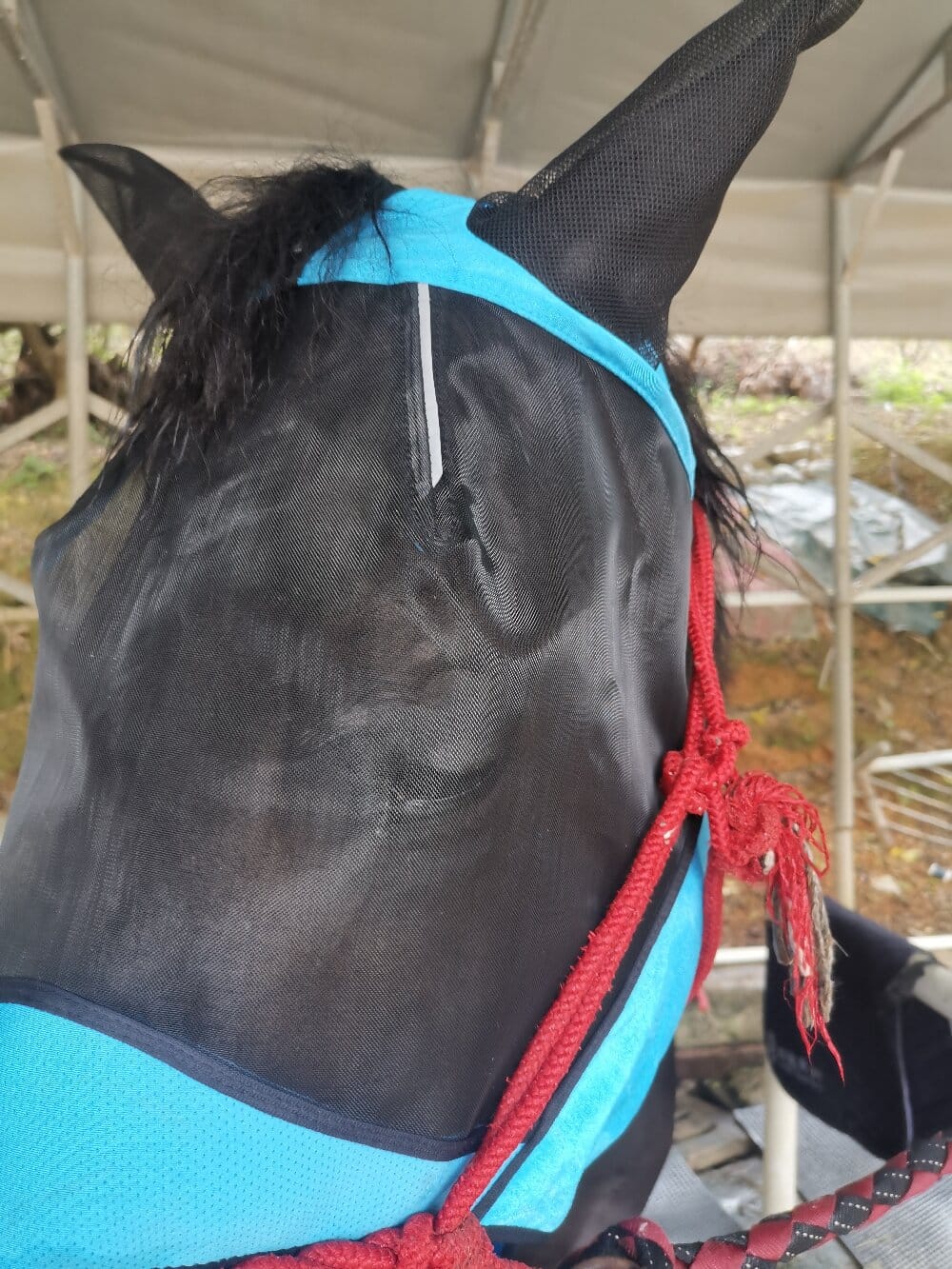
A horse fly mask is a specialized piece of equine equipment designed to shield the eyes, ears, and upper face from flying insects, ultraviolet radiation, and airborne debris. From a methodology perspective, evaluating this item requires an objective examination of its materials, fit, function, and measurable outcomes rather than anecdotal claims. This article applies a structured approach to assessing how fly masks for horses perform in real-world conditions, enabling owners, barn managers, and equine professionals to make evidence-based decisions about protective facewear.
Material and Design Specifications of a Horse Fly Mask
Methodological evaluation begins with construction. Most fly masks for horses are manufactured from mesh fabrics, commonly polyester or nylon, with varying aperture sizes. The mesh density determines the balance between airflow and particle exclusion: finer mesh blocks smaller insects such as biting midges but may reduce ventilation, while coarser mesh improves airflow at the cost of protection against tiny pests. Objective assessment should record the following variables:
- Mesh pore size and light transmission percentage
- Edge binding and seam reinforcement quality
- Fleece or soft lining at pressure points around the brow and nose
- Fastening systems, including hook-and-loop straps, buckles, or elastic bands
- UV-blocking rating, where manufacturers provide tested data
Each variable can be scored and compared across products, converting subjective impressions into comparable data points. Durability testing under controlled wear conditions, such as repeated laundering and field use over a defined period, further strengthens the evidence base.
Fit Assessment and Physiological Considerations
Fit is the most consequential factor in mask performance. An improperly sized mask can rub the orbital area, restrict peripheral vision, or slip over the eyes, creating welfare concerns. A systematic fitting protocol should include measurement of the head length from browband to muzzle, cheek width, and ear placement, followed by observation of the horse’s behavior during controlled exercise. Key indicators of correct fit include:
- Clearance between the mesh and the eye surface without contact
- Secure positioning during turnout, feeding, and rolling
- Unobstructed ear movement and intact hearing
- No visible abrasion or hair loss after consecutive days of wear
Physiological monitoring, such as checking for heat accumulation beneath the mask during warm weather, provides additional objective data. Masks with lighter colors and breathable mesh generally demonstrate lower thermal load, which is relevant for horses worked or pastured in high-temperature environments.
Evaluating Protective Efficacy and Behavioral Outcomes
The core function of a horse fly mask is reduction of insect pressure and associated stress behaviors. A rigorous evaluation framework pairs insect counts with behavioral observation. Researchers and caretakers can document head-shaking frequency, ear flicking, tail swishing, and stomping before and after mask application, using consistent time intervals and environmental conditions. Comparative studies of masked versus unmasked horses in the same pasture yield the most reliable conclusions. Additional outcome measures include incidence of ocular irritation, sun-related damage to unpigmented skin, and evidence of fly bite lesions on the face. These metrics allow an objective verdict on whether a given mask delivers measurable protection rather than merely perceived benefit.
Maintenance Protocols and Lifecycle Management
Longevity and hygiene directly affect both efficacy and cost. A defined maintenance schedule should specify inspection frequency, cleaning method, and replacement criteria. Machine washing in a mesh laundry bag on a gentle cycle, air drying to preserve shape, and weekly inspection of straps and seams form a practical baseline. Masks should be retired when mesh tears exceed a defined size, fasteners lose holding strength, or lining material compresses irreversibly. Recording replacement intervals across a season supports budget planning and informs purchasing decisions.
Conclusion
Applying a methodology-driven approach to the horse fly mask transforms a routine purchase into a measurable management decision. By systematically assessing construction, fit, protective efficacy, and maintenance requirements, equine caretakers can select facewear that genuinely supports ocular health and comfort. Consistent observation and record-keeping remain the foundation of sound, objective evaluation.