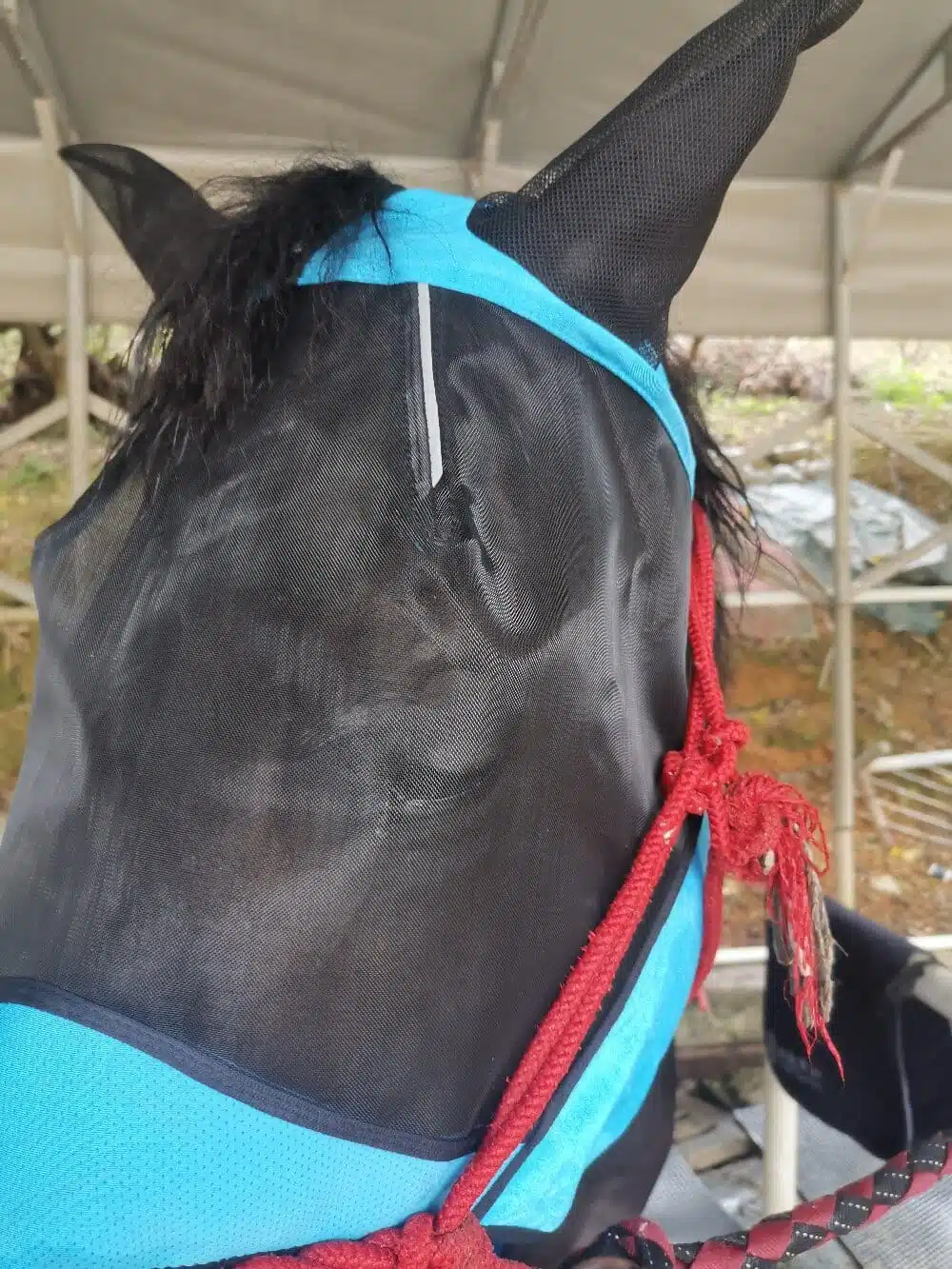

When evaluating a horse fly mask from a technical standpoint, it is essential to recognize that this piece of equipment is far more than a simple piece of fabric. A well-designed horse fly mask functions as an engineered barrier system, combining material science, ergonomic fit, and environmental adaptability to protect the equine eye and face from flying insects, UV radiation, and debris. From the perspective of a tack specialist, a veterinary professional, and a performance rider, the horse fly mask serves distinct but overlapping purposes that merit closer analysis.
Material Science and Mesh Specifications of the Horse Fly Mask
From a technical perspective, the performance of a horse fly mask is dictated primarily by its mesh construction. Manufacturers typically specify mesh density in grams per square meter or in terms of aperture size, and these figures directly influence breathability, visibility, and insect exclusion. A finer mesh, often rated between 200 and 300 microns, prevents even small gnats from penetrating, while coarser weaves prioritize airflow during high-intensity work. UV-blocking additives are frequently integrated into the polymer fibers, with many products claiming 60 to 90 percent UV reduction. Veterinary sources note that this feature is particularly valuable for horses with photosensitivity or pink skin around the muzzle and eyelids.
Durability testing also matters. Ripstop nylon and polyester blends resist tearing at stress points such as the poll and cheek, while binding tapes and double-stitched seams extend service life. From a rider’s standpoint, the weight of the mask affects acceptance; lighter masks reduce head-shaking behavior, whereas heavier-duty models may suit turnout in harsh conditions.
Fit, Ergonomics, and Behavioral Acceptance
Ergonomics is where technical design meets equine welfare. A properly engineered horse fly mask should clear the eyelashes and orbital area without pressing on the globe, and fleece or soft binding at the edges prevents rub marks. Adjustable touch-close straps at the throatlatch allow a customized fit, and some designs incorporate ear covers or nose extensions for expanded coverage. Behavioral specialists emphasize that gradual acclimation improves acceptance, and masks with reinforced eye darts maintain shape even after repeated washing.
- Clearance around the eyes to prevent corneal irritation
- Adjustable straps for secure, rub-free positioning
- Breathable ear and nose options for full-face defense
- Reflective piping for visibility during low-light turnout
Comparative Perspectives: Veterinary, Performance, and Management Views
Veterinarians evaluate the horse fly mask through the lens of disease prevention, particularly regarding insect-borne conditions such as conjunctivitis and summer sores. Performance riders prioritize aerodynamic fit and minimal visual obstruction, since a poorly fitted mask can shift during gallop work. Barn managers, meanwhile, focus on washability, drying time, and cost per season. Each perspective converges on the same conclusion: selection should match the specific hazard profile, whether that means fine mesh for gnat-heavy pastures or UV-blocking fabric for sunny climates.
Maintenance Protocols and Longevity Considerations
Technical analysis of longevity suggests that hand washing in mild detergent, air drying, and regular inspection of seams and straps can significantly extend product life. Rotating between two masks reduces wear and ensures continuous protection during laundering. Storing masks away from direct sunlight preserves elastic components and UV coatings.
Conclusion
Approaching the horse fly mask as an engineered protective system rather than a disposable accessory yields better decisions for equine health and comfort. By weighing mesh specifications, ergonomic fit, environmental demands, and maintenance requirements, owners can select a mask that delivers reliable, season-long defense against flying insects and solar exposure.