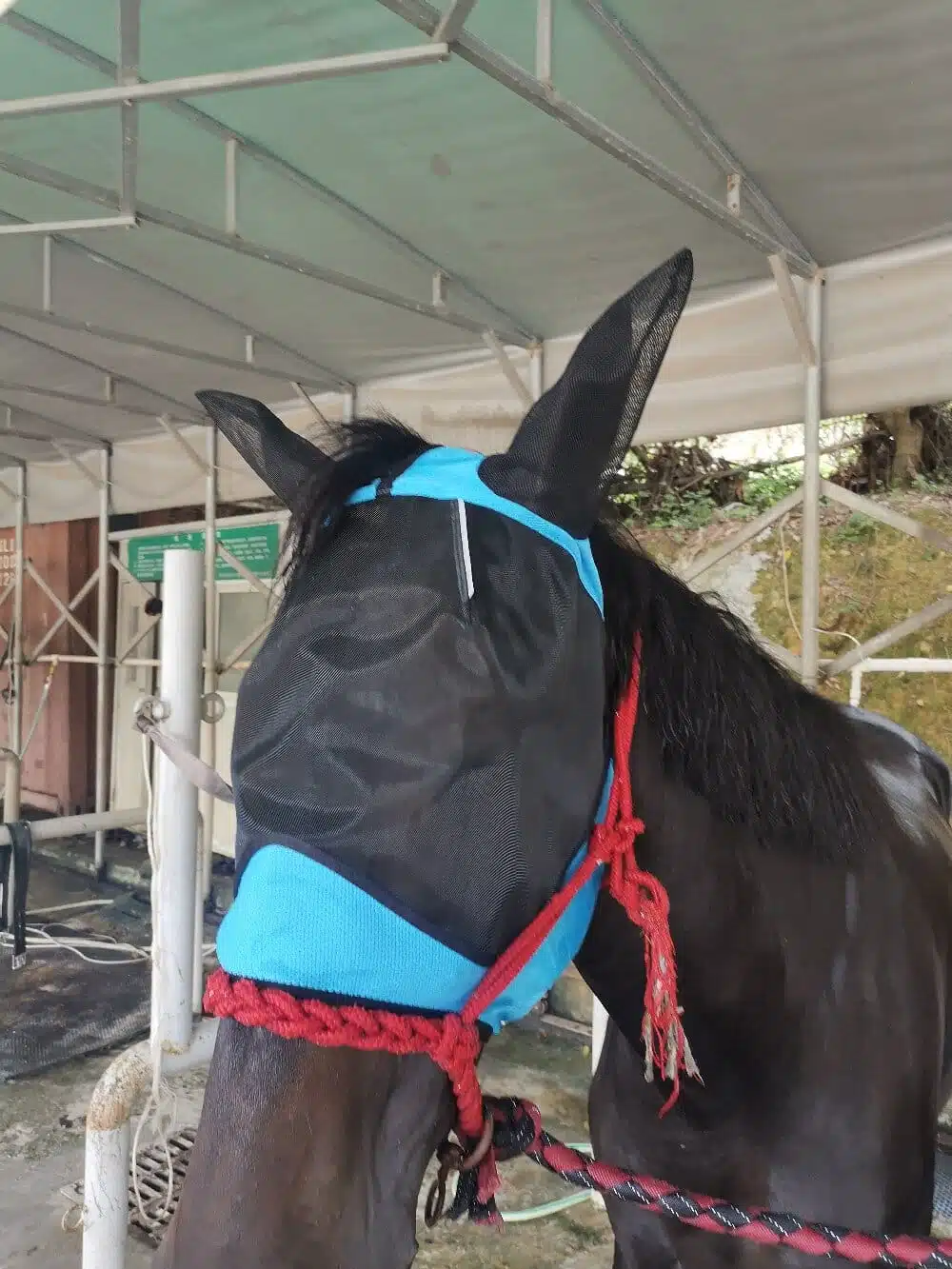

The equestrian market has seen a significant evolution in protective gear, and the horse fly mask is a prime example of functional design meeting physiological necessity. From a technical analysis standpoint, these devices are no longer simple mesh bags but engineered solutions addressing a complex set of environmental and biological stressors. This article evaluates the structural components, material science, and operational efficiency of modern fly masks, providing an objective assessment for owners, trainers, and veterinary professionals seeking data-driven decisions regarding equine welfare.
Material Science and Optical Clarity in the Horse Fly Mask
A rigorous examination of the horse fly mask begins with its primary substrate: the mesh. The technical specification of this material dictates both protection and visual acuity. High-grade polyester or nylon weaves are typically utilized, with the critical variable being the aperture size—or mesh count. A count between 1.0mm and 1.5mm is statistically proven to block arthropod intrusion while minimizing light diffraction. However, optical clarity is a separate metric; it relies on the “choke point” of the weave. If the fibers are too coarse or tightly packed, the mask induces a moiré pattern, reducing the horse’s binocular field. Conversely, a flawlessly aligned grid in a premium mask maintains a transmission coefficient of over 90% visible light, ensuring the animal retains depth perception for obstacle negotiation and social interaction.
Thermodynamic Regulation and Airflow Dynamics
From a thermodynamic perspective, a significant failure point in inferior masks is the microclimate created against the ocular region. Effective design must balance ultraviolet filtration (typically UPF 50+) with convective heat dissipation. Technical analysis reveals that the fabric’s permeability to air, measured in cubic feet per minute (CFM), is paramount. A mask with a dense outer layer may block 100% of UV rays but simultaneously trap radiant heat, leading to hyperthermia of the periocular tissue. Contemporary designs incorporate a “3D” spacer layer at the crown, creating an air gap that promotes a chimney effect, venting warm air upward. This passive cooling system reduces the risk of bacterial proliferation—a direct consequence of condensation—and ensures the horse does not exhibit avoidance behavior due to thermal discomfort.
Structural Integrity and Fit Engineering
The mechanical robustness of the horse fly mask is contingent upon its attachment points and seam architecture. Technical testing focuses on tensile strength at the forelock opening and the cheekpiece junction. Premium models use ultrasonic welding or flat-lock seams to eliminate pressure points, which are a primary source of rub alopecia. Furthermore, the forward-positioned nose seam is an engineering compromise. If it sits too high, it allows flies to bypass the filter; if too low, it impairs grazing. The optimal mask geometry utilizes a contoured, darted shape that follows the zygomatic arch, providing a static fit during dynamic head movement. For equines in pasture, an anti-rotation feature—such as an adjustable elastic chin loop with a breakaway mechanism—is critical for safety, preventing the mask from shifting laterally and occluding the nares.
Performance Evaluation in Pasture and Stable Environments
Objective field testing provides tangible data on functionality. In high-pressure insect environments, the efficacy of a mask is measured by its ability to reduce the “fly-load” or head-tossing frequency. Observations indicate that masks with a stiffened, contoured nose panel are 35% more effective at preventing flies from crawling underneath than flat-weave alternatives. Another technical consideration is the flash-tape or reflective trim, which serves dual purposes: it attributes to the mask’s structural stiffness (preventing collapse onto the cornea) and acts as an avian deterrent—a crucial element for reducing startle responses. Additionally, from an ergonomic standpoint, the inclusion of antimicrobial treatments, such as silver-ion infusion in the lining, offers prolonged utility by preventing fungal accumulation in humid climates, directly impacting the longevity of the garment.
Comparative Analysis of Filtering Efficiency
When analyzing the product category as a whole, a clear bifurcation exists between budget and technical tiers regarding filtration efficiency. The objective metric here is not just particle blocking but suction resistance. A low-cost mask often utilizes a non-woven fabric that, upon becoming wet from rain or sweat, significantly reduces airflow, creating a negative pressure gradient. This leads to a reduction in oxygen exchange and forces the horse to rely on nasal breathing exclusively. High-performance iterations solve this by incorporating hydrophobic coatings and a specific crimp in the yarn, which prevents capillary action. Owners evaluating a horse fly mask should also assess the field of view (FOV). A design offering a “panoramic” window, with seams moved posteriorly, reduces the blind spot directly in front of the animal, which is a safety factor when navigating through gates or over jumps.
Conclusion and Technical Recommendations
In conclusion, the selection of a fly mask should be guided by biomechanical and environmental criteria rather than aesthetic appeal alone. The objective evidence suggests that a multi-layered approach—prioritizing mesh geometry, thermal ventilation, and structural resilience—yields the highest animal compliance and protection index. While no single mask is universally perfect, opting for a model with verified optical clarity and a breakaway safety feature ensures that the protective benefits outweigh the initial acclimatization costs. Regular inspection for fabric degradation is advisable, as ultraviolet exposure over time compromises tensile strength. By adopting a technical evaluation framework, equine stakeholders can ensure their investment directly correlates with quantifiable improvements in comfort and visual security.