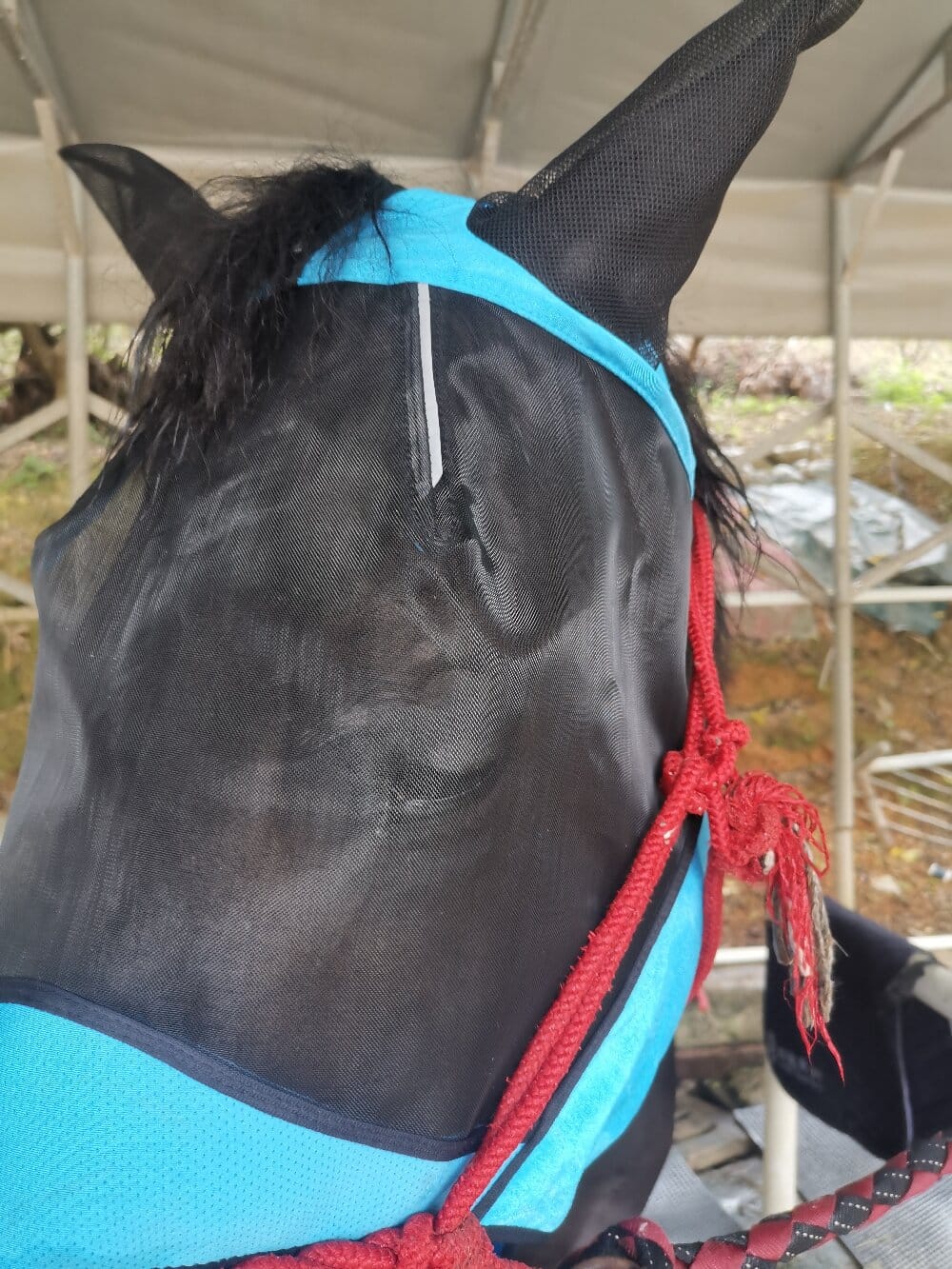
A horse fly mask serves as a critical piece of protective equine equipment, engineered to shield the animal’s sensitive facial area from flying insects, ultraviolet radiation, and environmental debris. From a technical standpoint, the device is not merely a fabric covering but a structured barrier system that must balance durability, visibility, and comfort. Understanding the construction and performance variables of a horse fly mask allows owners and barn managers to make informed procurement decisions based on measurable criteria rather than aesthetic preference.
Material Specifications and Mesh Density in the Horse Fly Mask
The primary performance indicator of any equine fly mask is its mesh density, typically measured in grams per square meter or denoted by micron ratings. Standard models utilize a knitted high-density polyethylene or polyester mesh with apertures ranging from 0.5 mm to 2.0 mm. Finer mesh blocks smaller insects such as gnats and midges but reduces airflow and light transmission. Coarser mesh offers superior ventilation but allows smaller pests to penetrate. Technical evaluation should consider the trade-off between insect exclusion and thermal regulation, particularly in high-humidity climates.
Fabric treatments add another technical layer. Many masks incorporate ultraviolet stabilizers rated at UPF 50+, which prevent polymer degradation from solar exposure. Some manufacturers apply insecticide-infused bindings or permethrin-treated ear covers, though these require verification of residual efficacy over wash cycles. From a materials engineering perspective, the tensile strength of the binding tape and the seam construction—typically double-stitched or bar-tacked—determine the product’s fatigue life under repeated laundering and field use.
Ergonomic Fit and Retention Mechanics
A horse fly mask must maintain positional stability without creating pressure points or restricting the visual field. Technical fit parameters include the distance between the browband and the eye orbit, the clearance of the noseband over the nasal bone, and the tension distribution of the fleece padding. Improper fit leads to rubbing, corneal irritation, or mask displacement during turnout. Adjustable hook-and-loop closures and elasticized throat straps are standard retention mechanisms, but their holding force must be calibrated to prevent slip without excessive compression.
Field data indicates that masks with a contoured brow arch and reinforced ear openings demonstrate lower displacement rates. The ear covers, when present, should use a breathable mesh with adequate acoustic transparency to avoid attenuating the horse’s hearing, which is a welfare consideration often overlooked in low-cost designs.
Durability Testing and Maintenance Protocols
Objective evaluation of a horse fly mask includes abrasion resistance testing, colorfastness to washing, and hardware corrosion resistance. Stainless steel or nickel-plated hardware outperforms brass in humid environments. Recommended maintenance involves hand washing in cool water with mild detergent and air drying to preserve mesh integrity and UV treatments. Machine drying is contraindicated due to thermal shrinkage of synthetic fibers.
- Inspect binding seams every two weeks for fraying.
- Replace masks with stretched or torn mesh immediately to prevent insect ingress.
- Rotate between two masks to extend service life and allow proper cleaning.
Conclusion
Selecting an equine fly mask requires technical judgment across mesh density, material treatment, ergonomic fit, and durability metrics. A properly specified mask reduces insect-borne irritation and UV damage while maintaining comfort and visual function. Buyers should prioritize measurable construction features over cosmetic variables, verifying mesh ratings, seam quality, and retention hardware before purchase.