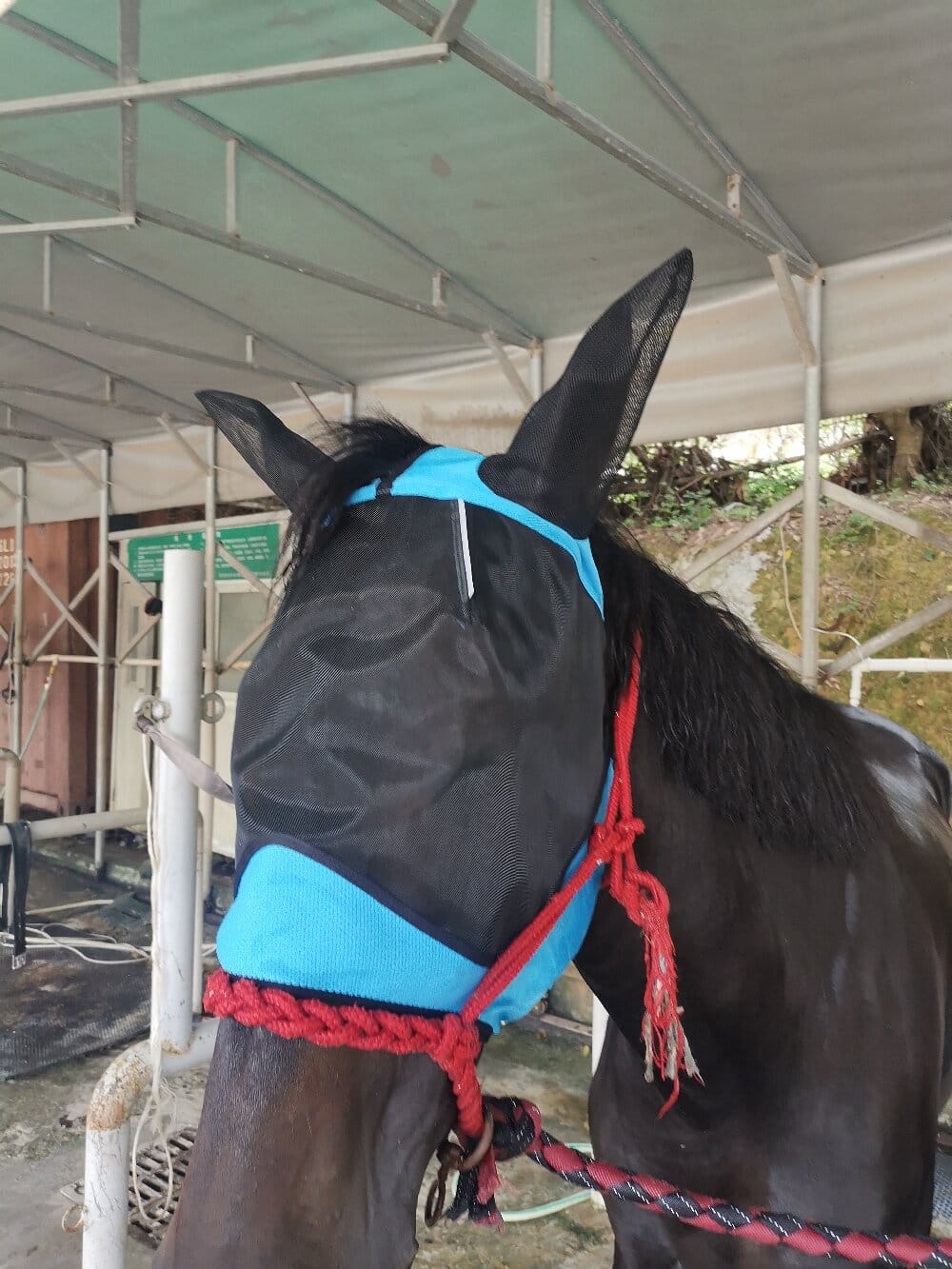
When I first started evaluating a horse fly mask for my mare, I assumed it was a simple purchase: pick a size, pick a color, done. But after watching her rub one mask off in a pasture corner and another chafe along her browband, I began approaching fly masks the way I approach any piece of riding equipment — by breaking down materials, fit geometry, and environmental performance. A horse fly mask is not just a mesh bag over the face; it is a small engineering system that has to balance visibility, airflow, abrasion resistance, and stay-put retention under real barn conditions. In this article I want to share the technical framework I now use before I buy, so you can judge a mask by its construction rather than its marketing photo.
Material Specs: What the Mesh Numbers Actually Tell You
The first specification I check is mesh density. Manufacturers rarely print it, but you can feel the difference: a tighter weave blocks more of the smallest biting insects, while an open weave offers better airflow and less heat buildup. I look for a UV-stabilized mesh because untreated fabric degrades quickly under summer sun, and I have seen cheap masks turn brittle within a single season. I also inspect the binding tape around the edges — a double-stitched, soft-bound edge is far less likely to rub than a raw or single-stitched seam. From a technical standpoint, the ideal fly mask for horses combines fine mesh over the eyes with reinforced darts or shaping seams that keep fabric off the eyelashes.
Fit Geometry and Retention: The Fly Mask Details That Matter
Fit is where most masks fail. I measure three zones: the distance from browband to noseband, the width across the cheekbones, and the clearance under the jaw. A well-designed fly mask uses adjustable hook-and-loop straps at the throat and sometimes a browband strap, giving me two points of tension control. I prefer a mask with fleece or padded binding at the brow and nose because pressure points there cause head tossing and rubbing. Retention also depends on ear holes and forelock openings — if the ears are too tight, the mask migrates; if the forelock opening is too small, hair pulls and the mask shifts sideways. I test fit by watching the horse graze: if the mask lifts at the cheek or slides down over the eyes during normal movement, the geometry is wrong for that head shape.
Field Testing and Seasonal Durability
Once a mask passes the bench inspection, I move to field testing. I check it daily for the first week, looking for rub marks, stretched mesh, and strap fatigue. I also evaluate how it performs in heat: a mask that traps moisture along the face can cause skin irritation even if the mesh is breathable. Long-nose and draft-friendly designs usually need extra length at the muzzle, while delicate-headed horses do better with tapered patterns. I rotate two masks through the season so each has time to dry and relax, which extends the life of the elastic and binding. Washing in cool water with a mild detergent and air-drying preserves the UV coating far better than machine drying.
My Buying Checklist for a Horse Fly Mask
- UV-stabilized, fine-weave mesh with visible airflow
- Double-stitched, soft-bound edges at brow and nose
- Adjustable throat strap plus a browband or ear-level strap
- Shaped darts that keep fabric off the eyes
- Correct ear and forelock openings for the horse’s head type
- Reinforced muzzle length for long-nosed builds
Conclusion
Treating a horse fly mask as a technical product rather than an accessory changed how I shop. I now prioritize mesh quality, seam construction, and fit geometry, then confirm everything through a short field test. That approach has given me masks that stay in place, resist rubbing, and survive a full season of turnout — which is exactly what the horse cares about.